Product Design · 2020–Present · Current role
GHX
Helping hospitals decide which medical devices to buy, and whether it paid off.
GHX’s value analysis products help hospital teams make supply decisions with evidence: whether a new device should come in, which products in a category to standardize on, why some cases cost more than others, and whether a contract’s rebates were ever paid. I’m a senior product designer there. This page plays a few flows, redrawn on our current design system with sample data; the rest of the work stays private.
- Role
- Senior Product Designer
- Year
- 2020–Present
- Domain
- Hospital supply chain
- Status
- Current role
Problem
Which devices a hospital buys is decided by committees of clinicians and supply chain staff, with evidence, physician preference, spend and contract terms spread across different places.
Approach
Put the evidence, the spend and the people involved in front of whoever is deciding, at the moment they decide.
Result
GHX customers report results such as Riverside Health’s 28% cut in joint costs in one three-month project, and $520,000 saved in a year at ECU Health.
01 · Context
Value analysis, for people who aren’t analysts.
Value analysis is how a hospital decides which medical devices and supplies to use. A new product is requested, often by a physician, reviewed by a committee of clinicians and supply chain staff, and approved or declined. Afterwards the same teams look for variation in cost and use, and check that contracts deliver what they promised.
I design across those products, and across the wider GHX platform: an AI orchestration platform, the Registration Center and the Vendormate kiosk. Most of the value-analysis flows below are redrawn on the Lumere Design System we use today, with a fictional health system and its people; the device makers are real. Category optimization is shown as designed.
- Product introduction
- New product requests, with research content beside the decision.
- Category optimization
- Comparable products side by side, with spend and evidence.
- Physician-level analytics
- Where cost varies by procedure and physician, and why.
- Rebate intelligence
- Tiers, earnings and payments, tracked against each contract.
02 · Design: Product introduction
The request is where the decision happens.
A new product request carries its own context: the group it joins, what it replaces and what research says.
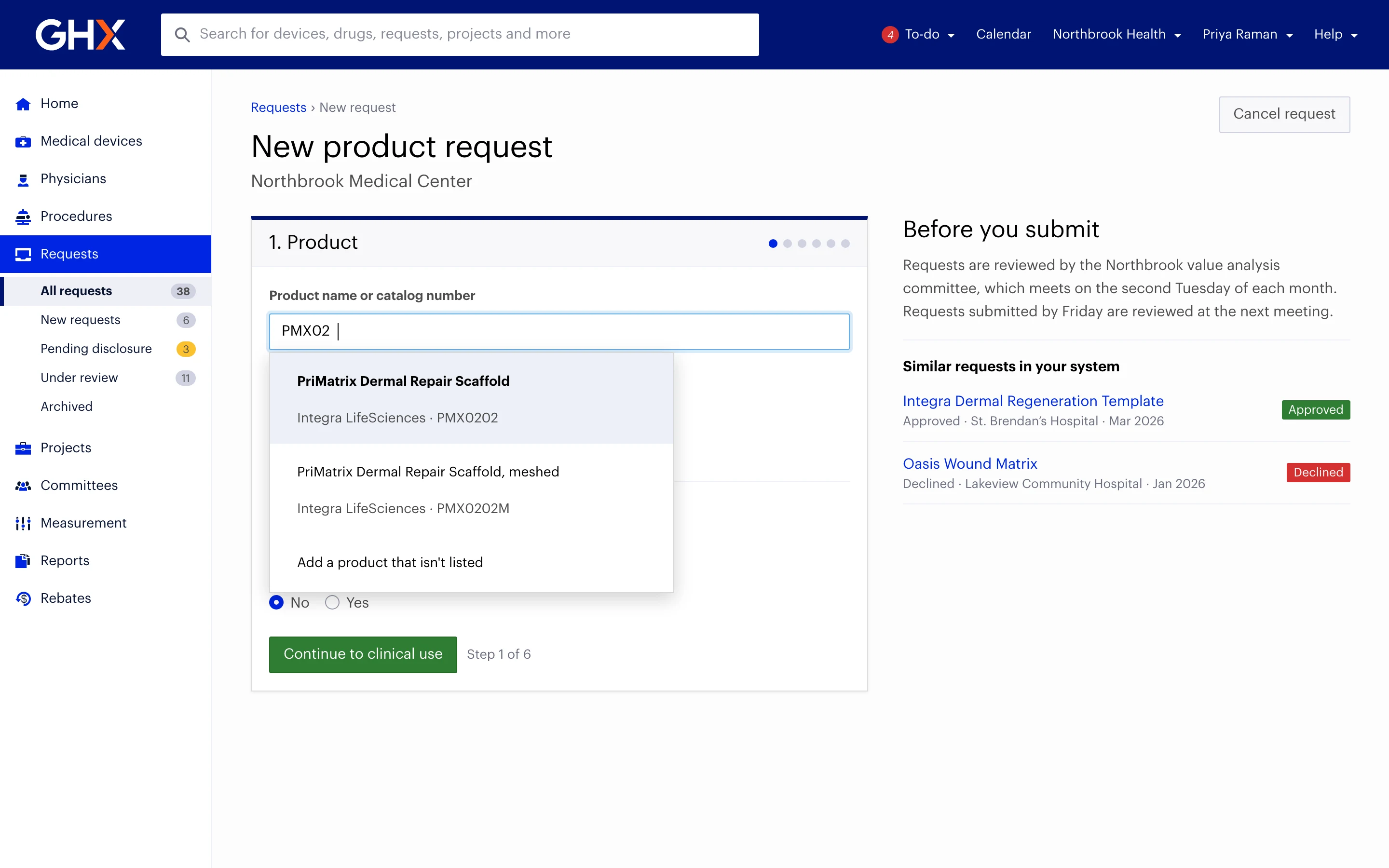
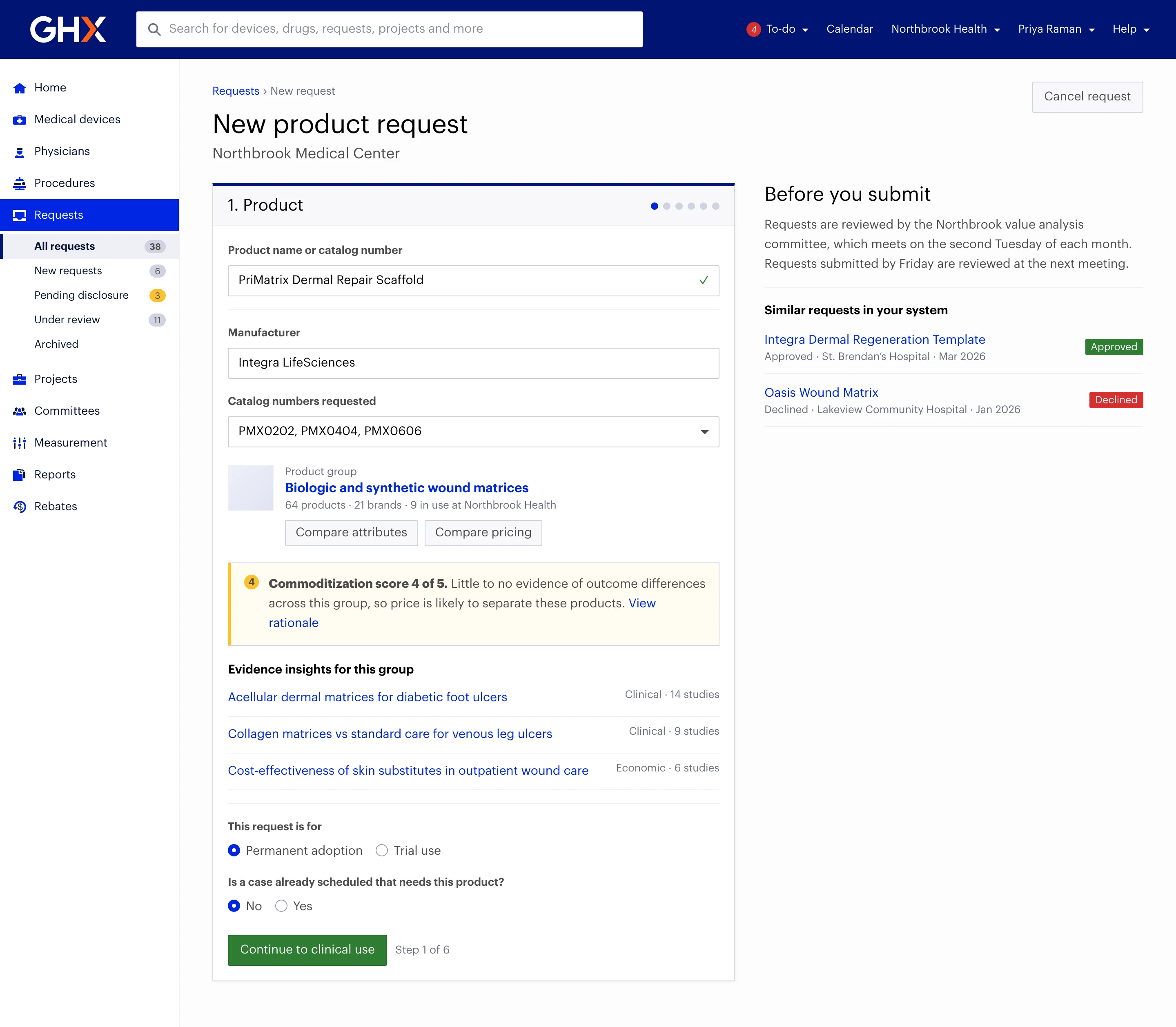
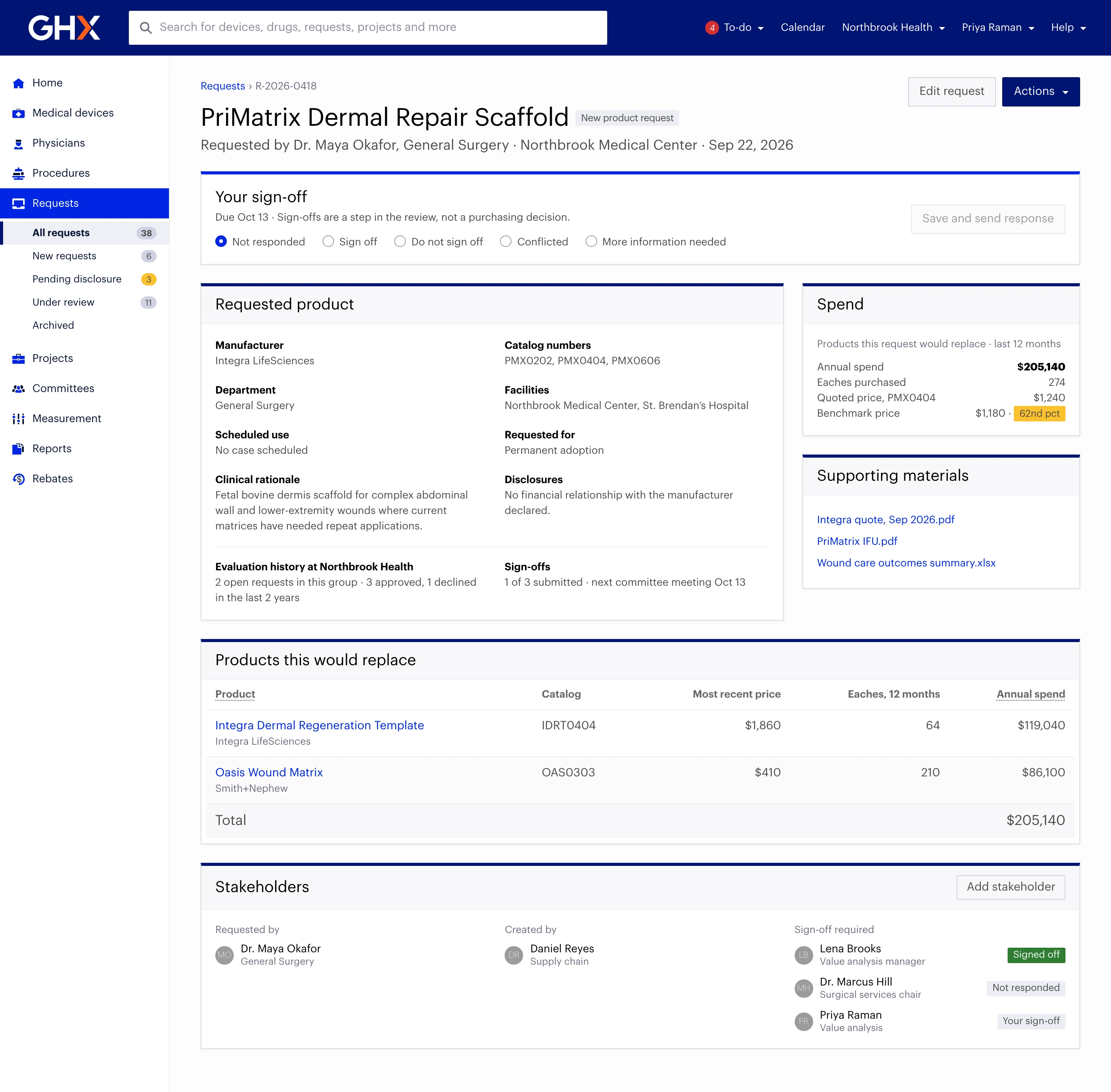
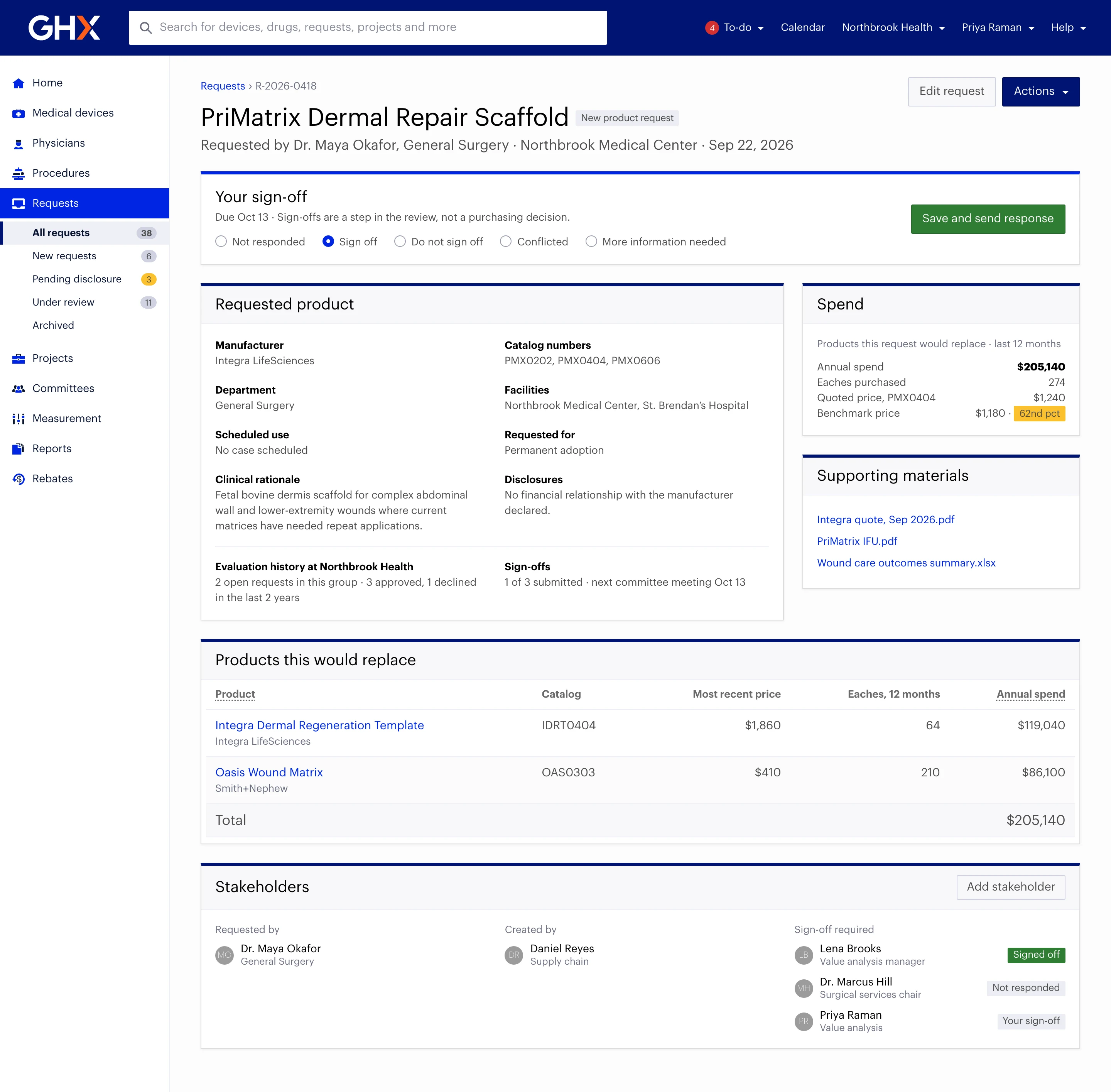
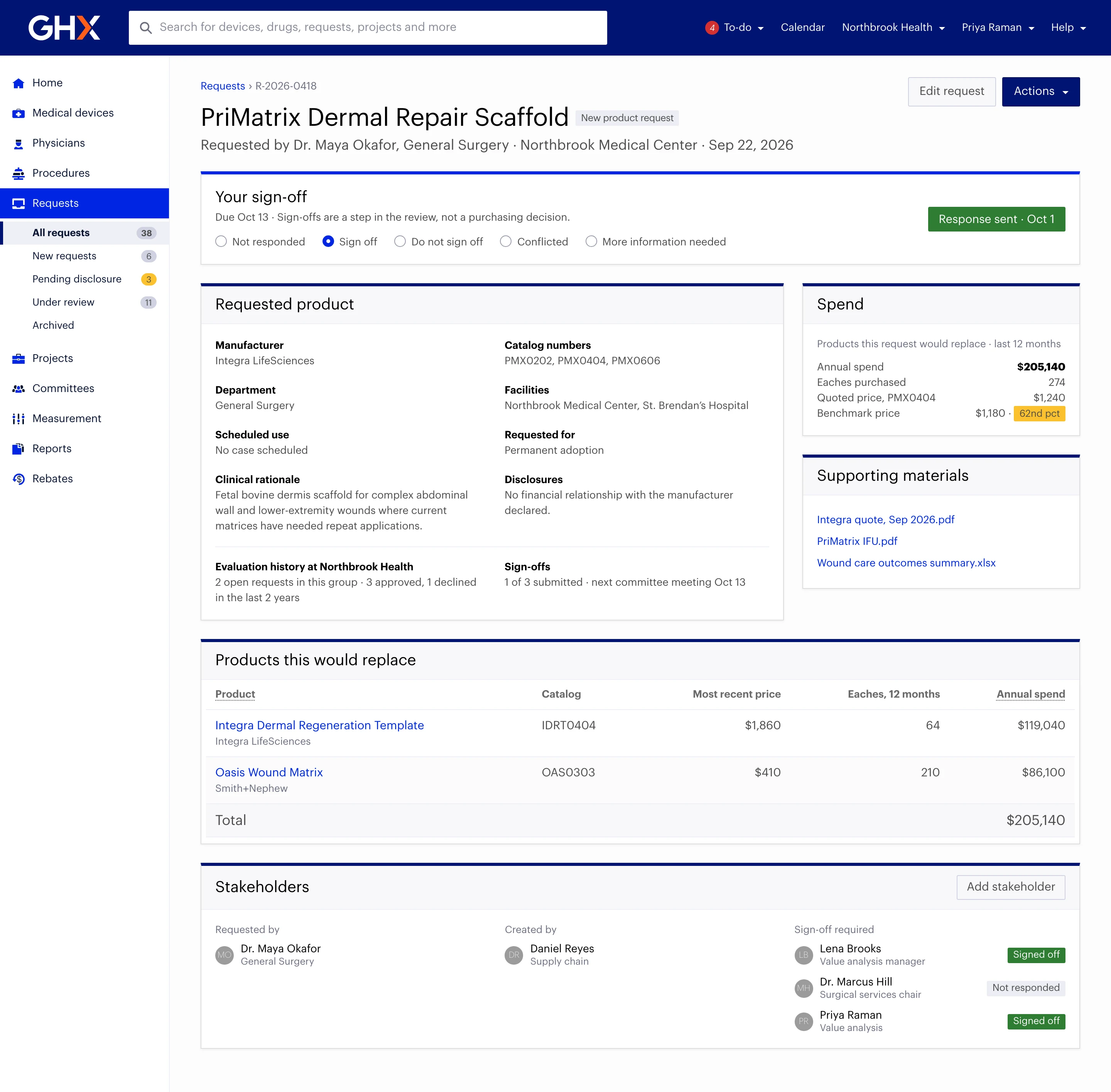
A request starts with one product and one requester, but a committee decides it. So the request gathers what they need: the product group it belongs to, the products it would replace and what those cost today, any financial interest the requester has declared, and who still has to sign off.
Research content sits inside the form instead of in a separate library. If the evidence shows little difference in outcomes across a group, the requester sees that while filling it in, and the reviewers see it before they vote.
03 · Design: Crosswalks
What would we buy instead, and what would it save?
A crosswalk maps every line a hospital buys to one supplier’s equivalent, then prices the switch.
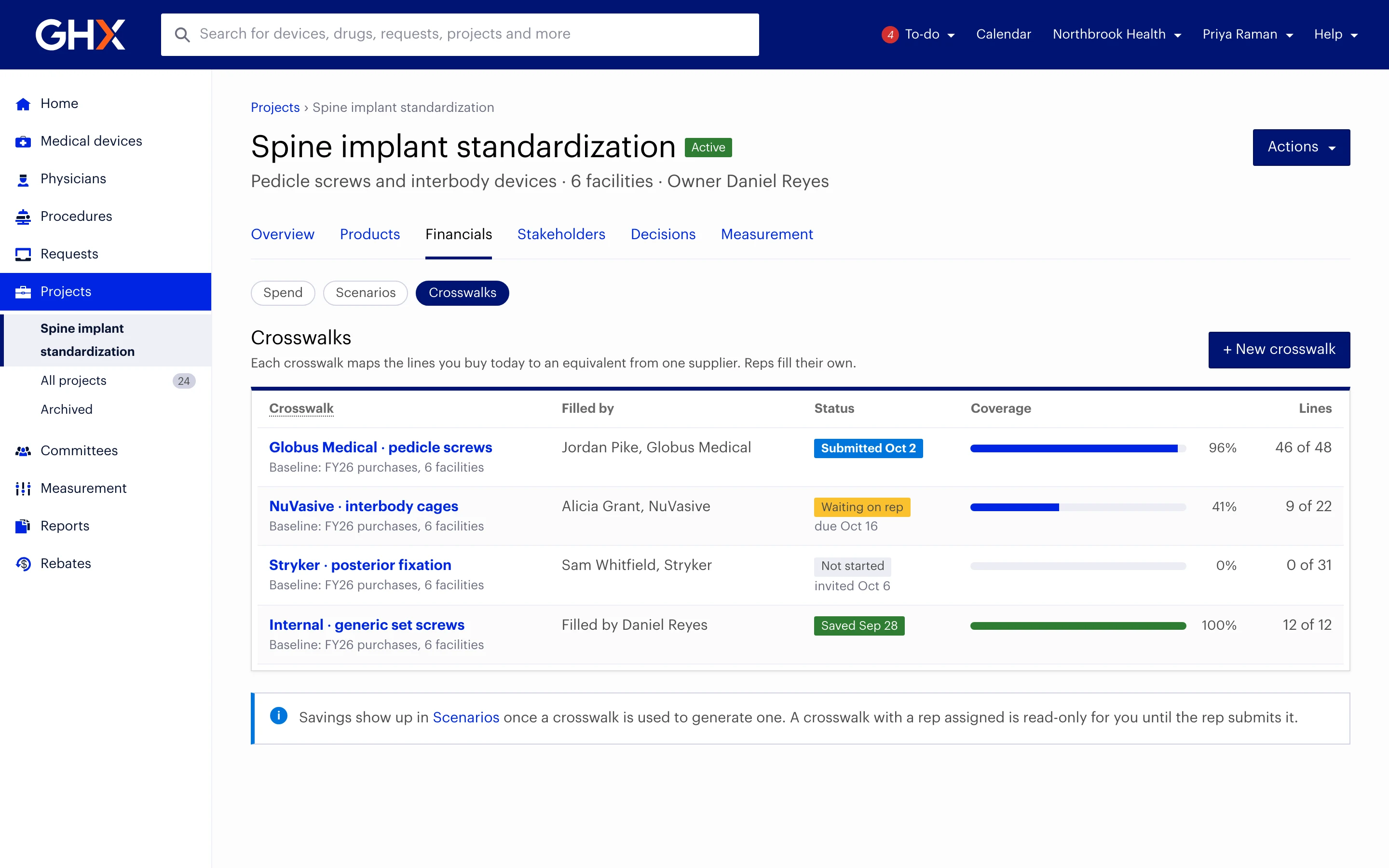
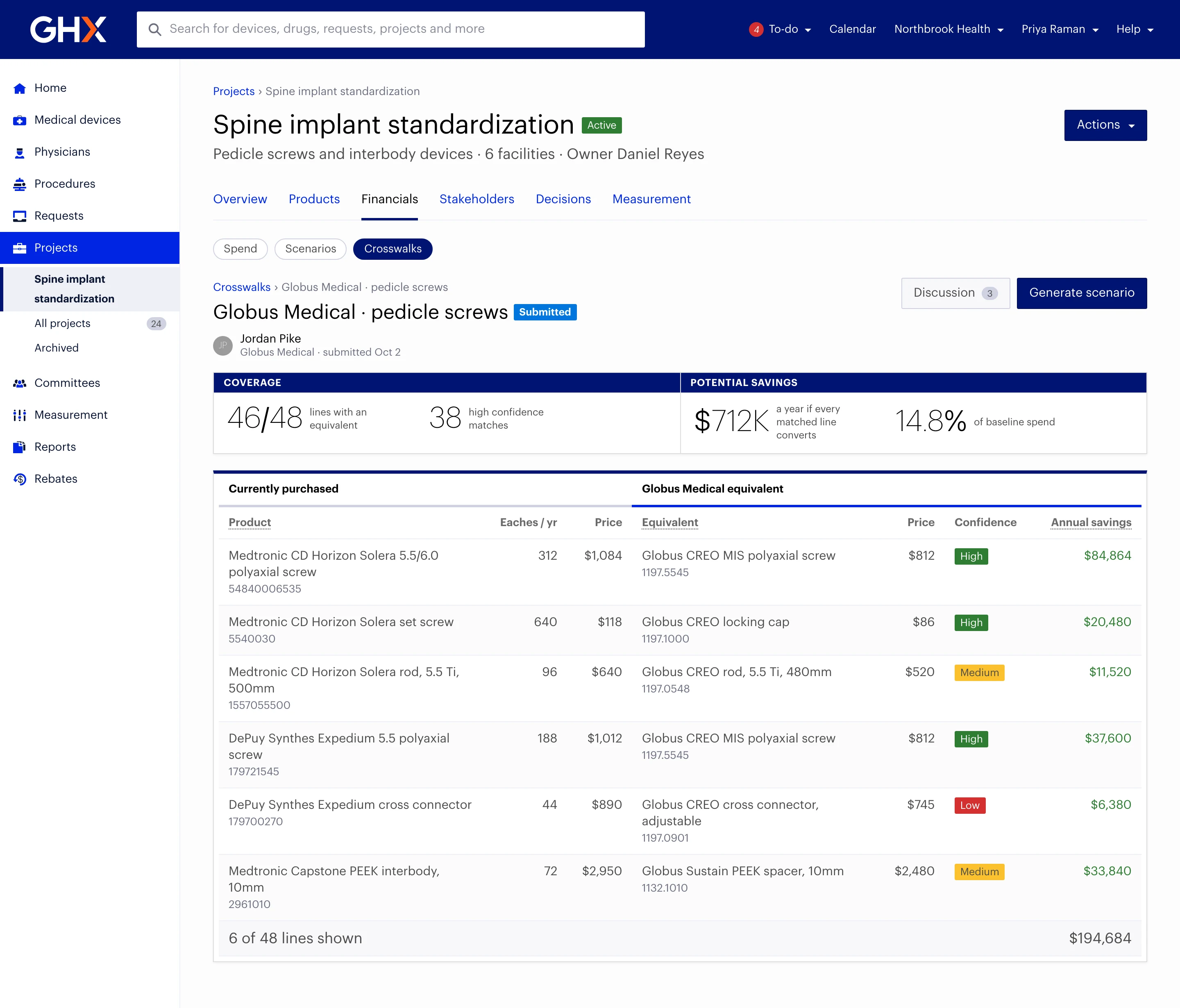
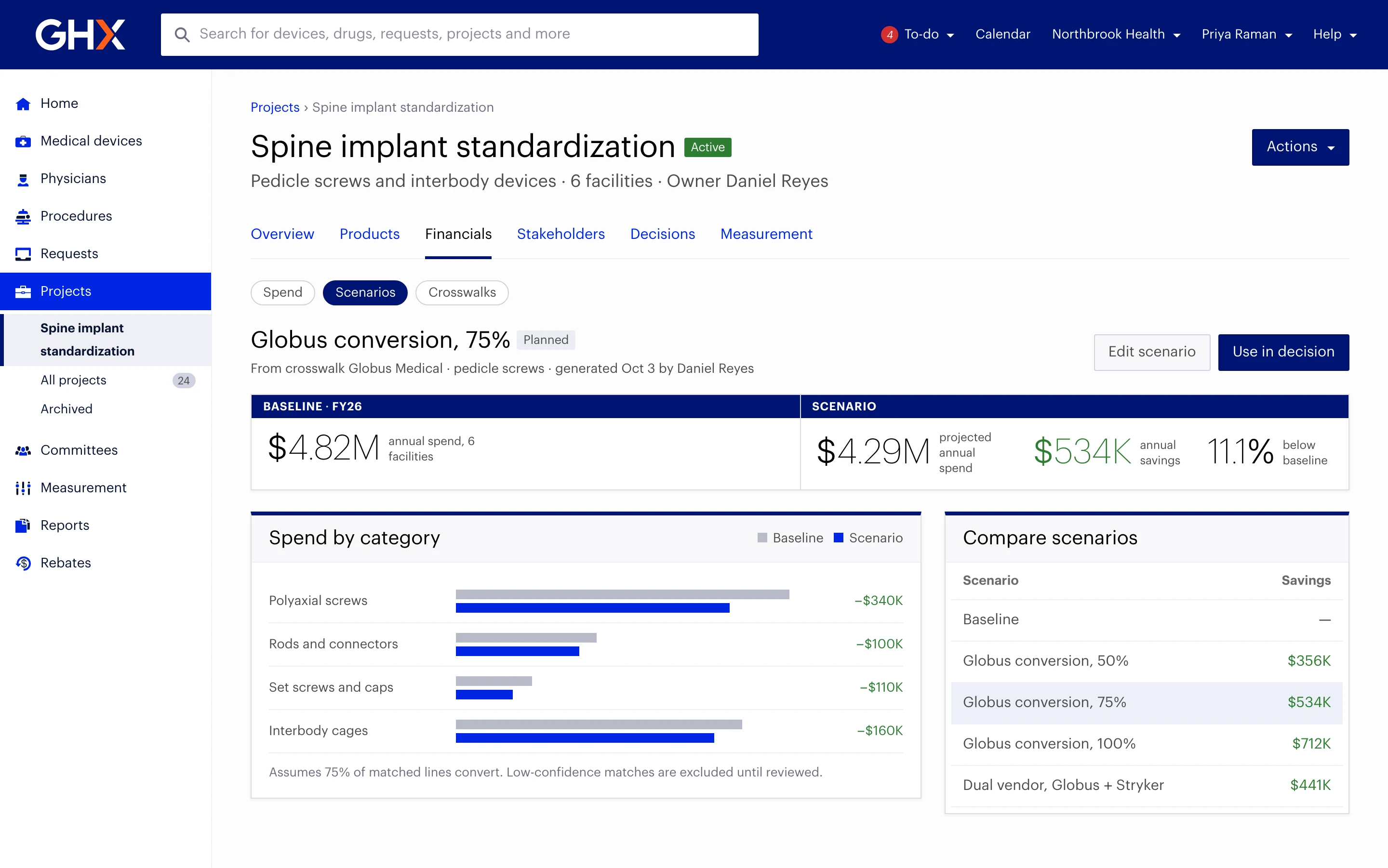
Part of the same value analysis tool. When a project considers moving a category to another supplier, supply chain creates a crosswalk from what the hospital buys today, and the supplier’s rep fills in their equivalent for each line, with a price. Both sides can talk it through on the crosswalk itself.
The hospital sees coverage, how confident each match is and what each line would save, then generates a scenario at the conversion rate it believes, beside the project’s other options.
04 · Design: Catalog decisions
One decision per catalog, not per product.
Decisions are recorded catalog by catalog, at the facilities they apply to, each with its reason.
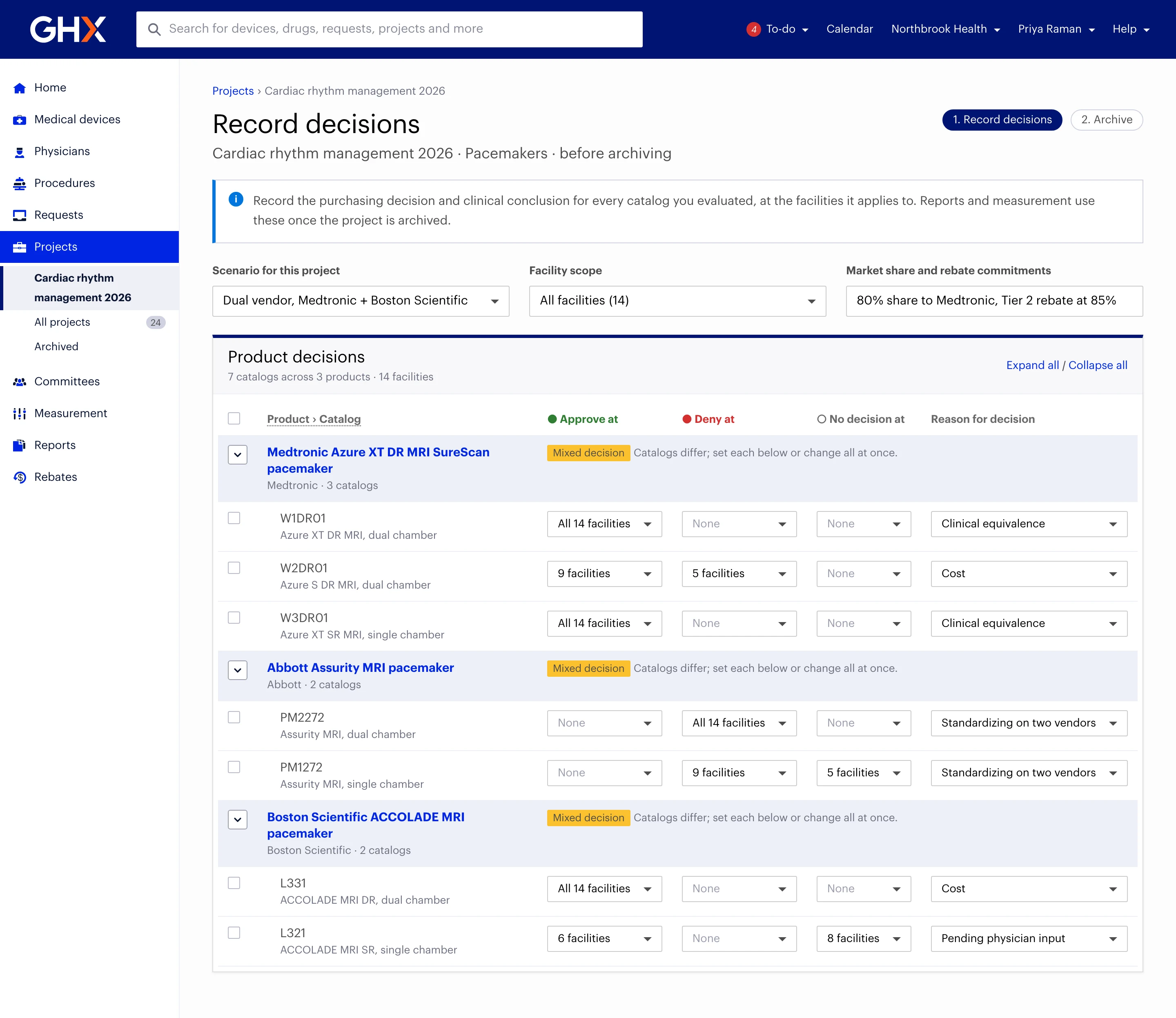
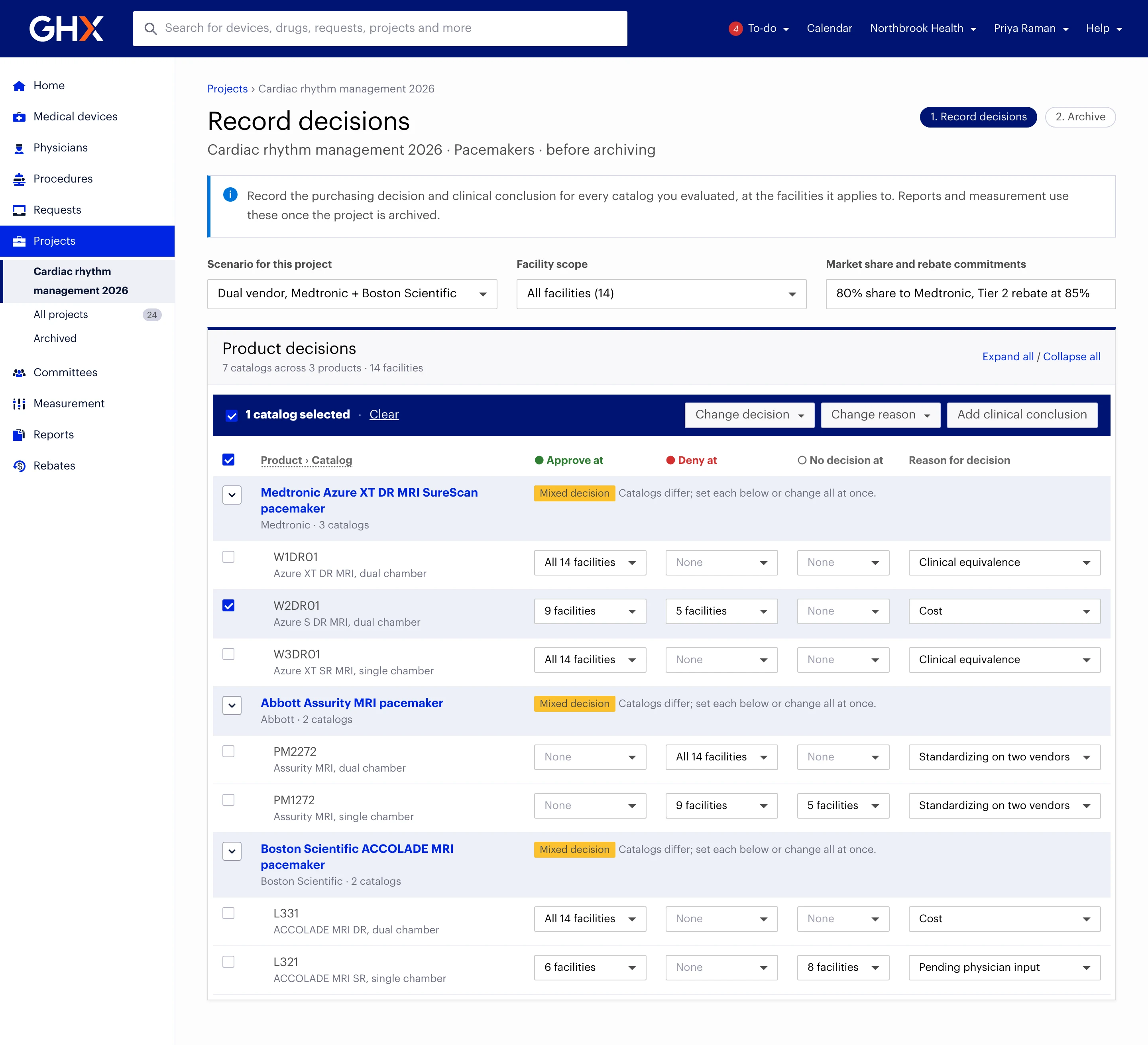
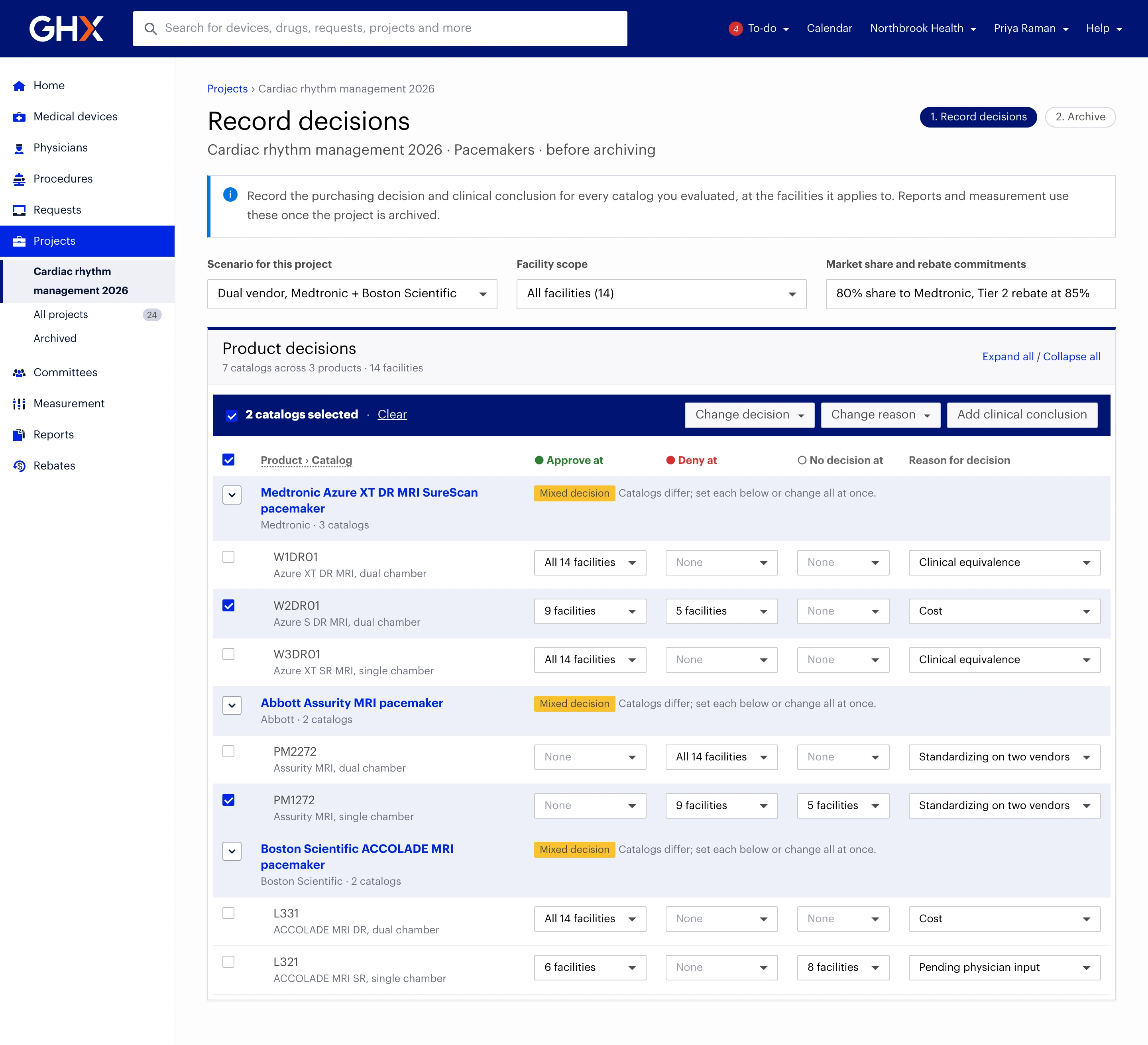
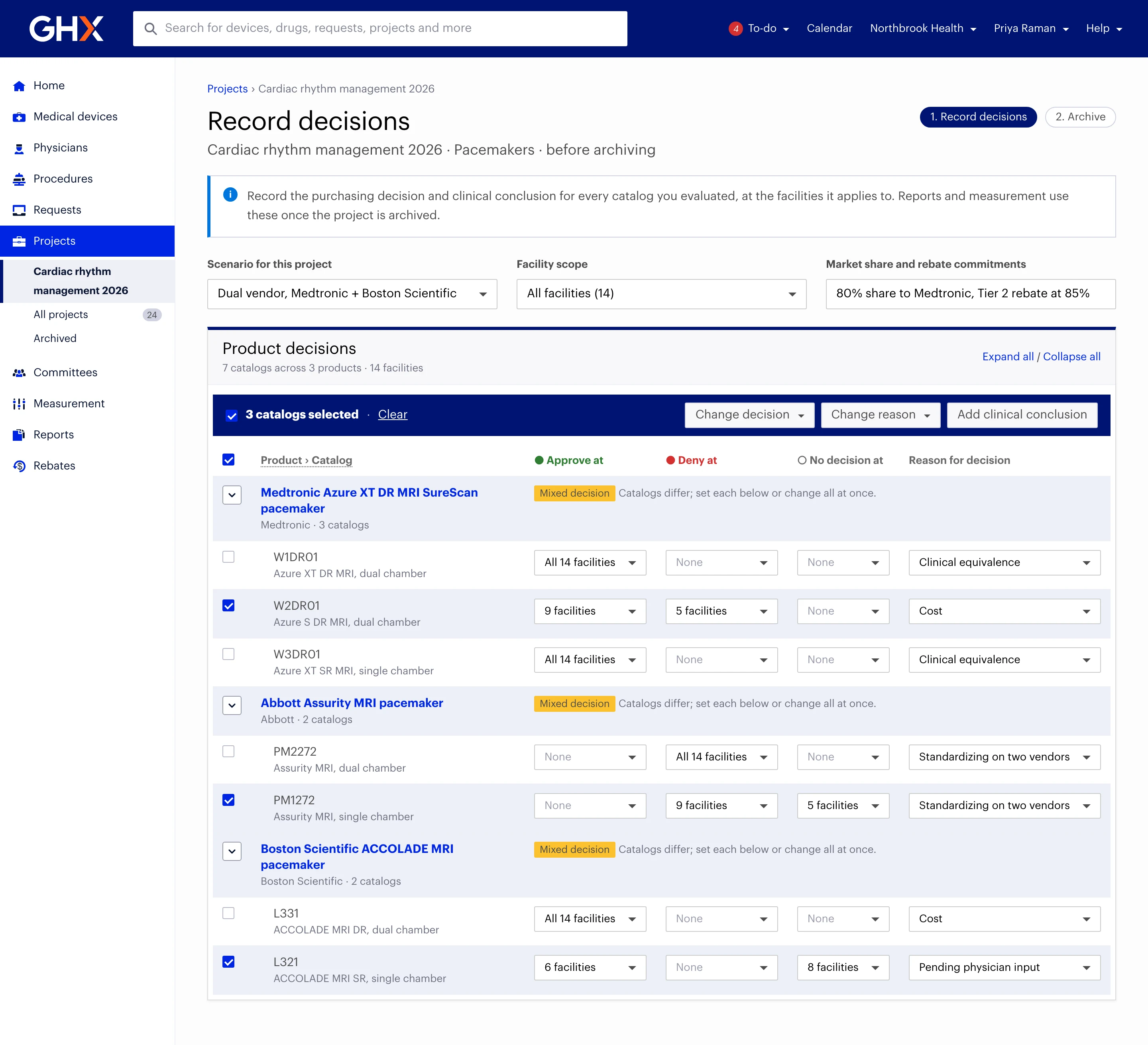
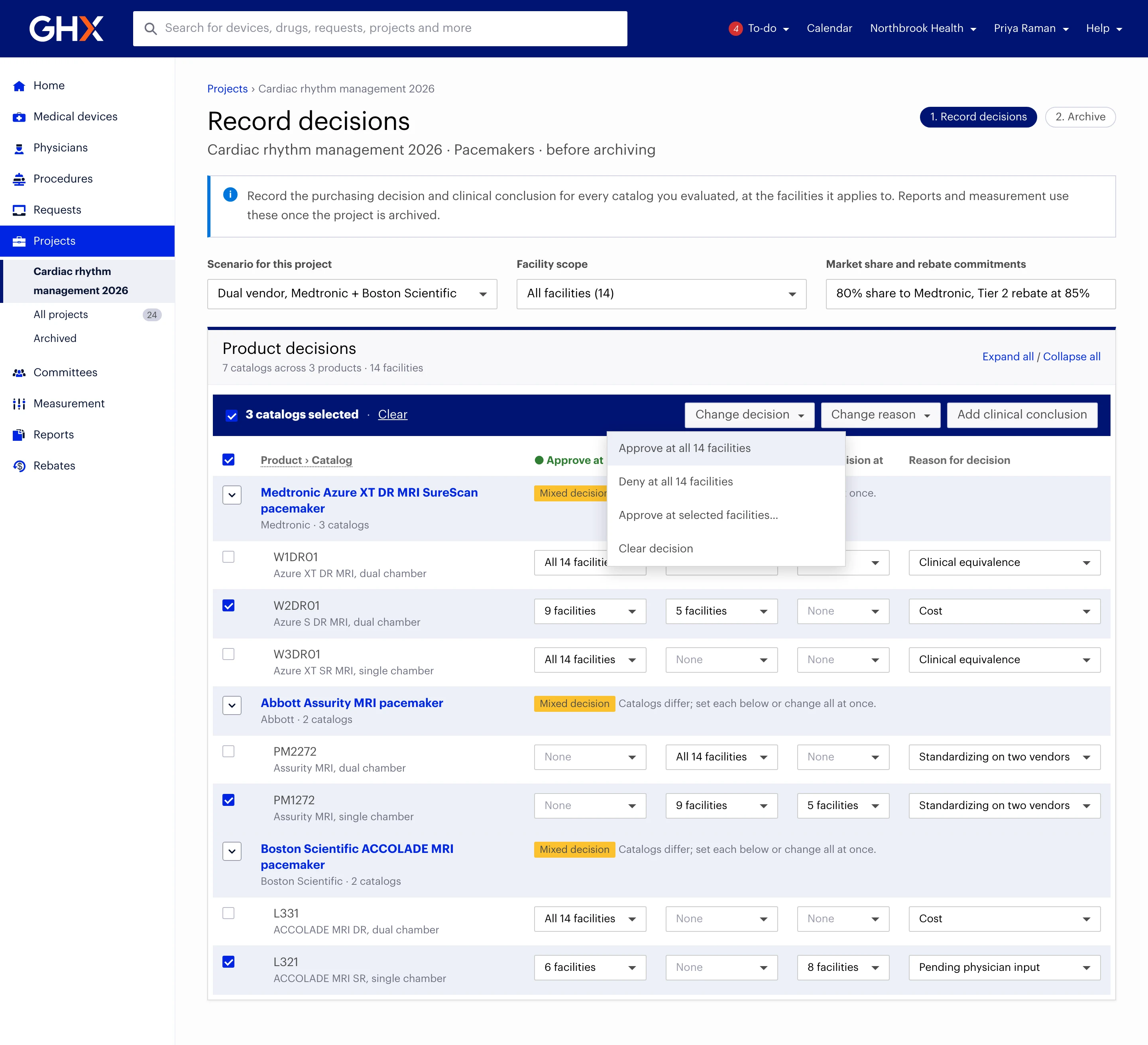
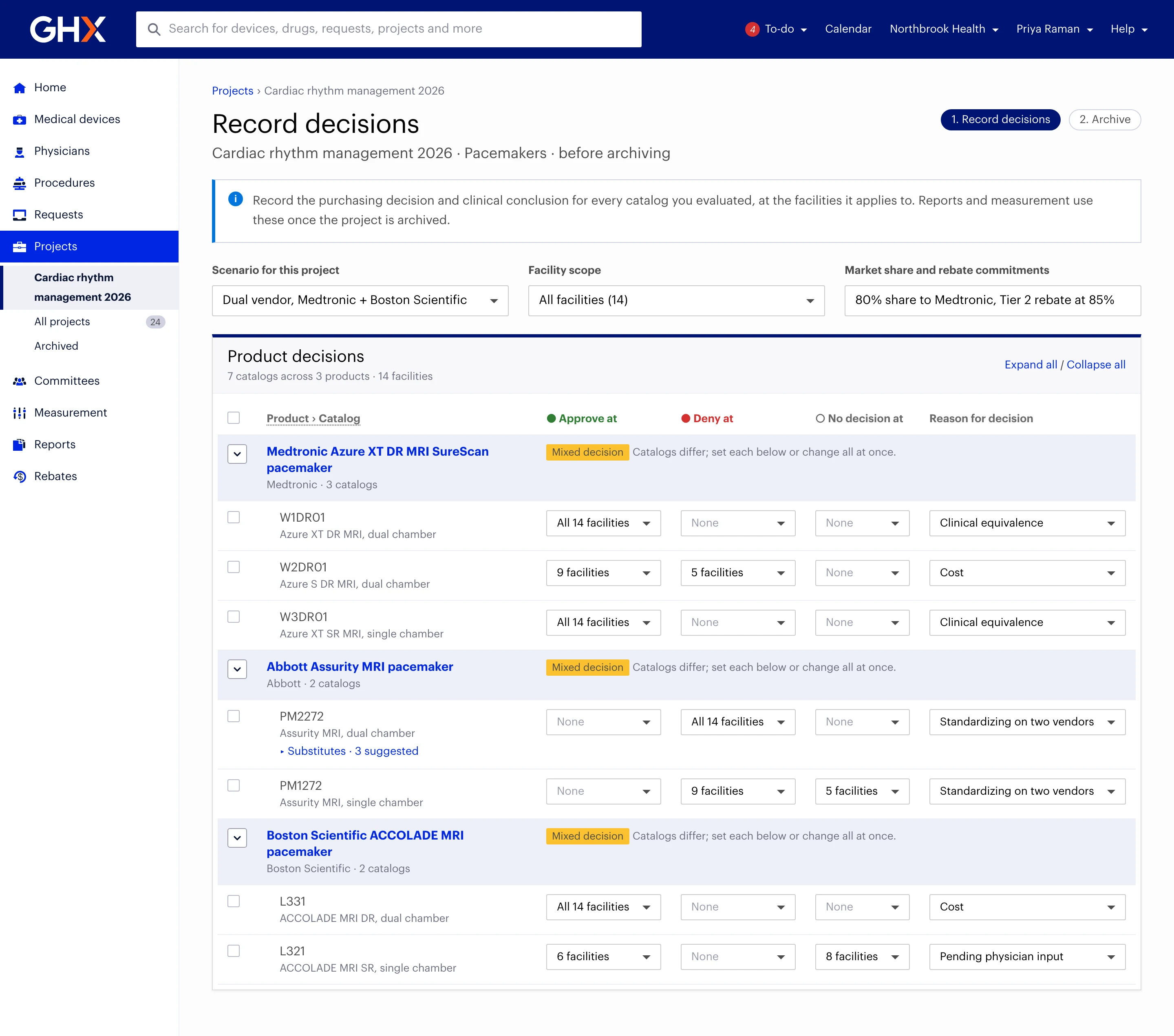
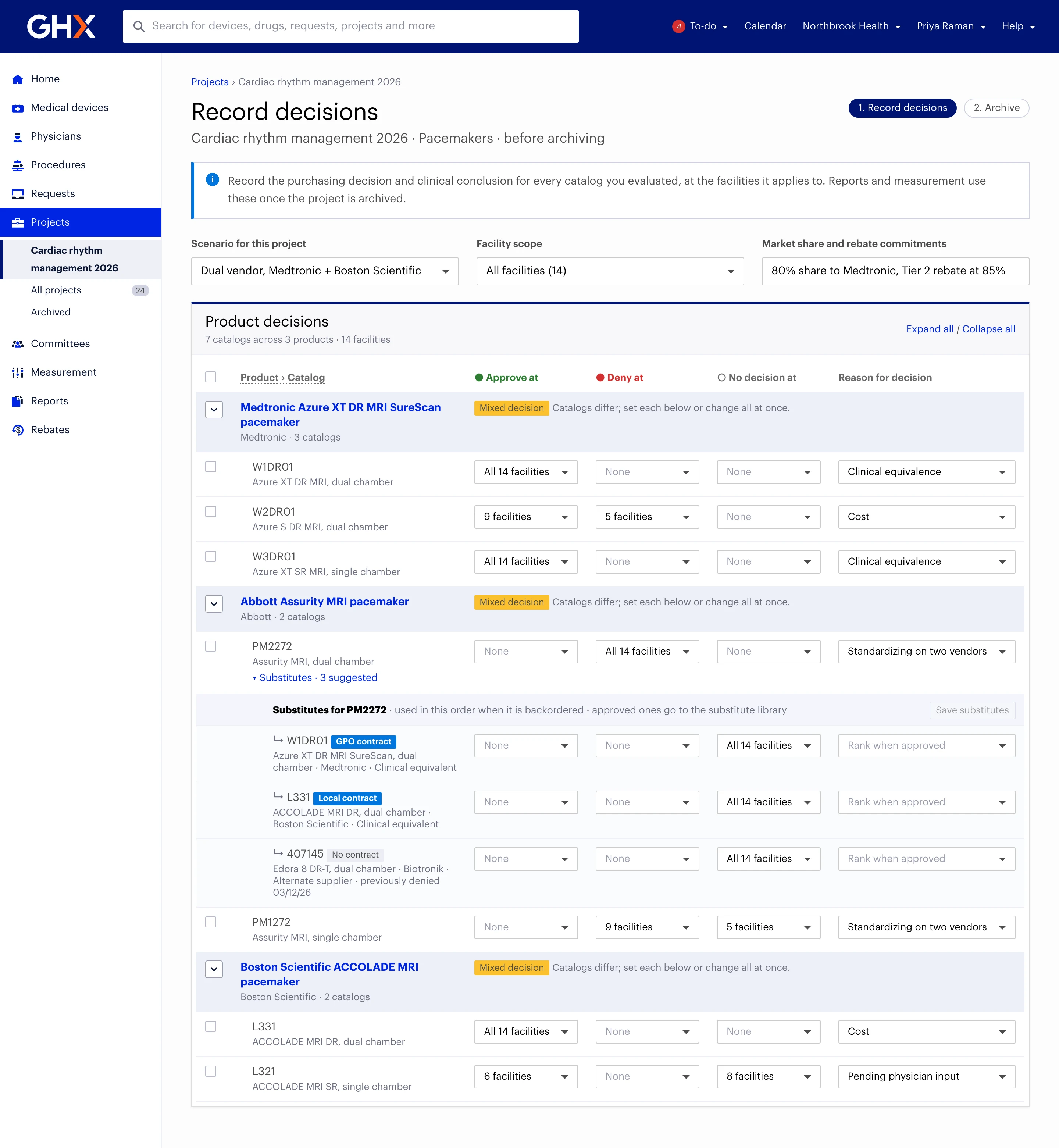
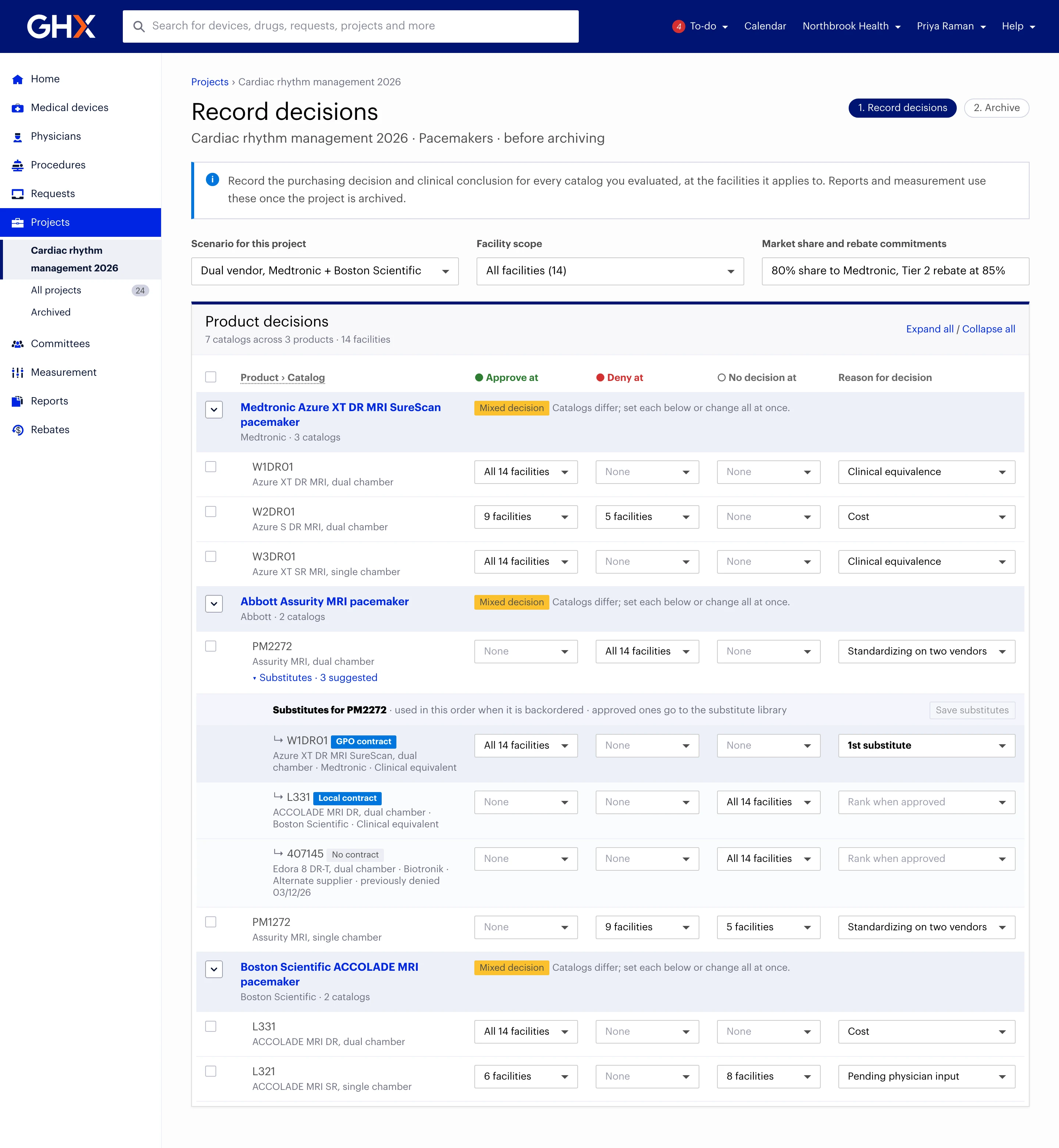
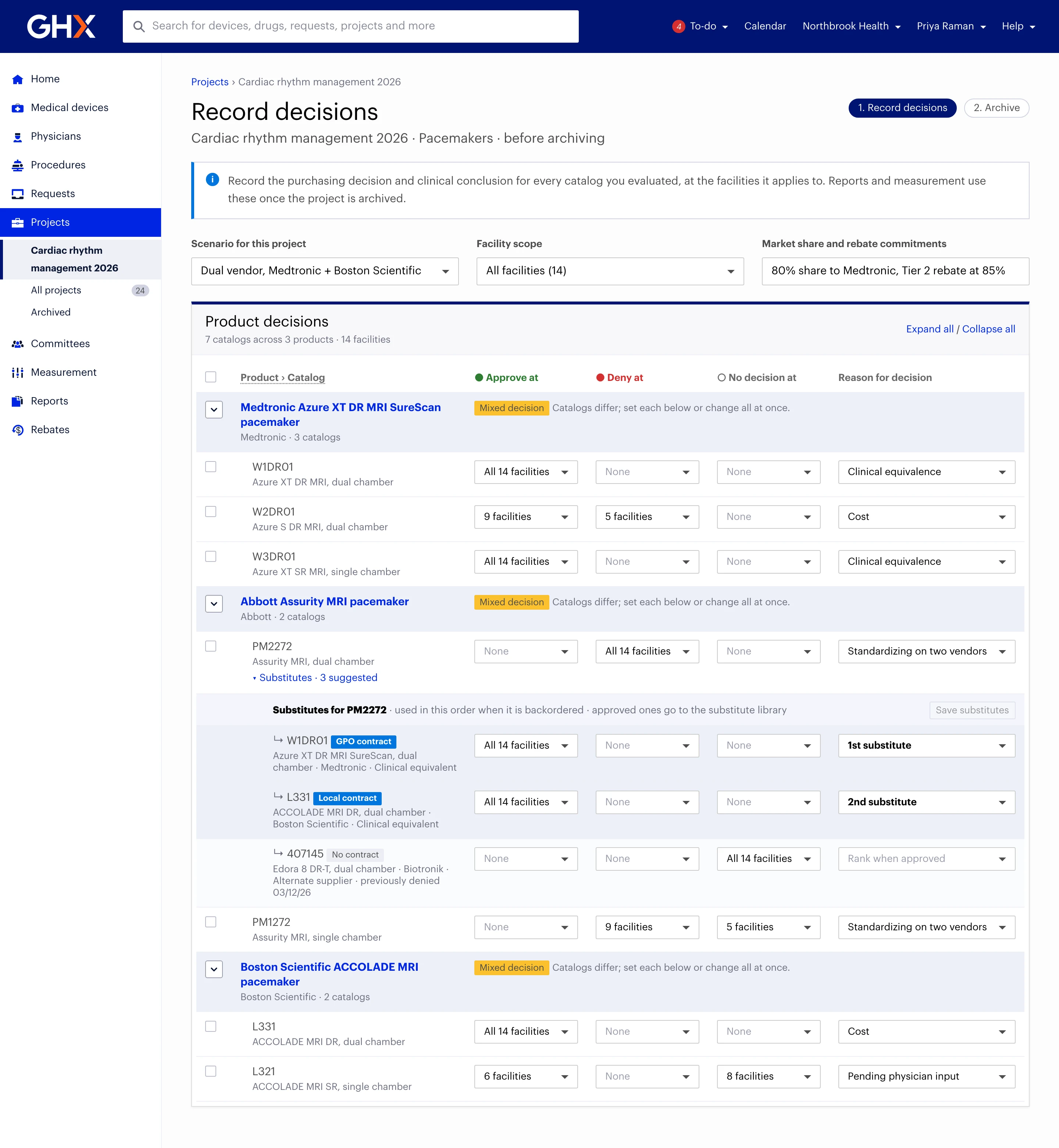
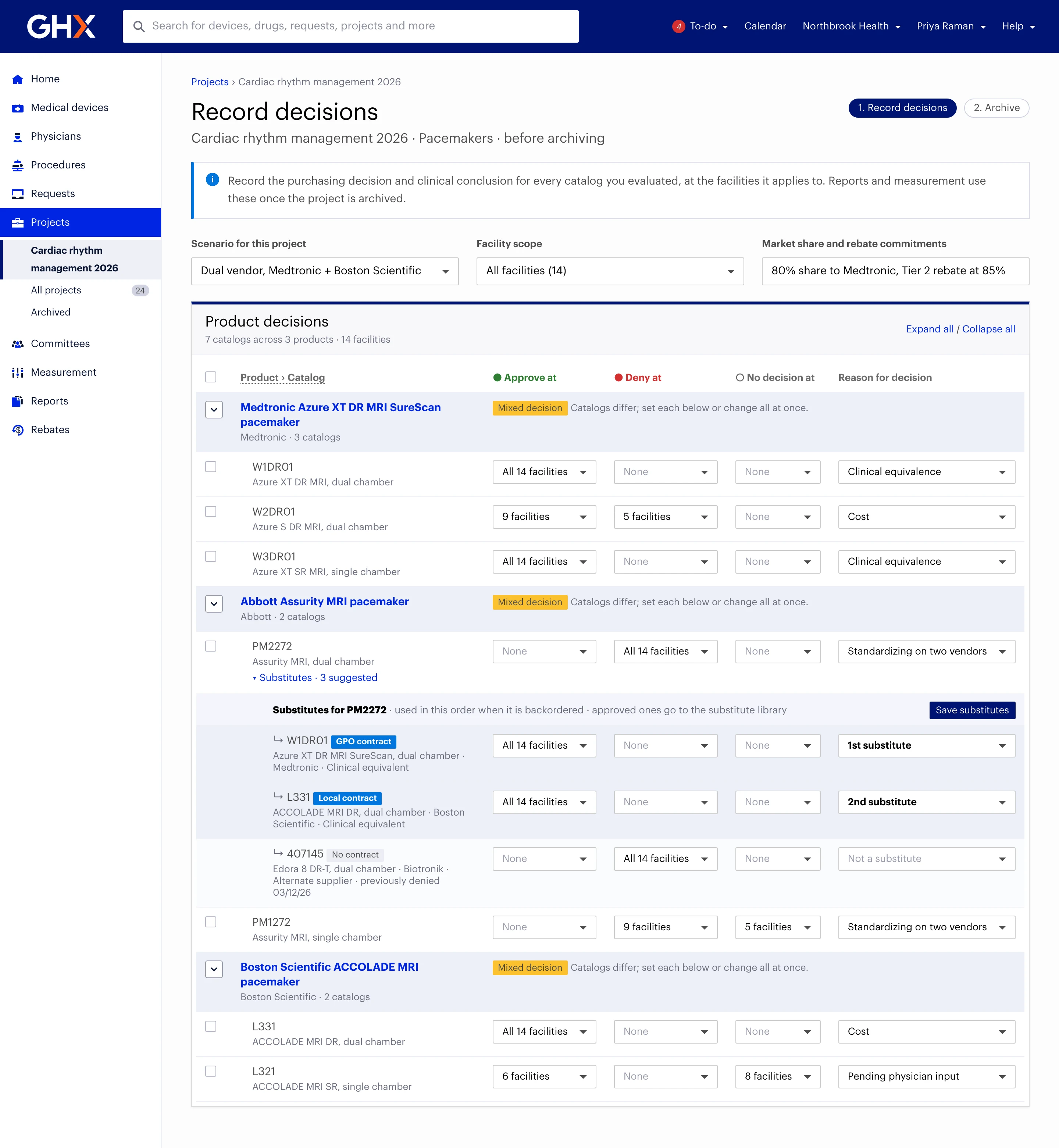
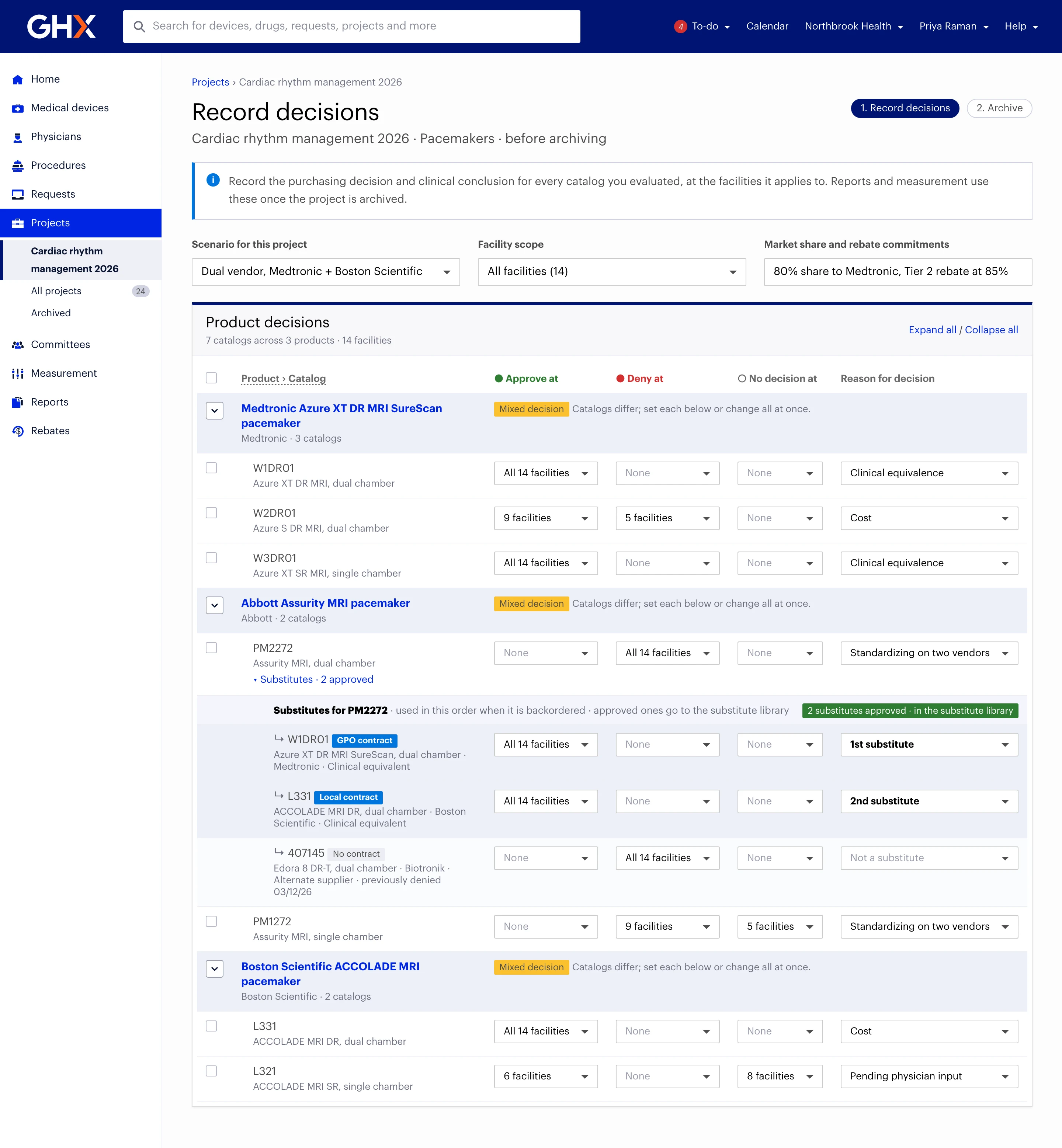
A project ends in decisions, and a product is rarely one decision. One size or configuration is approved everywhere, another only at the facilities with the volume, a third left for the physicians to weigh in. So decisions are recorded at the catalog level, across the project’s facilities, with a reason and a clinical conclusion, and many catalogs can change at once.
For a catalog the project moves away from, the committee also approves substitutes, ranked, and they go into the substitute library for when an item is backordered. Those decisions are what reports and measurement read after the project is archived.
05 · Design: Physician-level analytics
Why some cases cost more than others.
Every case for a procedure, sorted by cost, then what the expensive ones have in common.
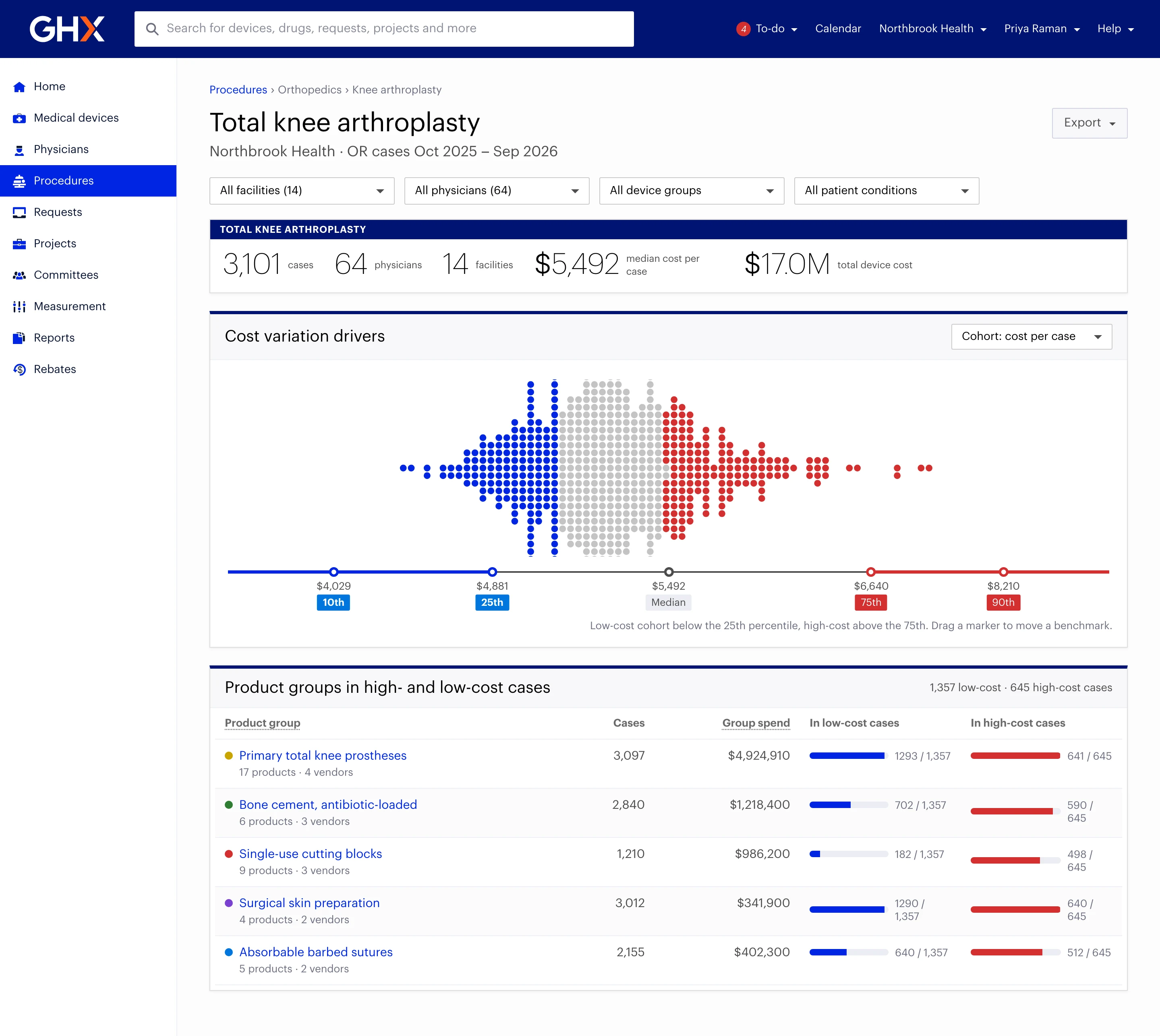
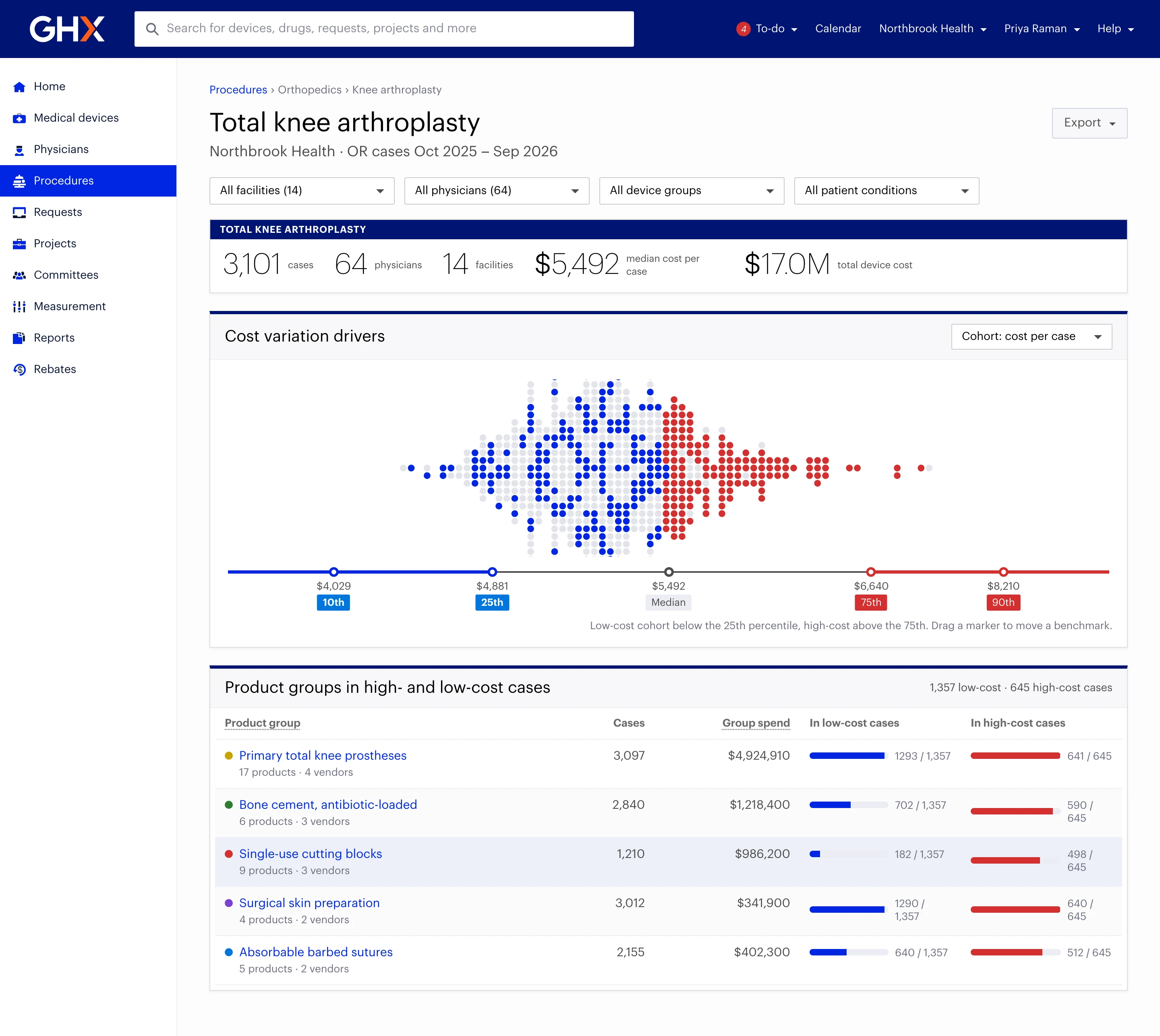
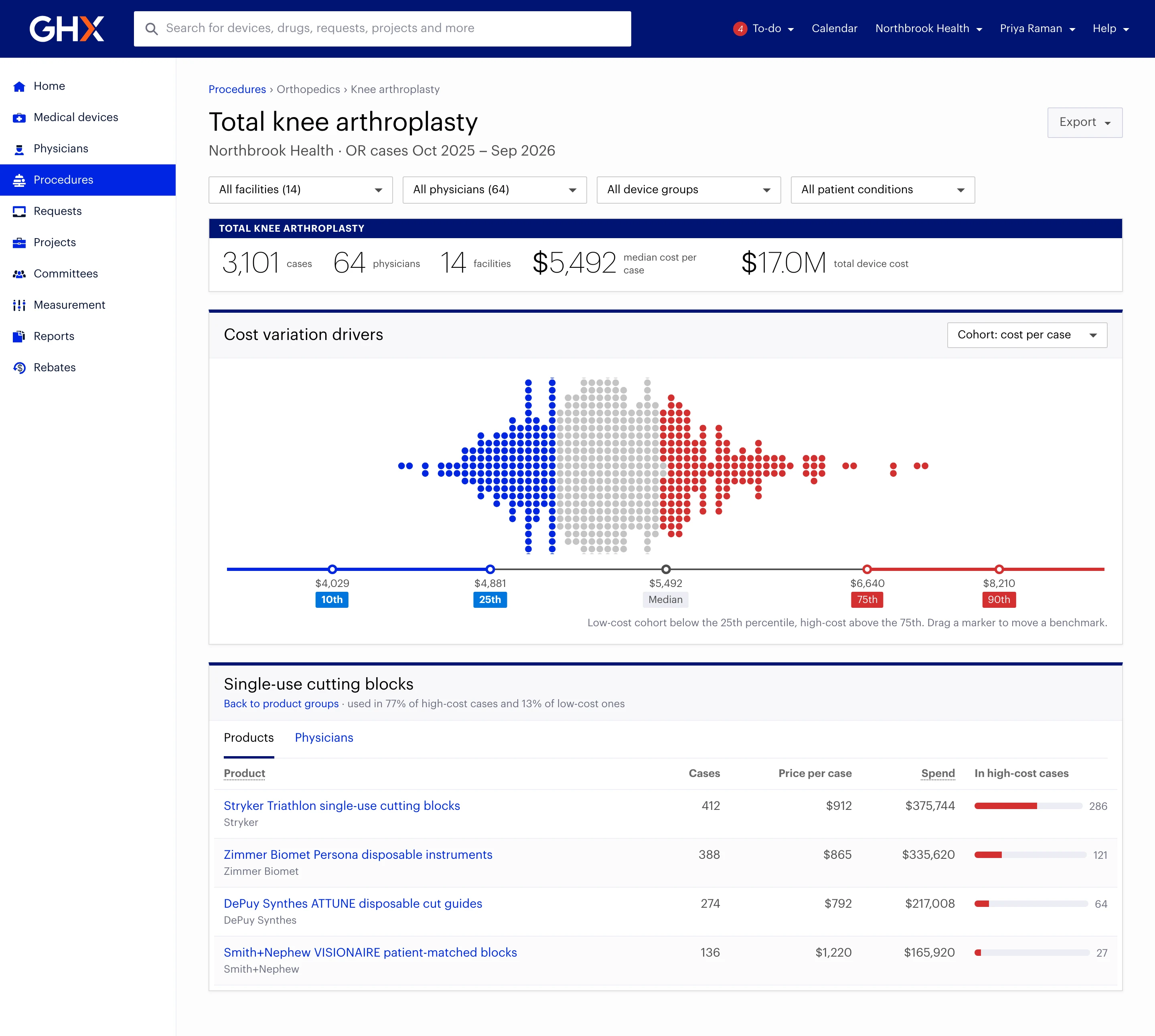
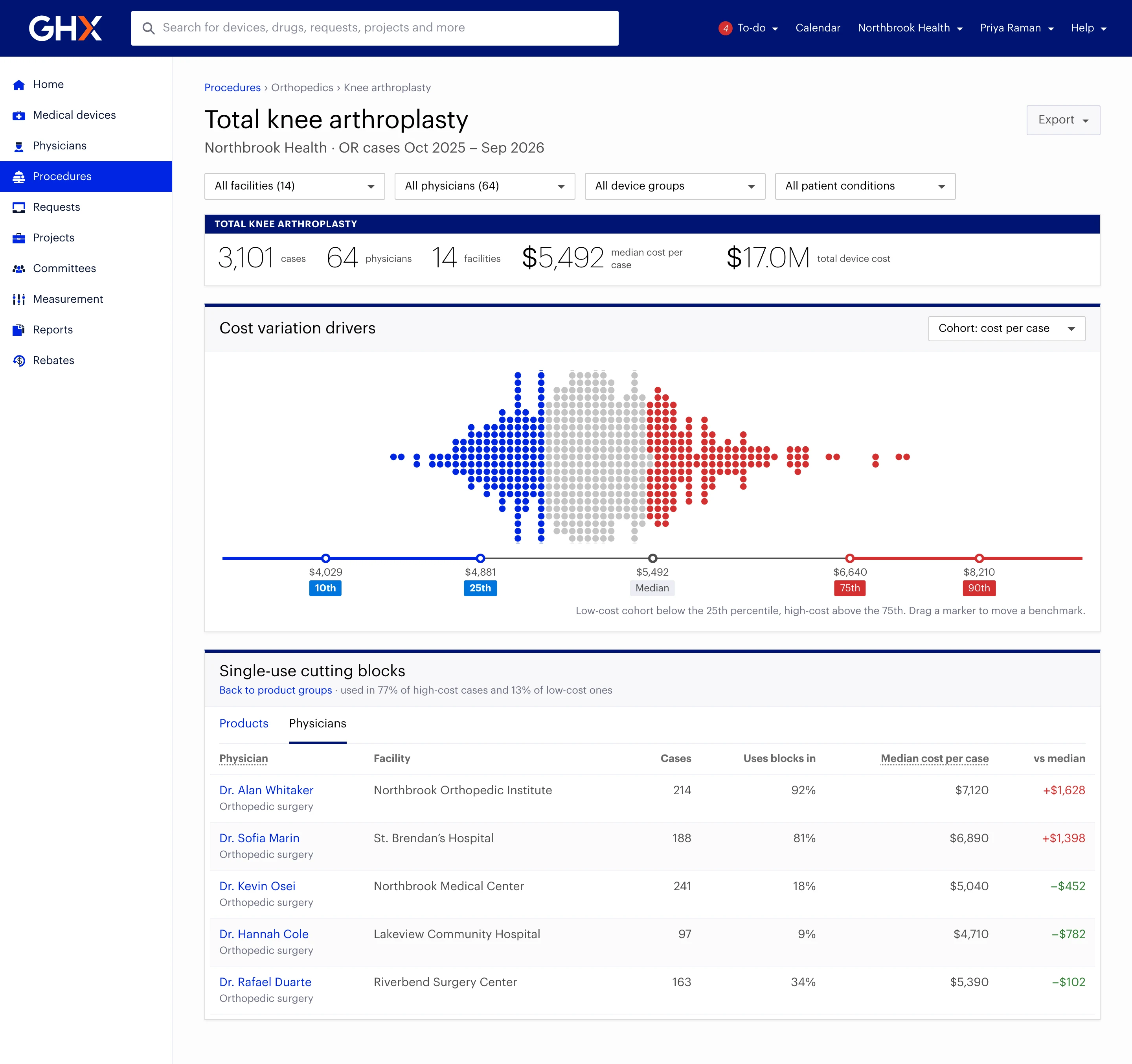
Cost per case for a procedure varies, sometimes widely. The analysis puts every case on one line from low cost to high, then compares the two ends: which product groups turn up more often in the high-cost cases, which products inside a group, and which physicians.
GHX describes the point of this as supporting discussions with clinical teams. The design follows that: it shows patterns a supply chain team can bring to physicians, with the cases behind every number.
06 · Design: Rebate intelligence
Money a contract promised, and whether it arrived.
What each contract has earned, what was paid, and which tiers are still within reach.
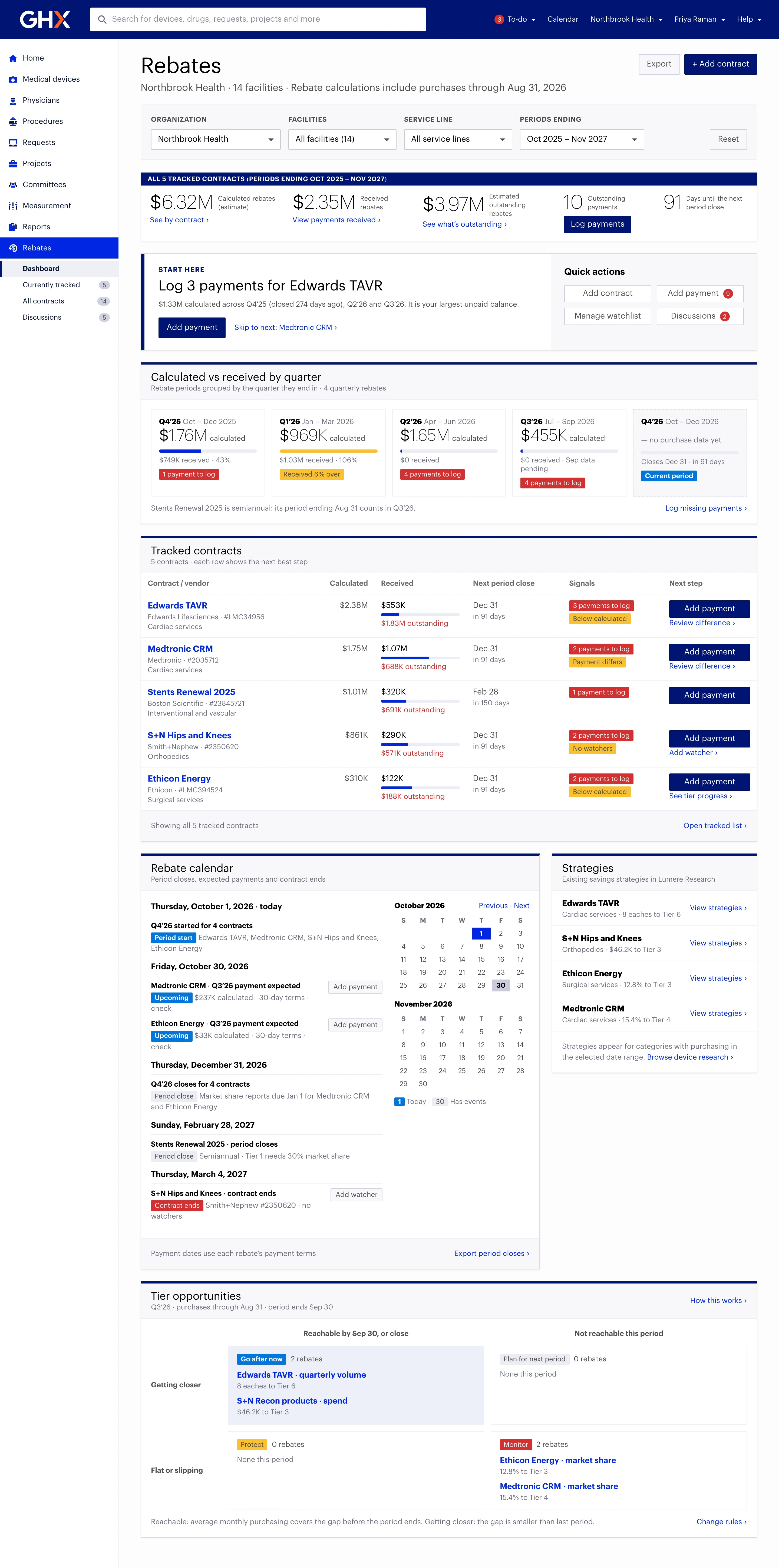
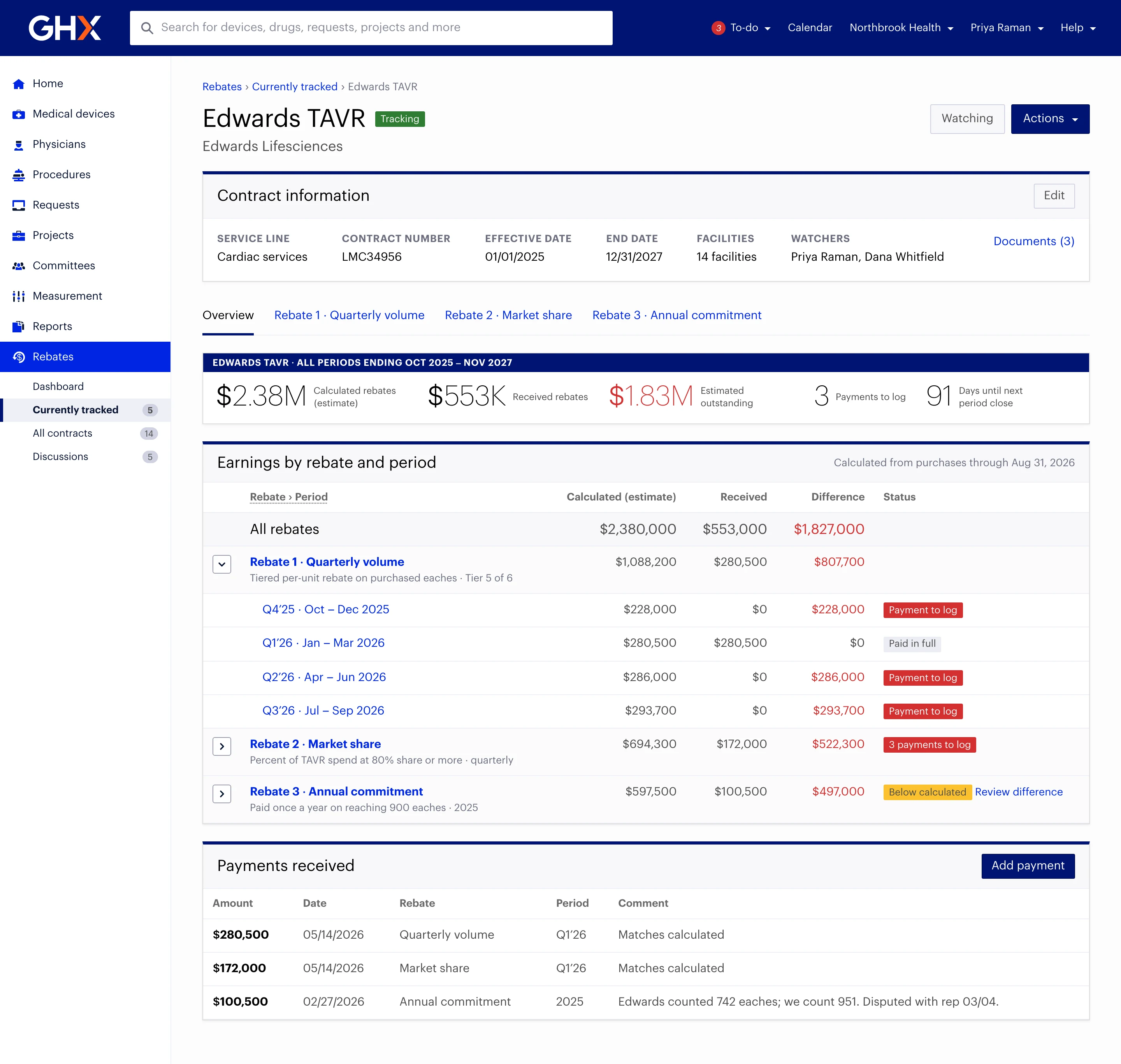
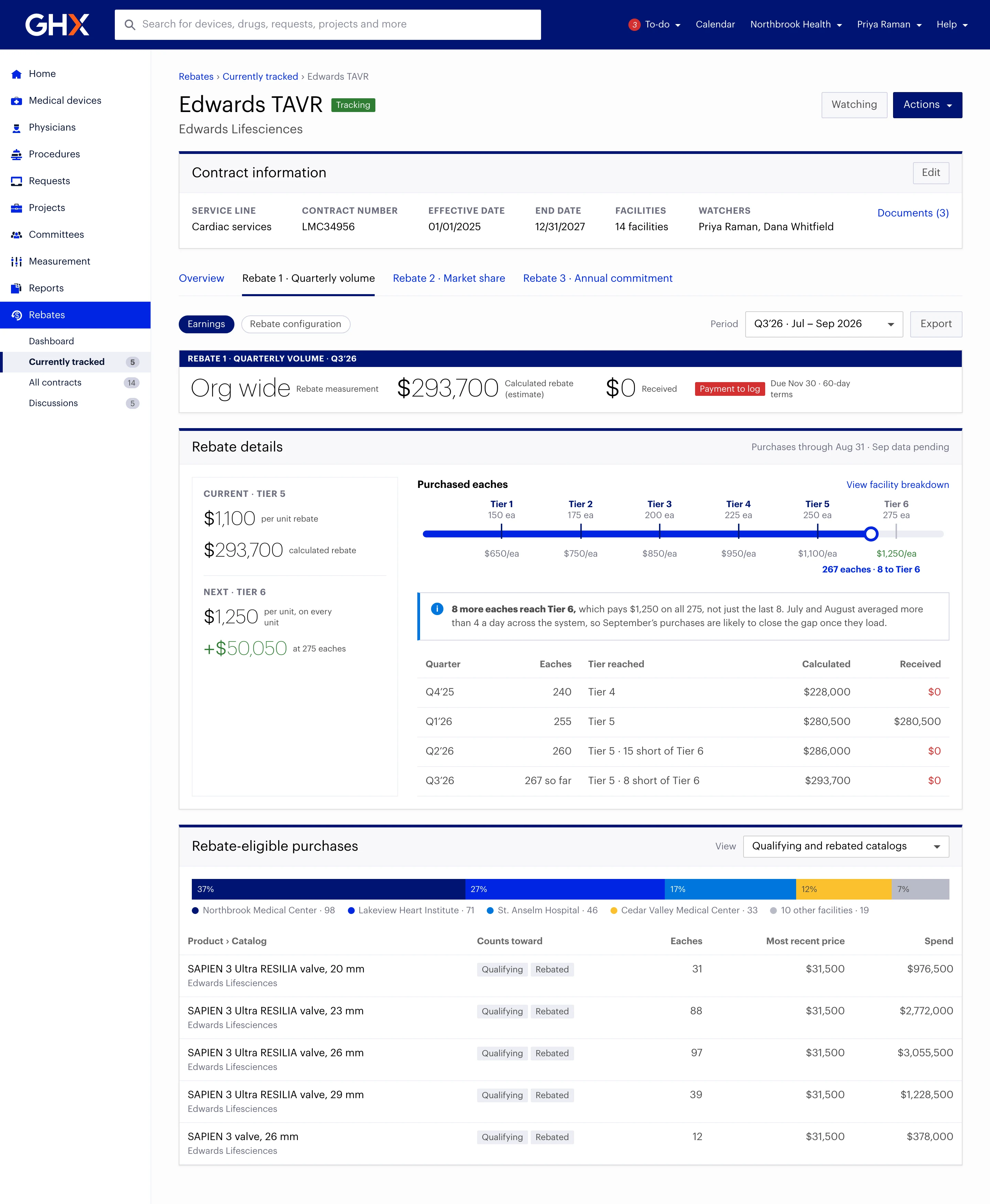
Device contracts often pay rebates in tiers, by volume, spend or market share. Rebate intelligence tracks those commitments, compares what a hospital should have earned with what was paid, and finds rebate dollars that were missed.
The dashboard starts from what someone can act on today: the payments still to log, the money that came in short of what was calculated, and the tiers still within reach this period. From there, a contract breaks down by rebate and period, and each rebate shows the tier it is on, what the next one pays, and the purchases that count toward it.
07 · Design: Category optimization
Comparable products, side by side.
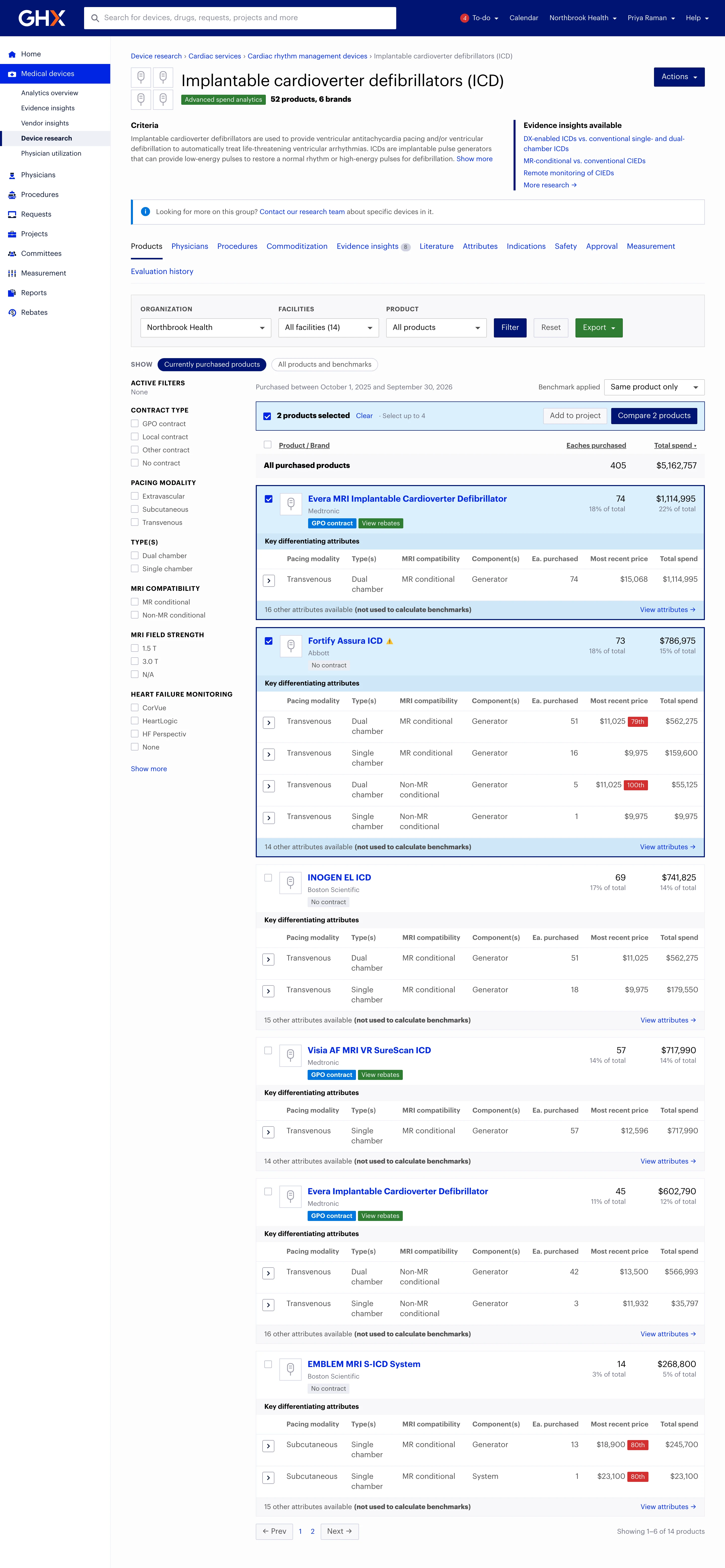
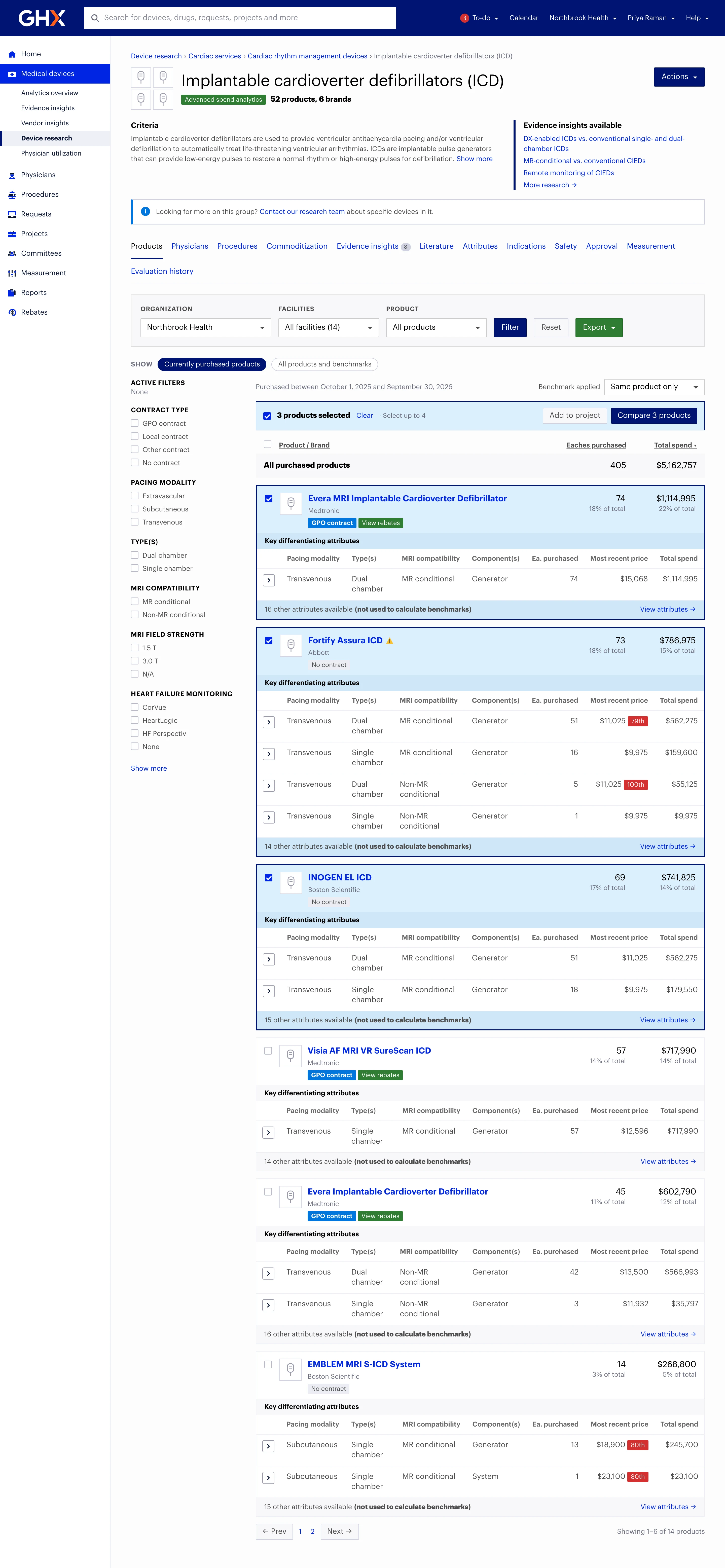
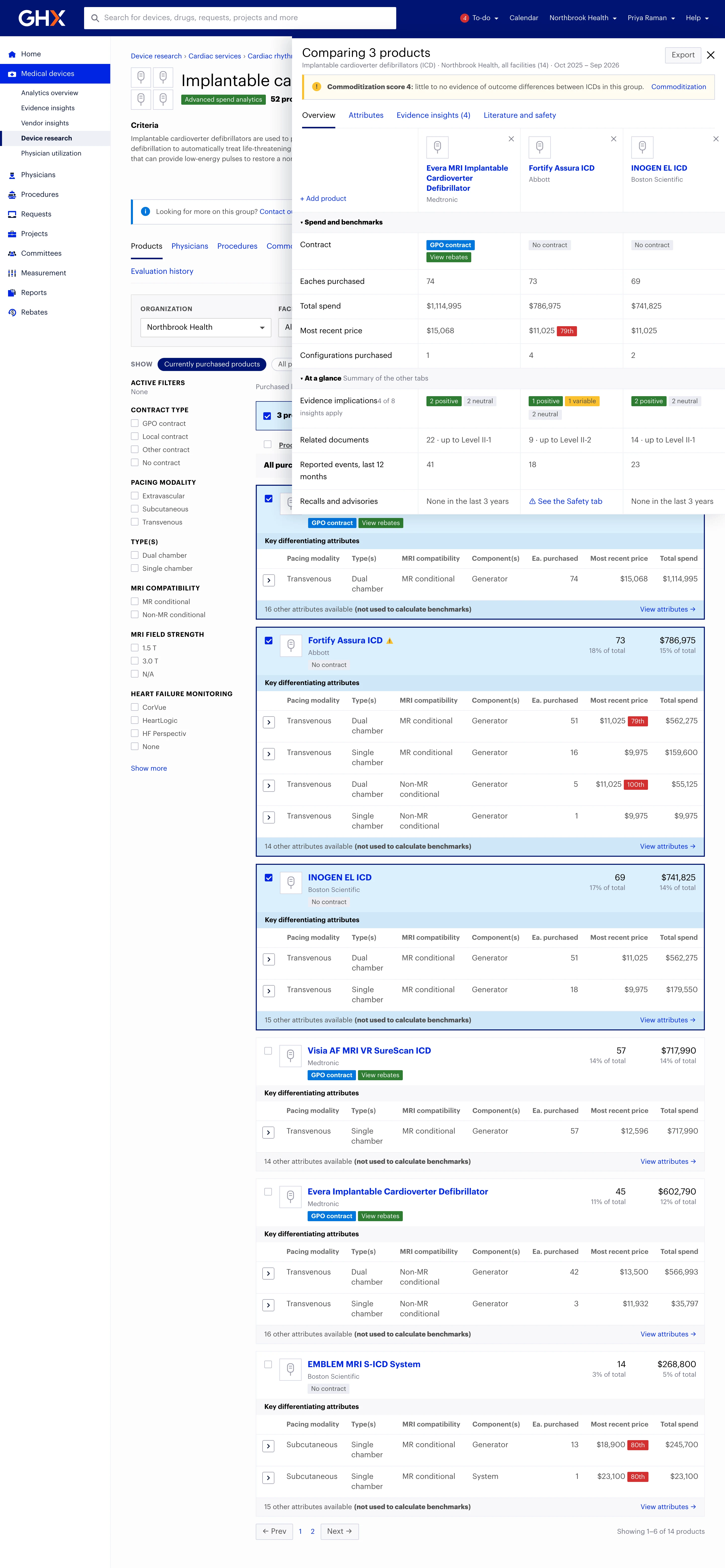
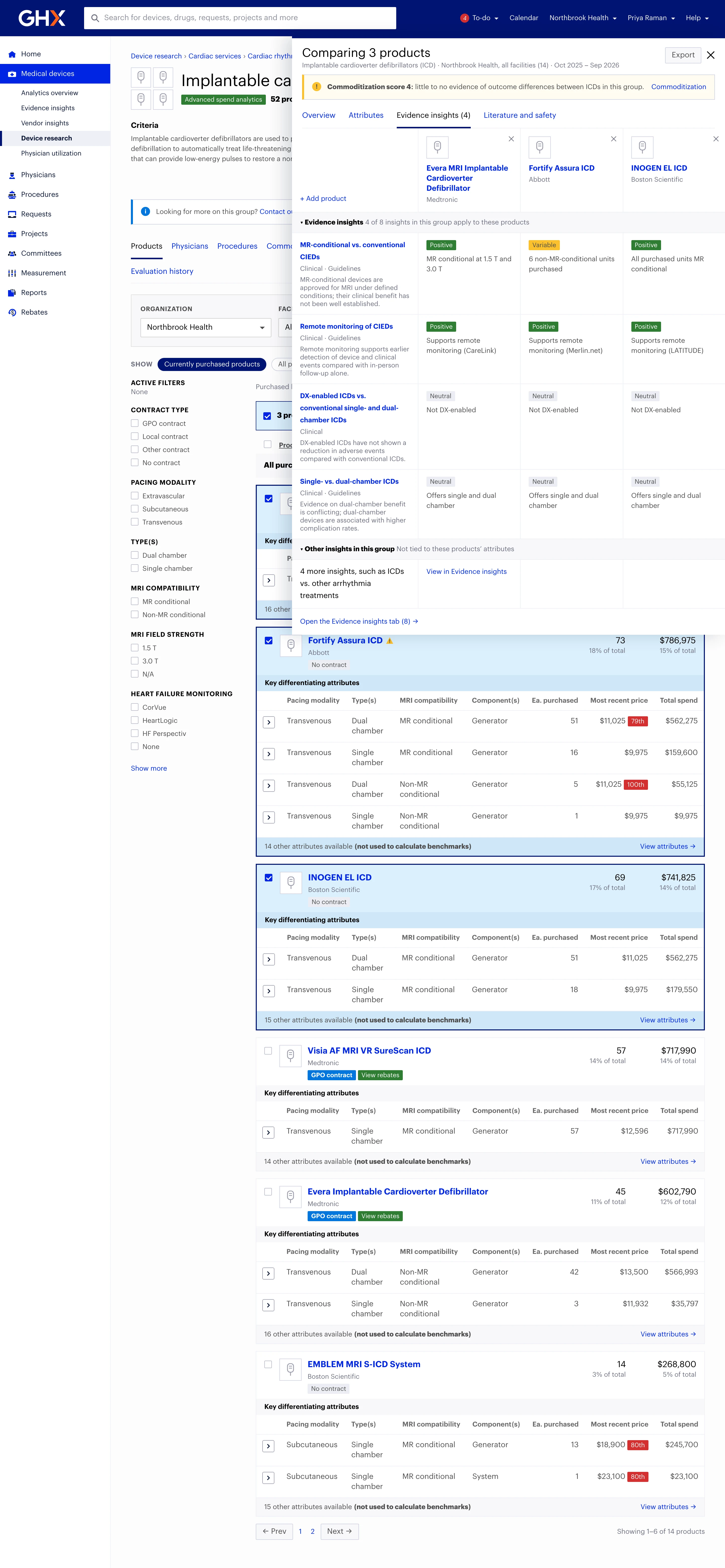
A product group compared on spend, contracts, attributes and what the evidence says about each product.
By product group
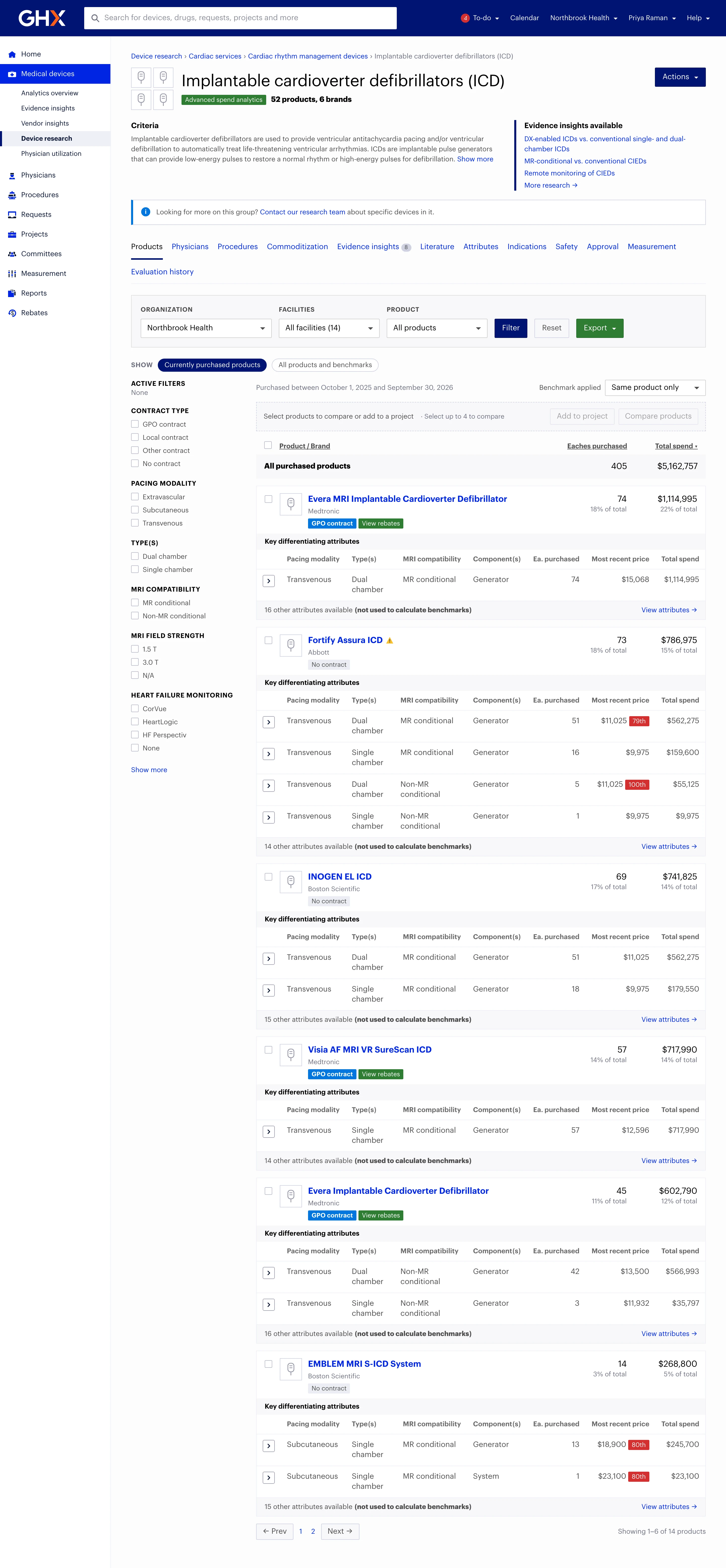
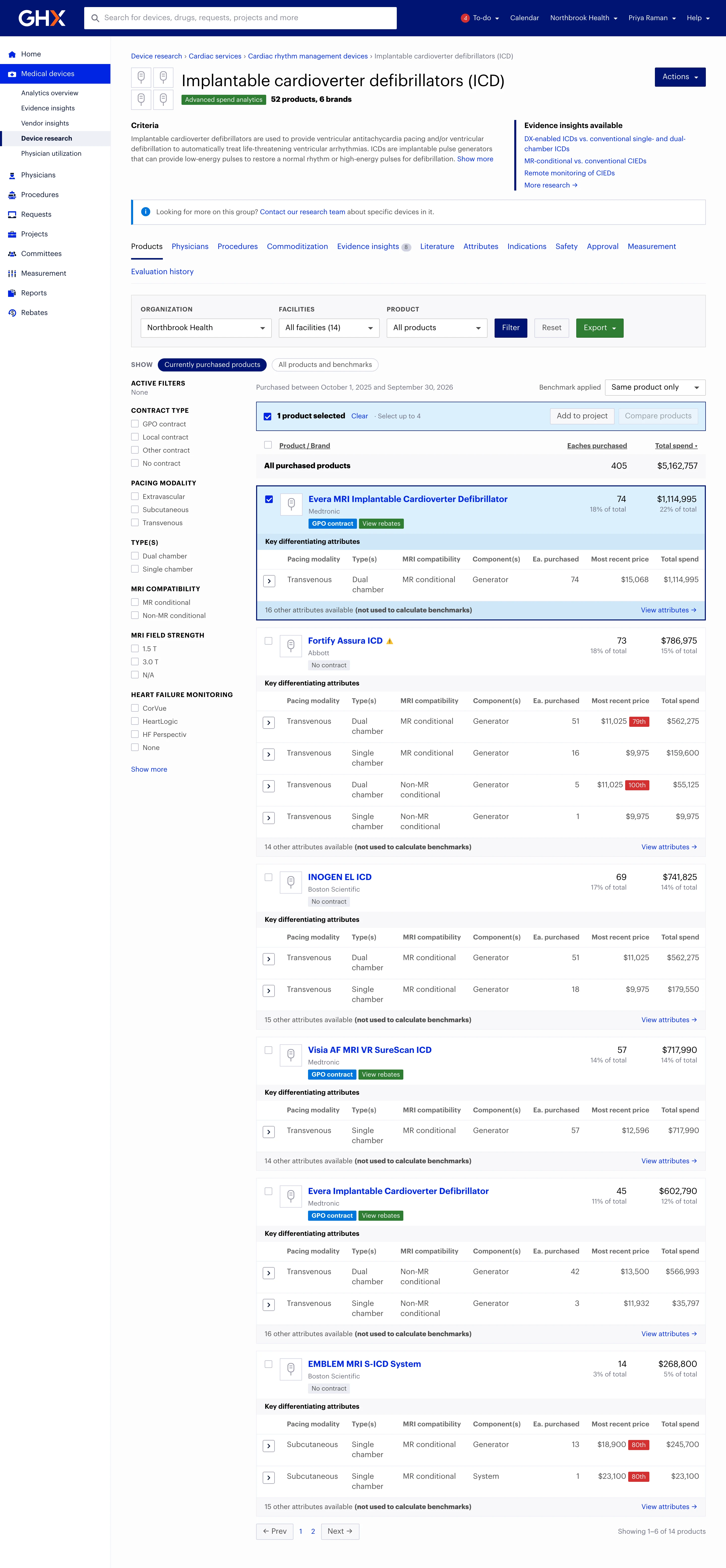
By vendor
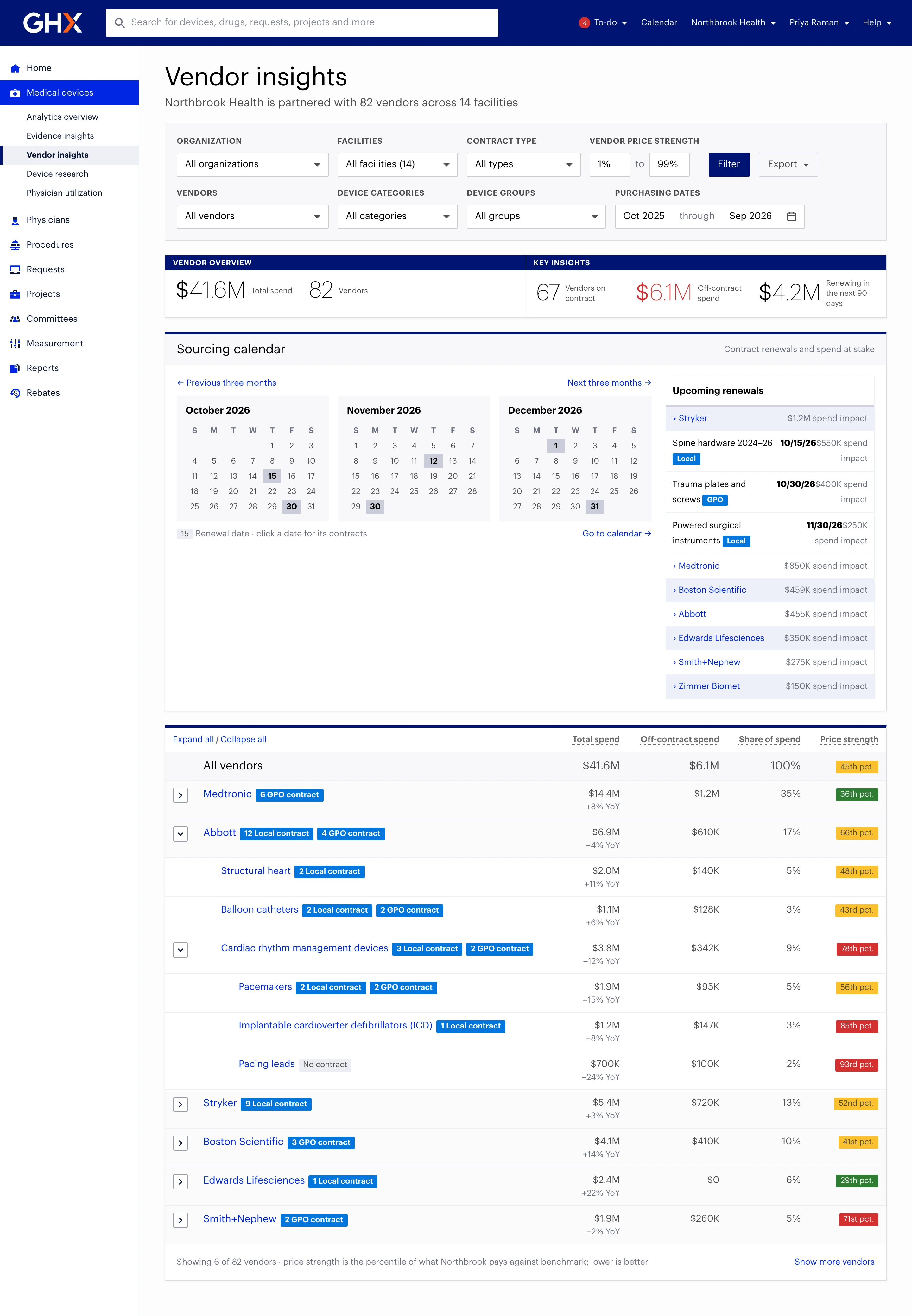
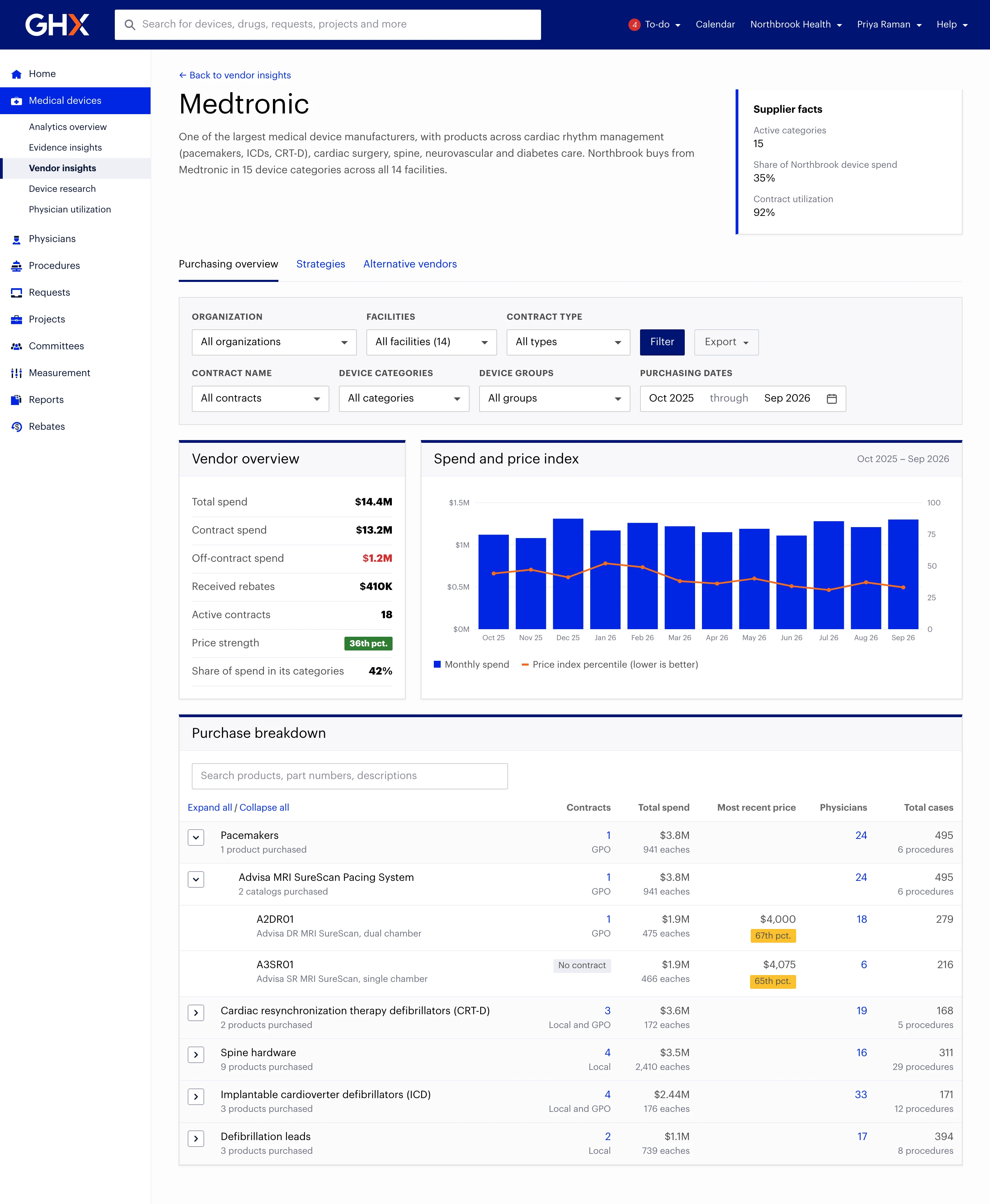
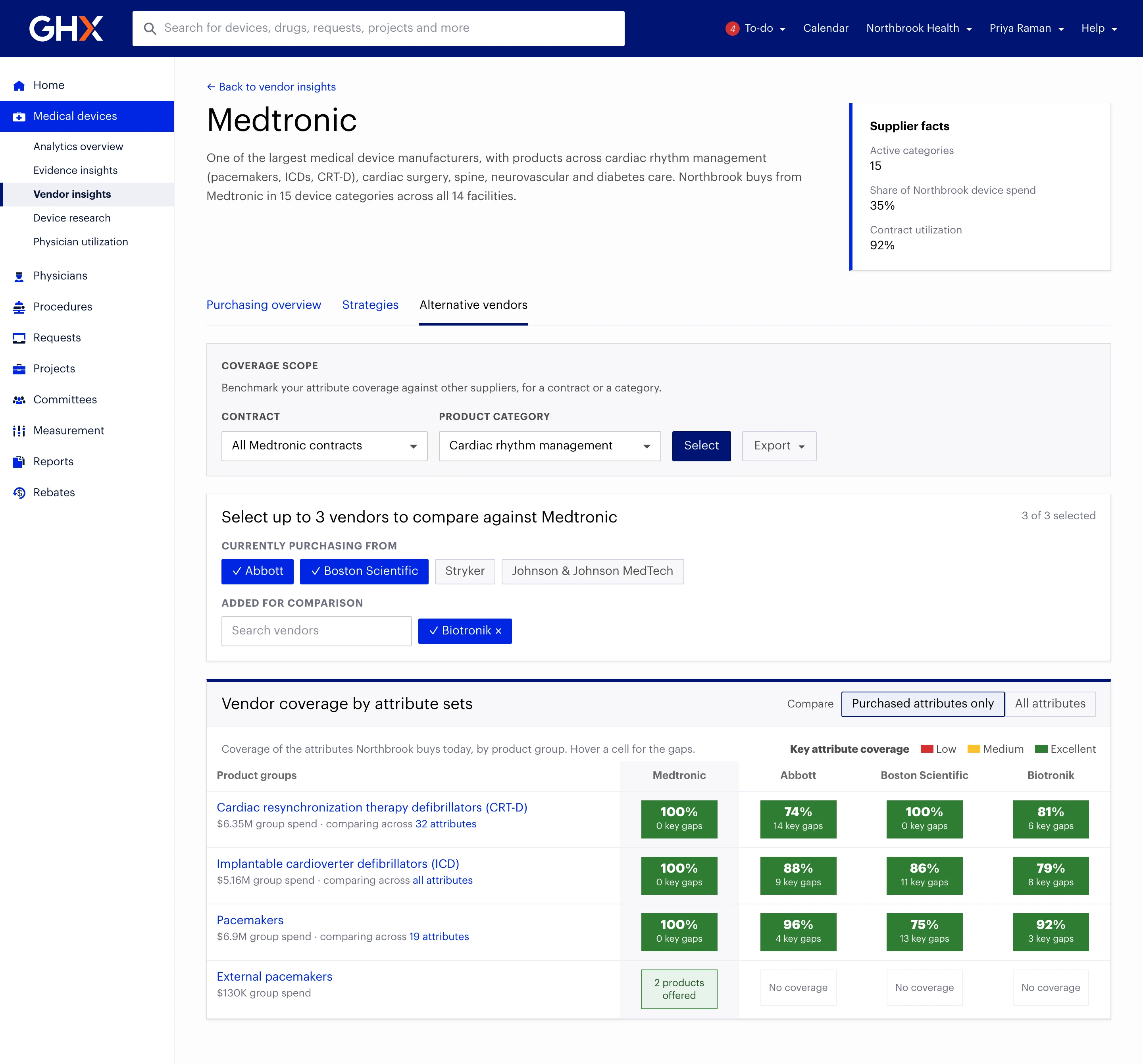
Category optimization looks at a whole group of comparable devices at once, using the hospital’s own purchasing data. Each product shows its contract, the attributes that tell it apart, and what the system paid against a benchmark. Picking a few opens them side by side over the list, so it is easier to see where a system pays more for a product the evidence rates the same.
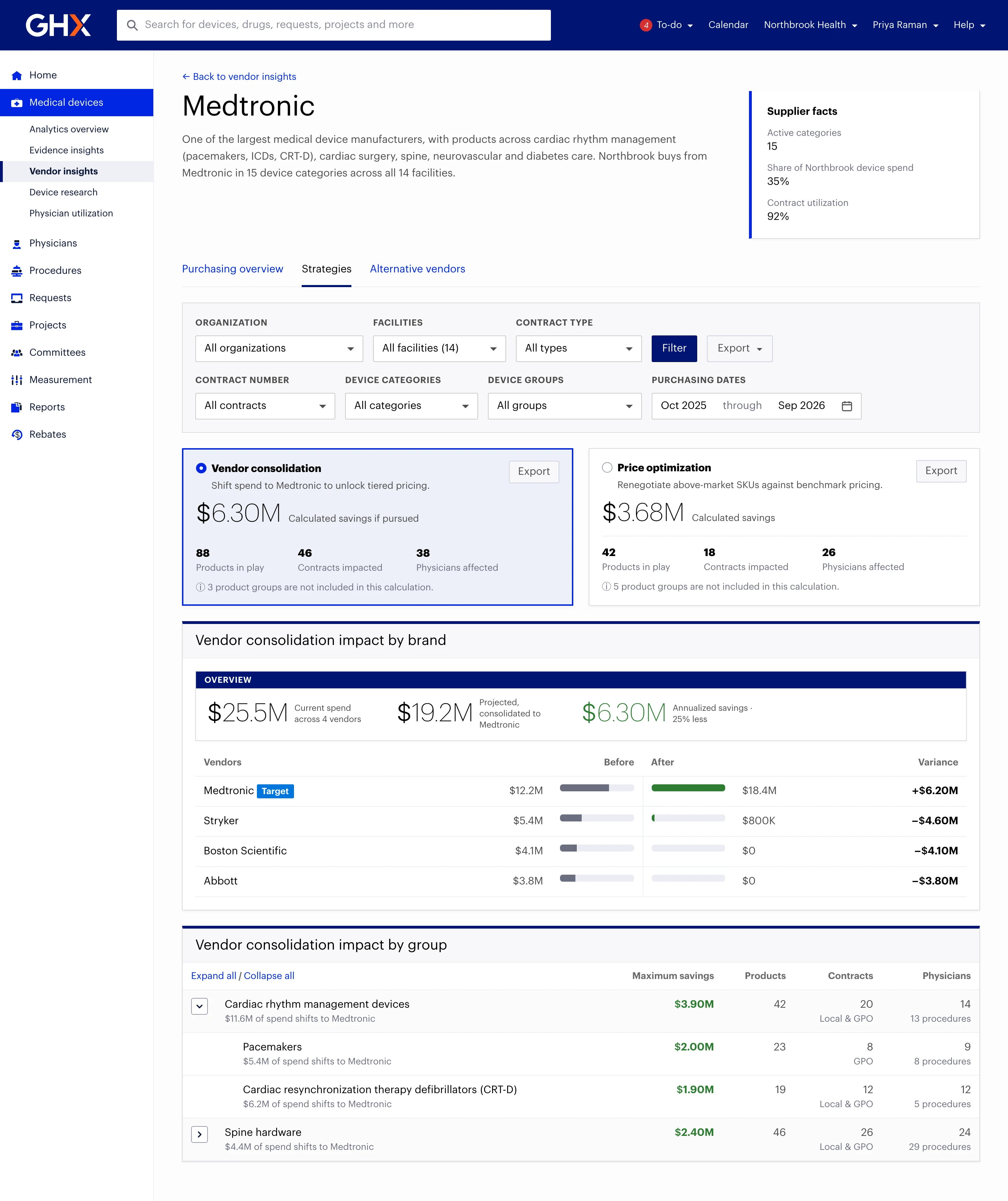
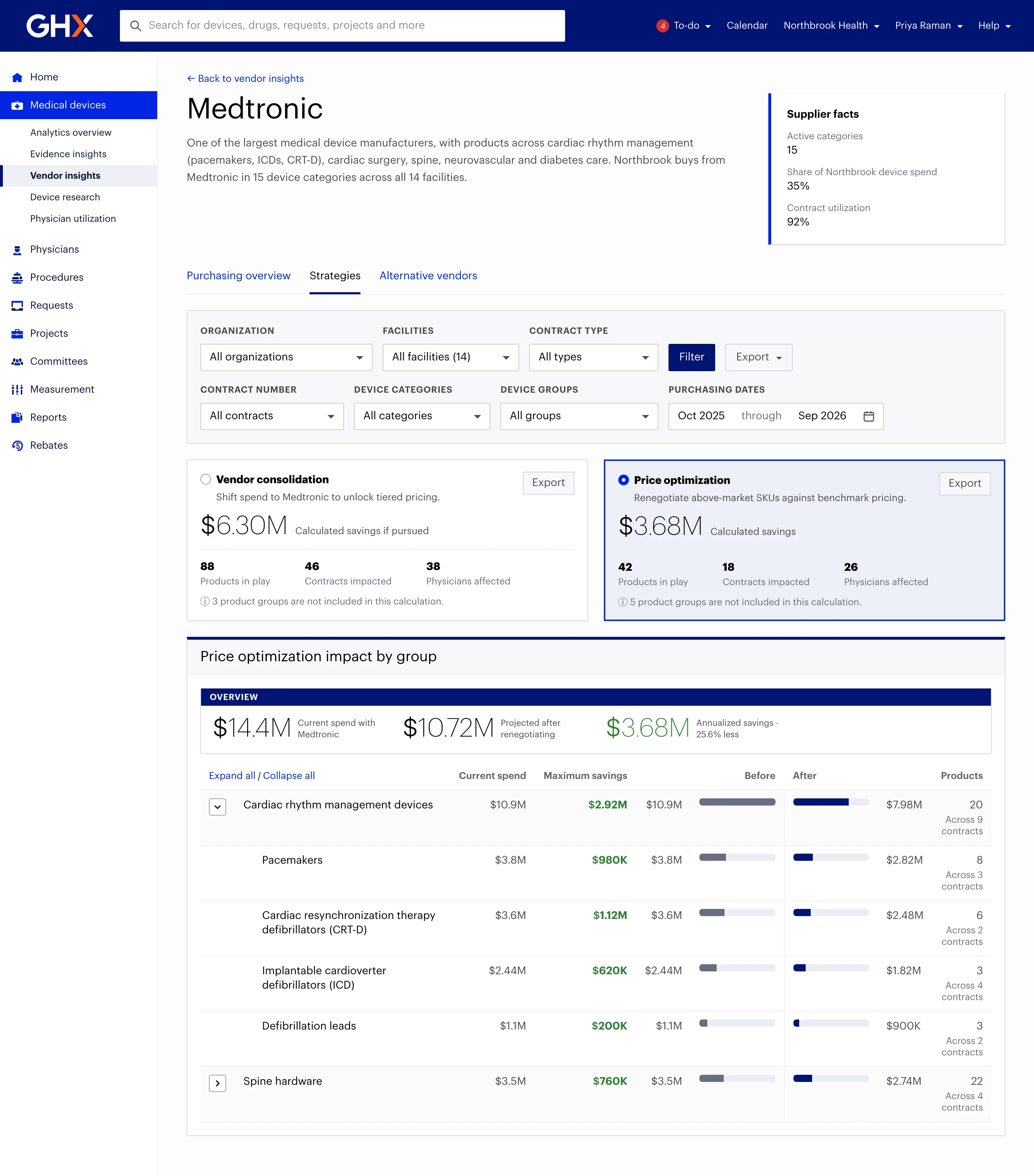
The same question can start from a vendor instead of a product group. Vendor insights lists every vendor a hospital buys from, with its off-contract spend and how its prices compare, and each vendor opens on what the hospital buys from it, priced strategies (consolidate with that vendor, or renegotiate what is above market) and how well other vendors cover the same products.
08 · Design: AI orchestration
Agents that work the orders, in the open.
AI agents work the orders between hospitals and suppliers, and hand people only what needs a decision.
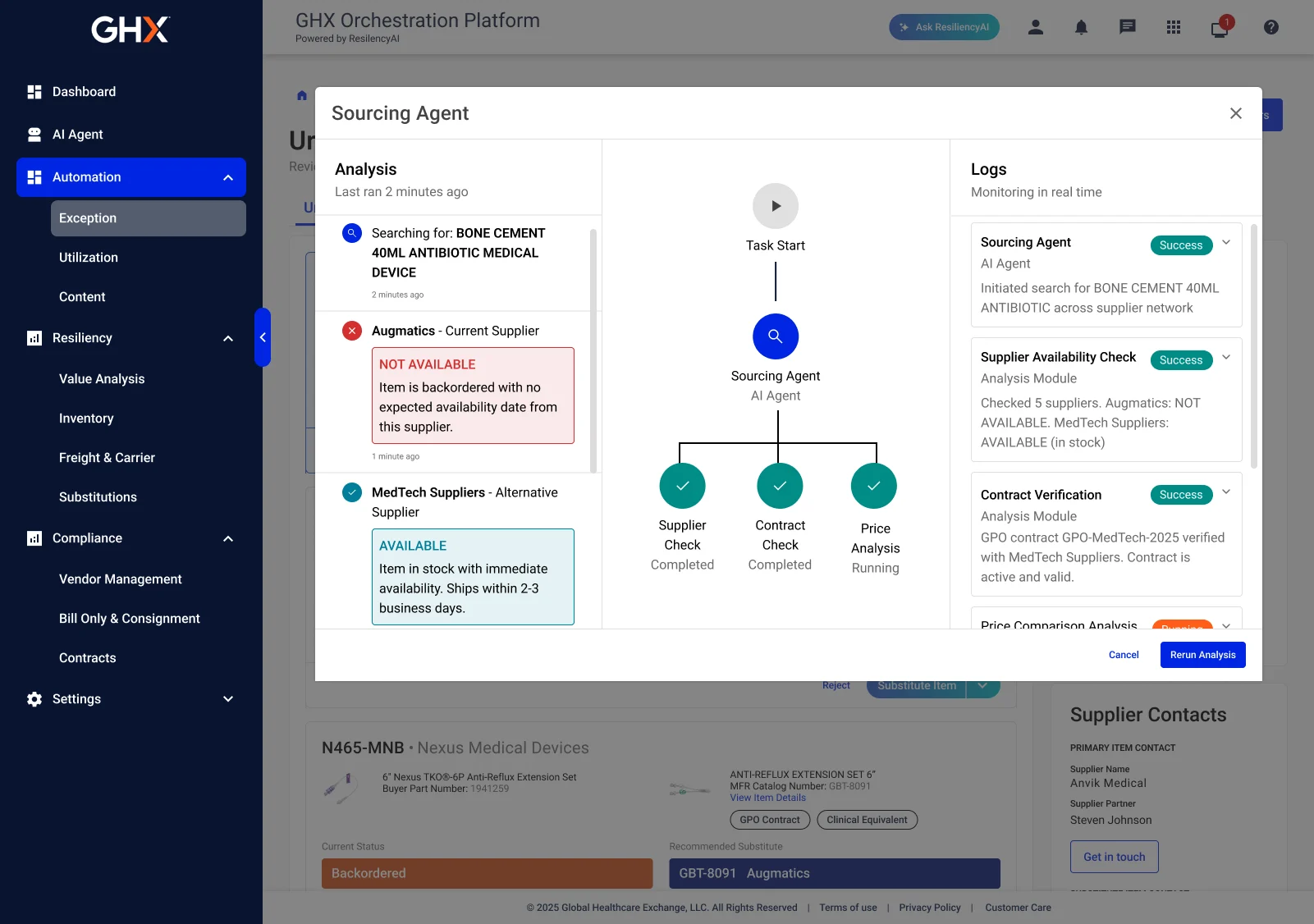
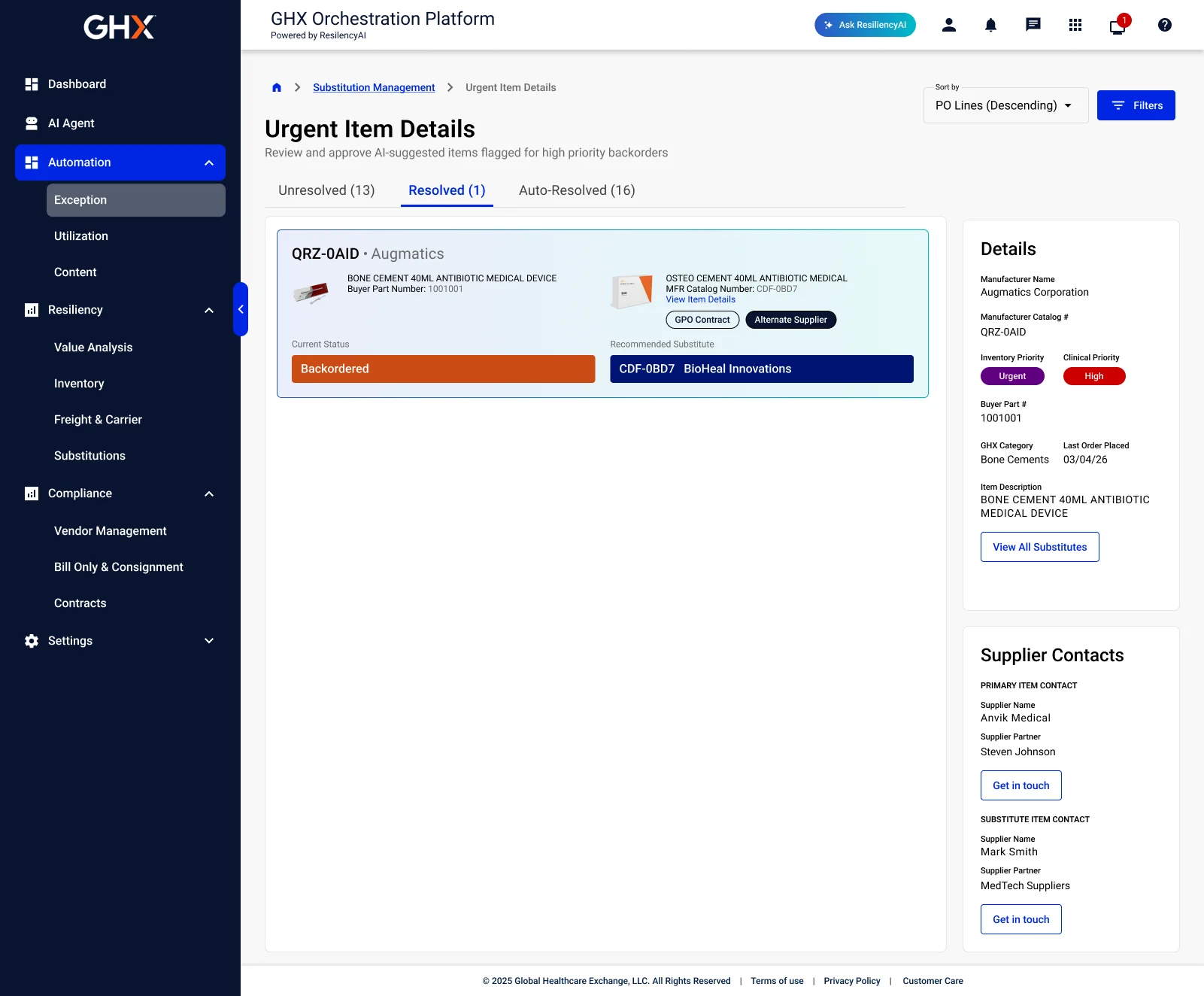
Provider · Backorders
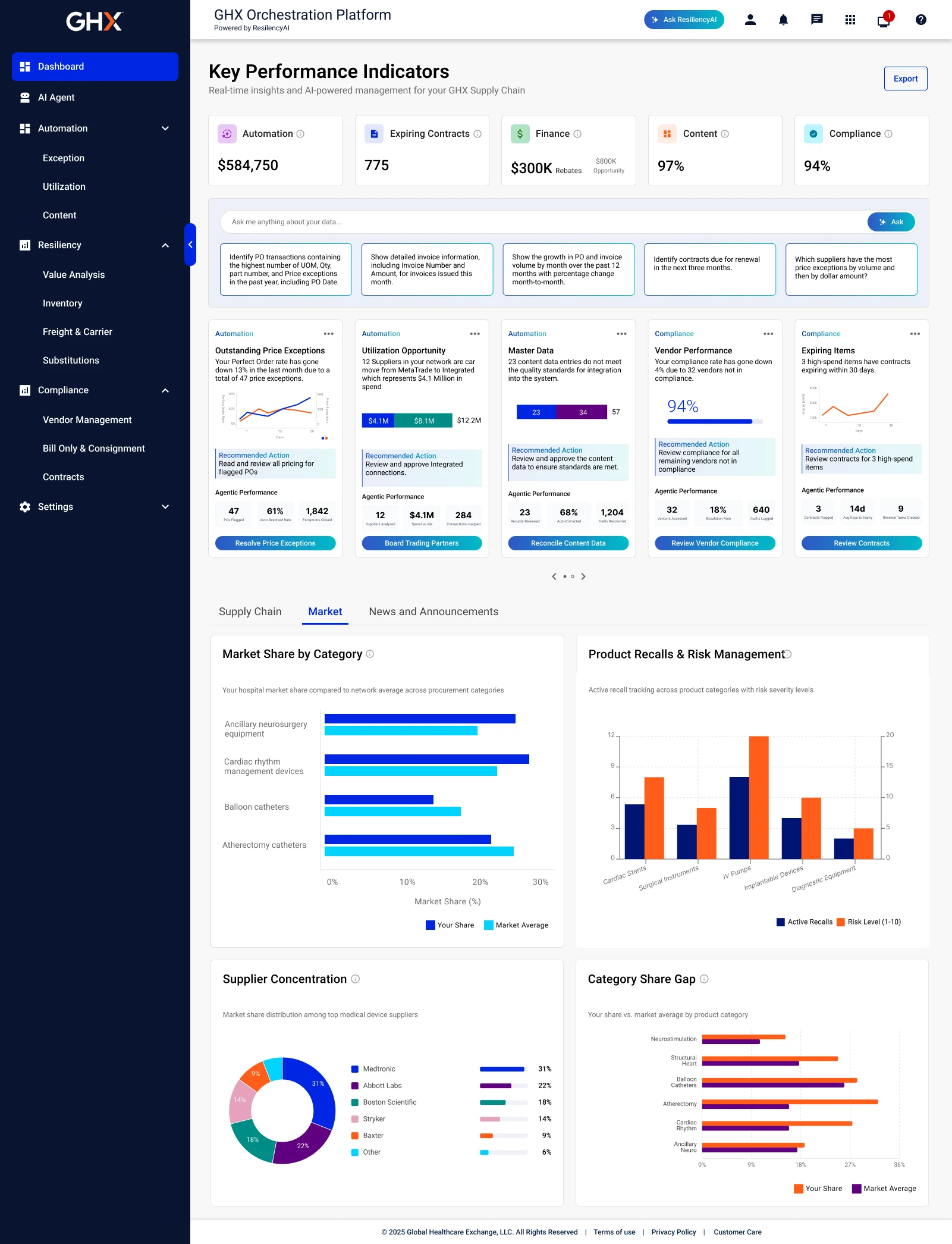
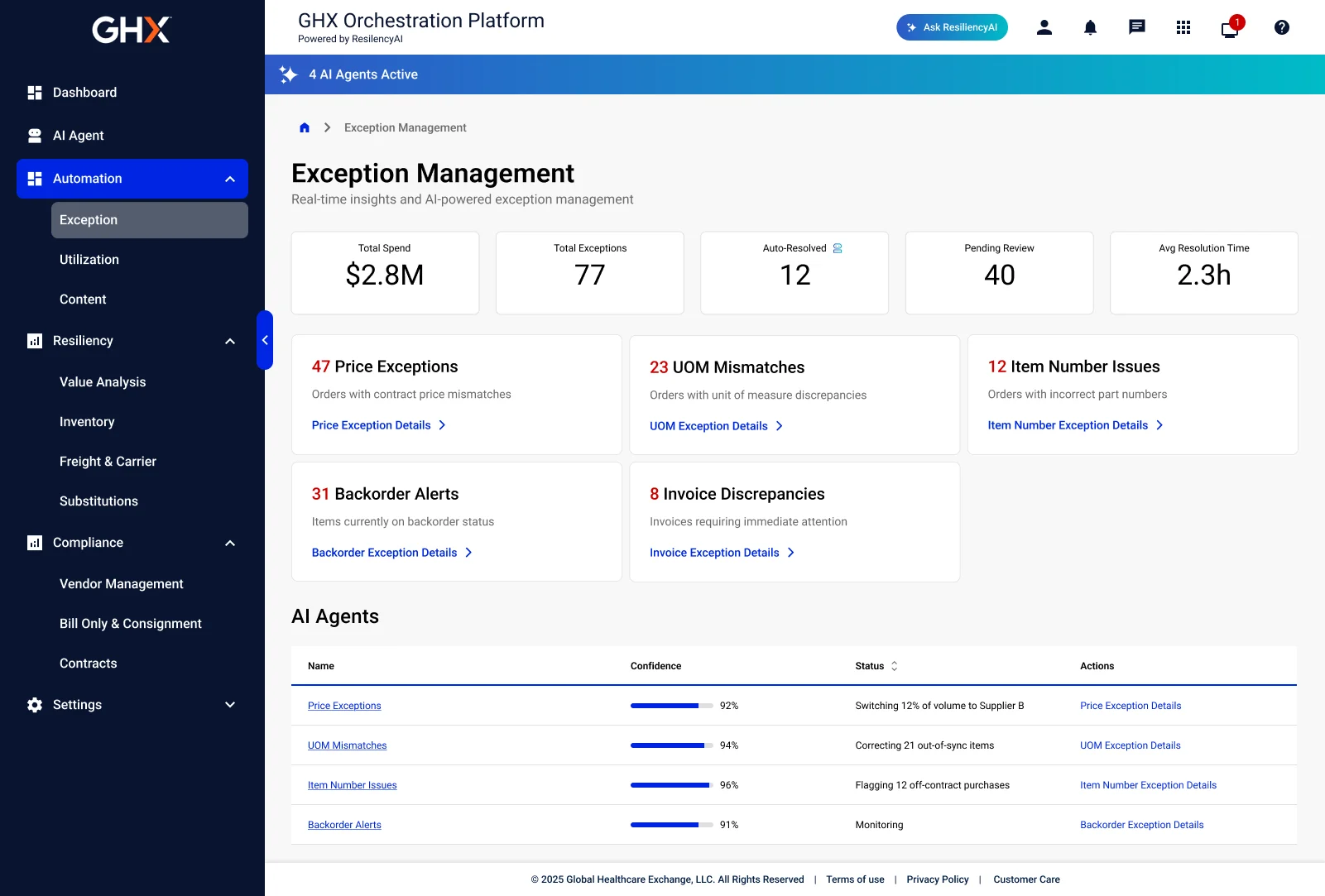
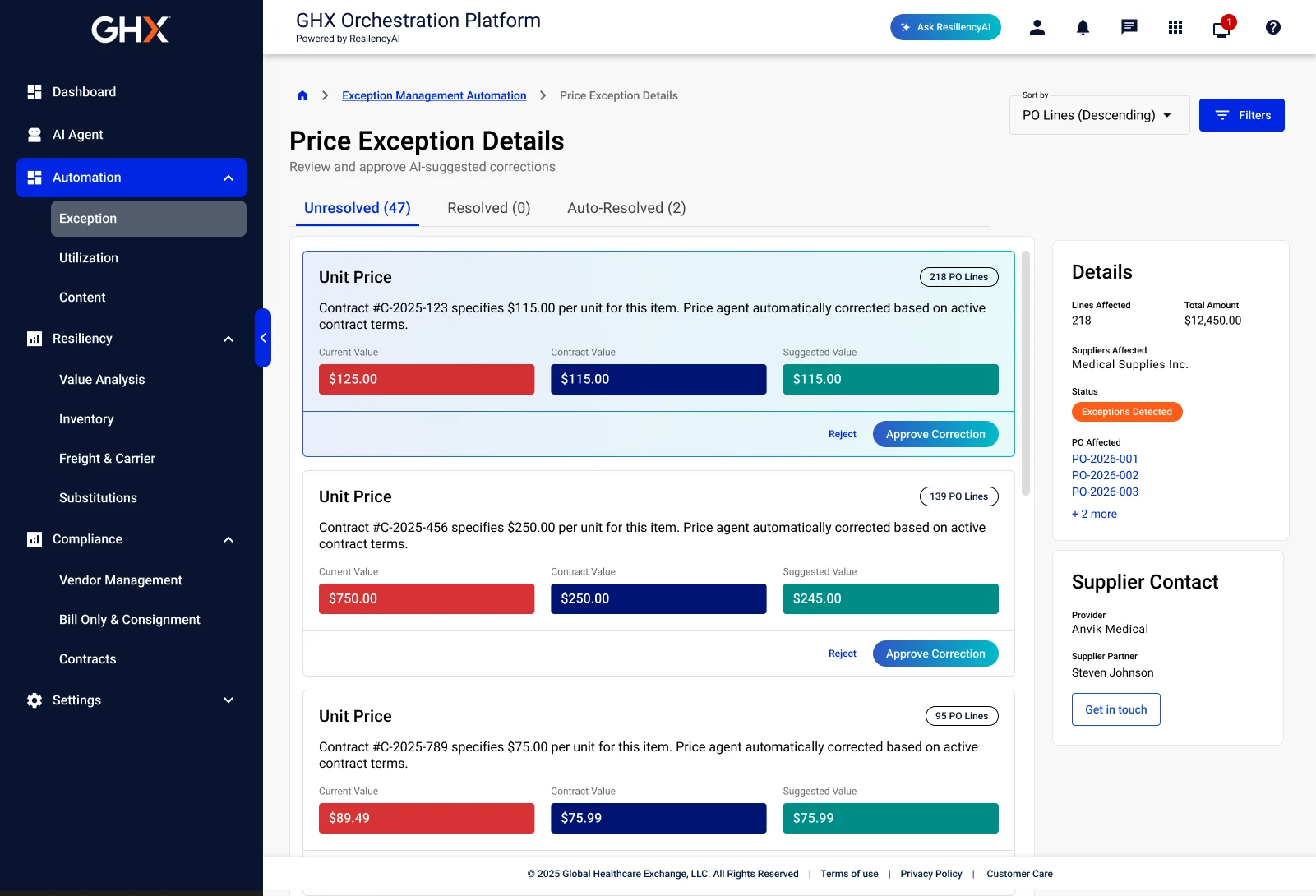
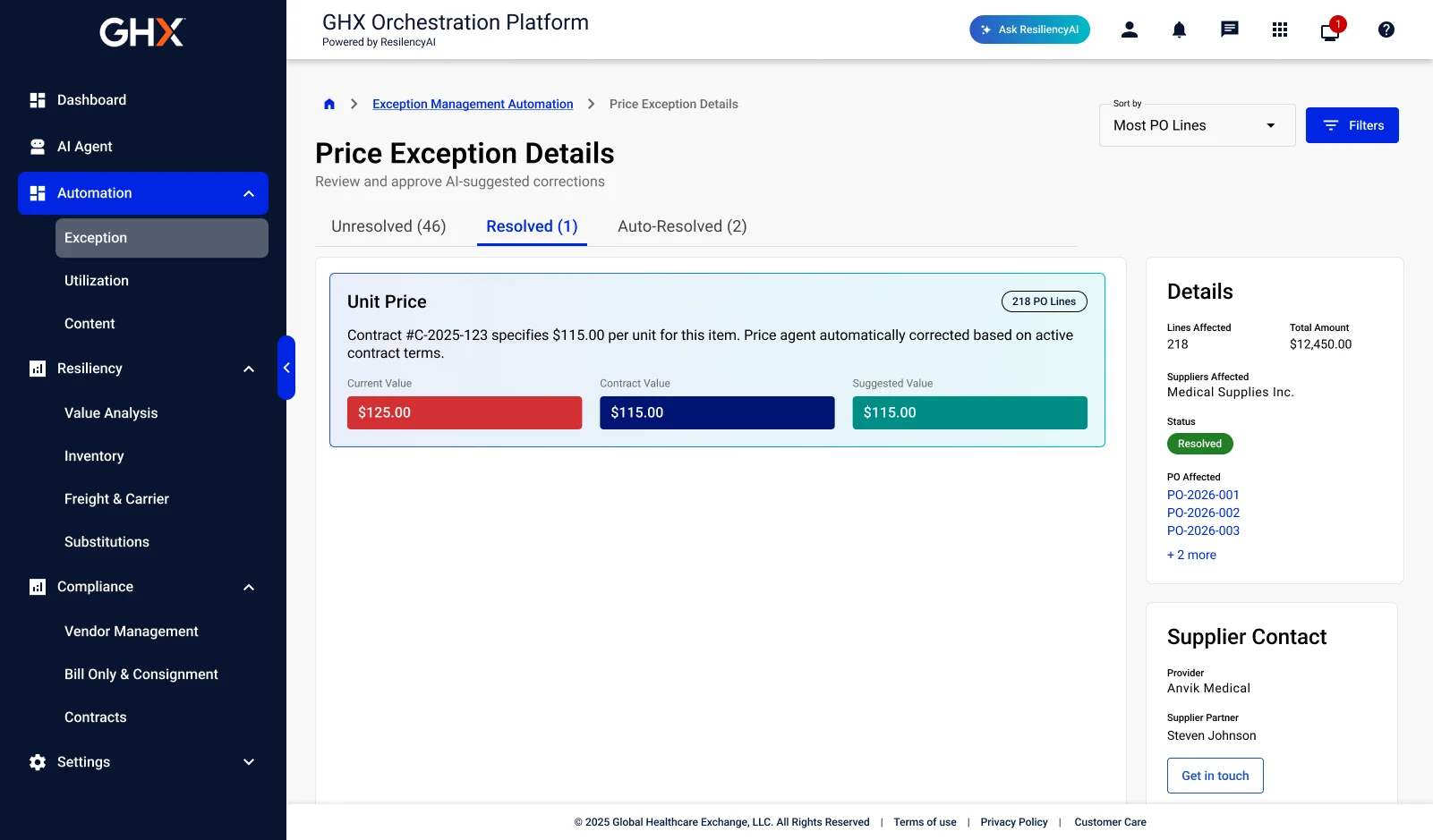
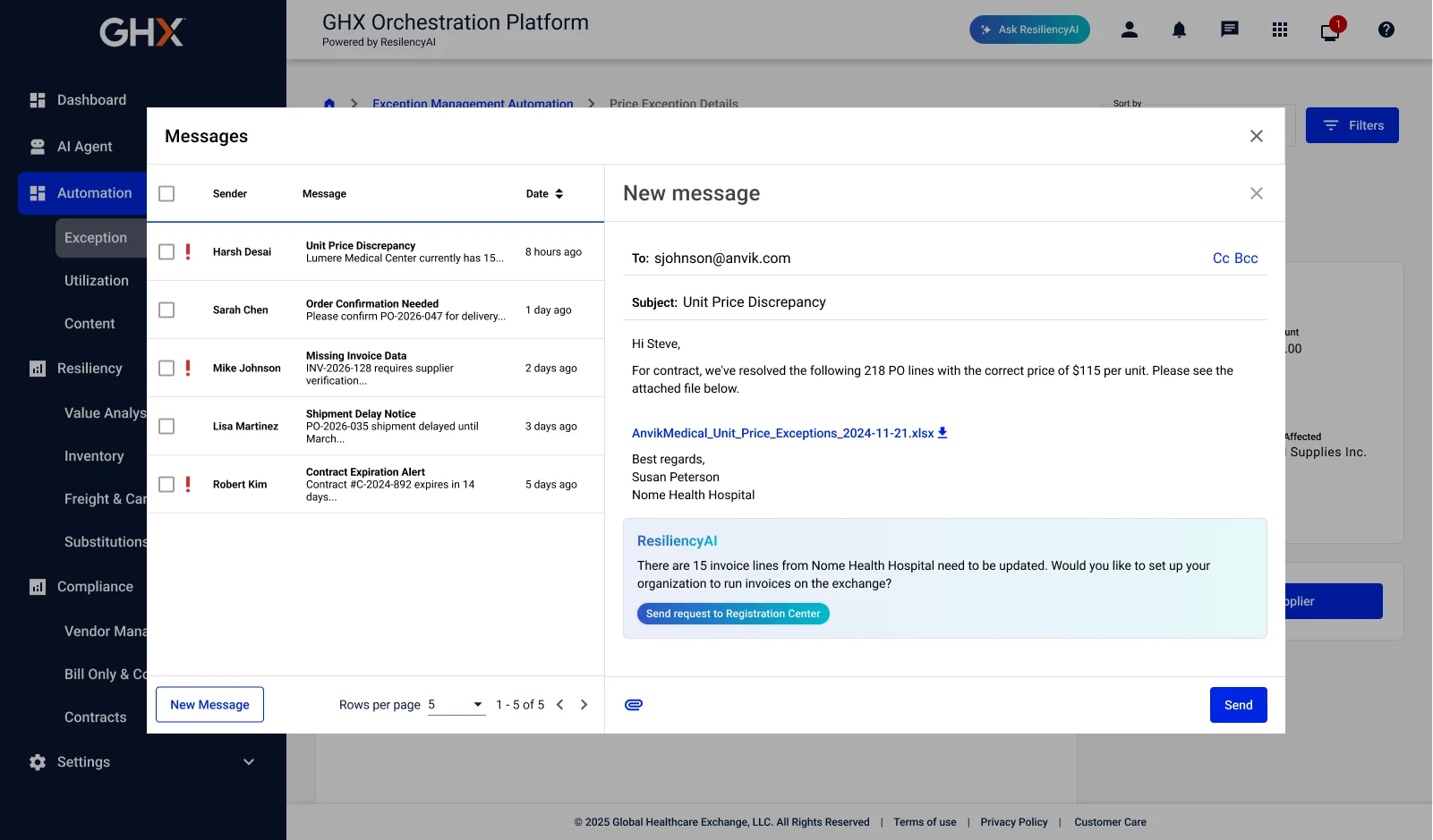
Provider · Price exceptions
Supplier · Shortages
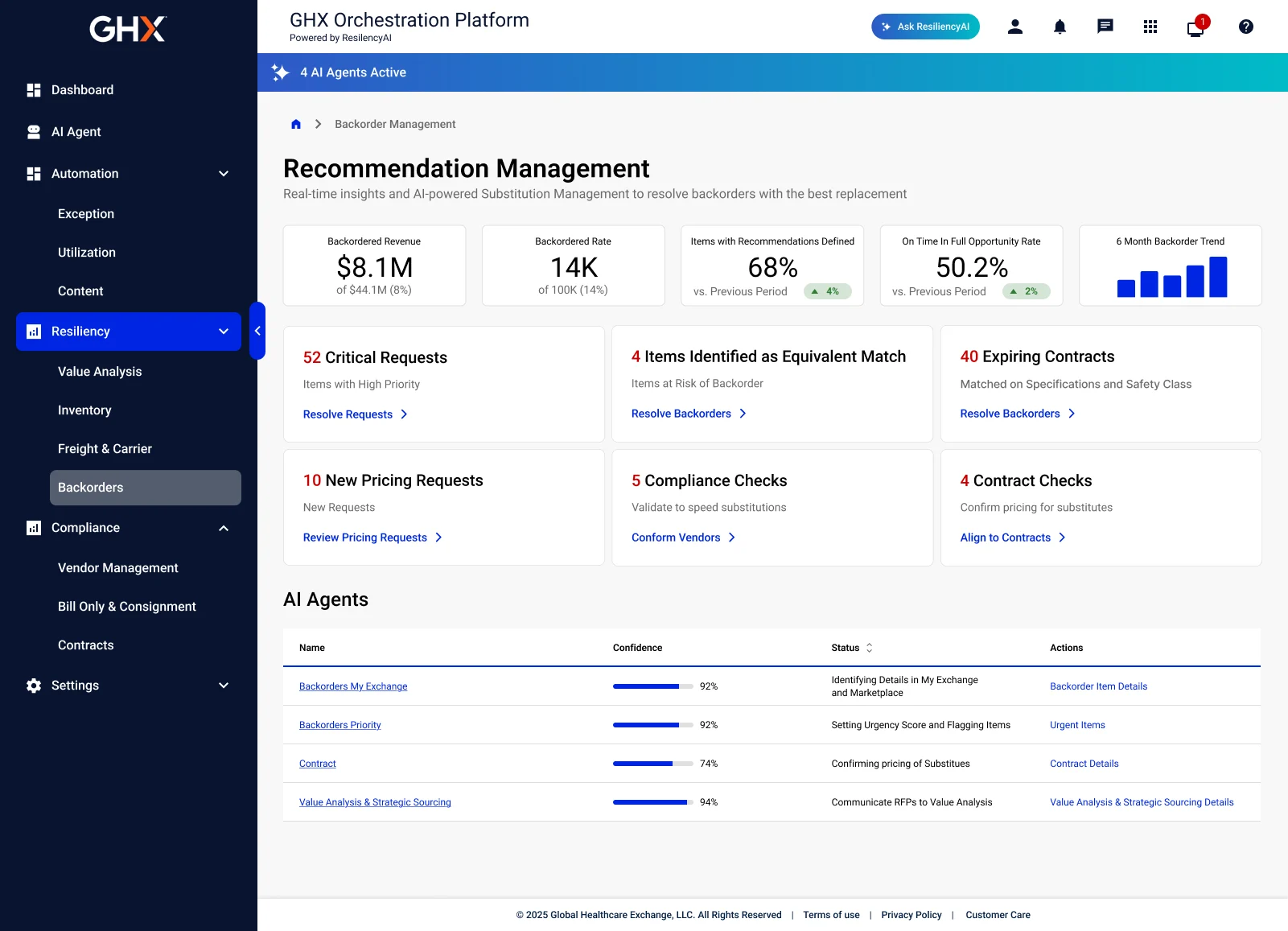
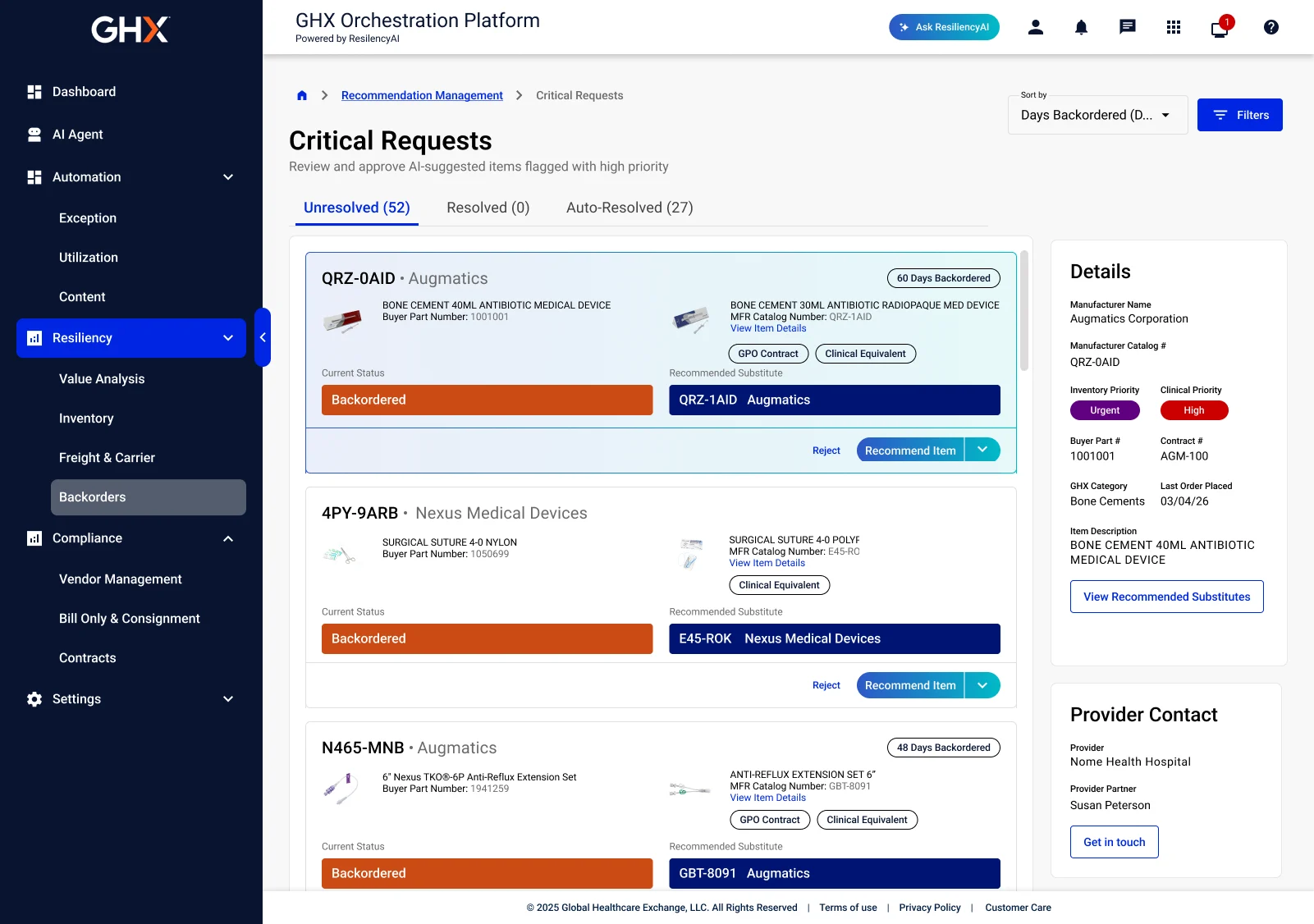
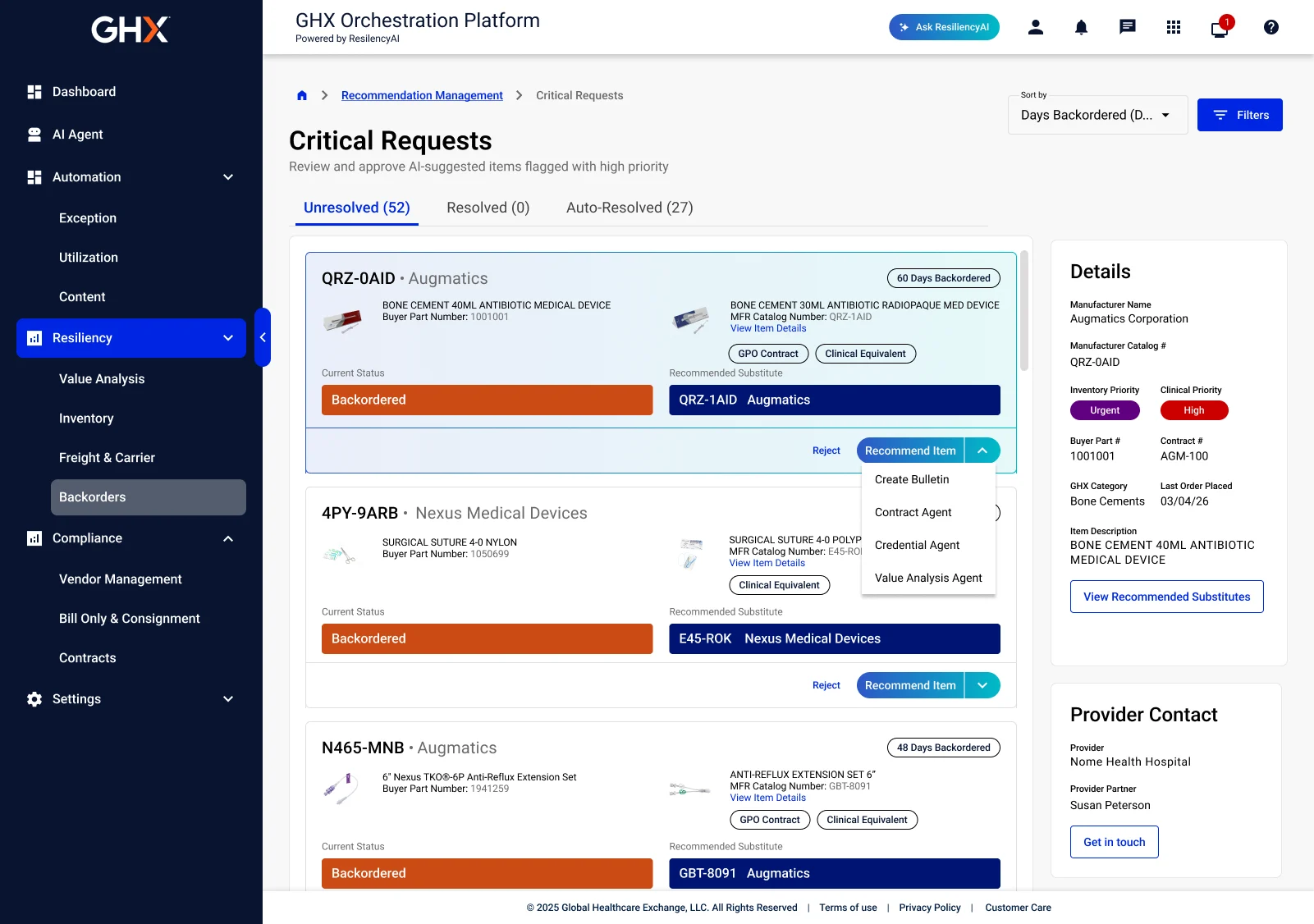
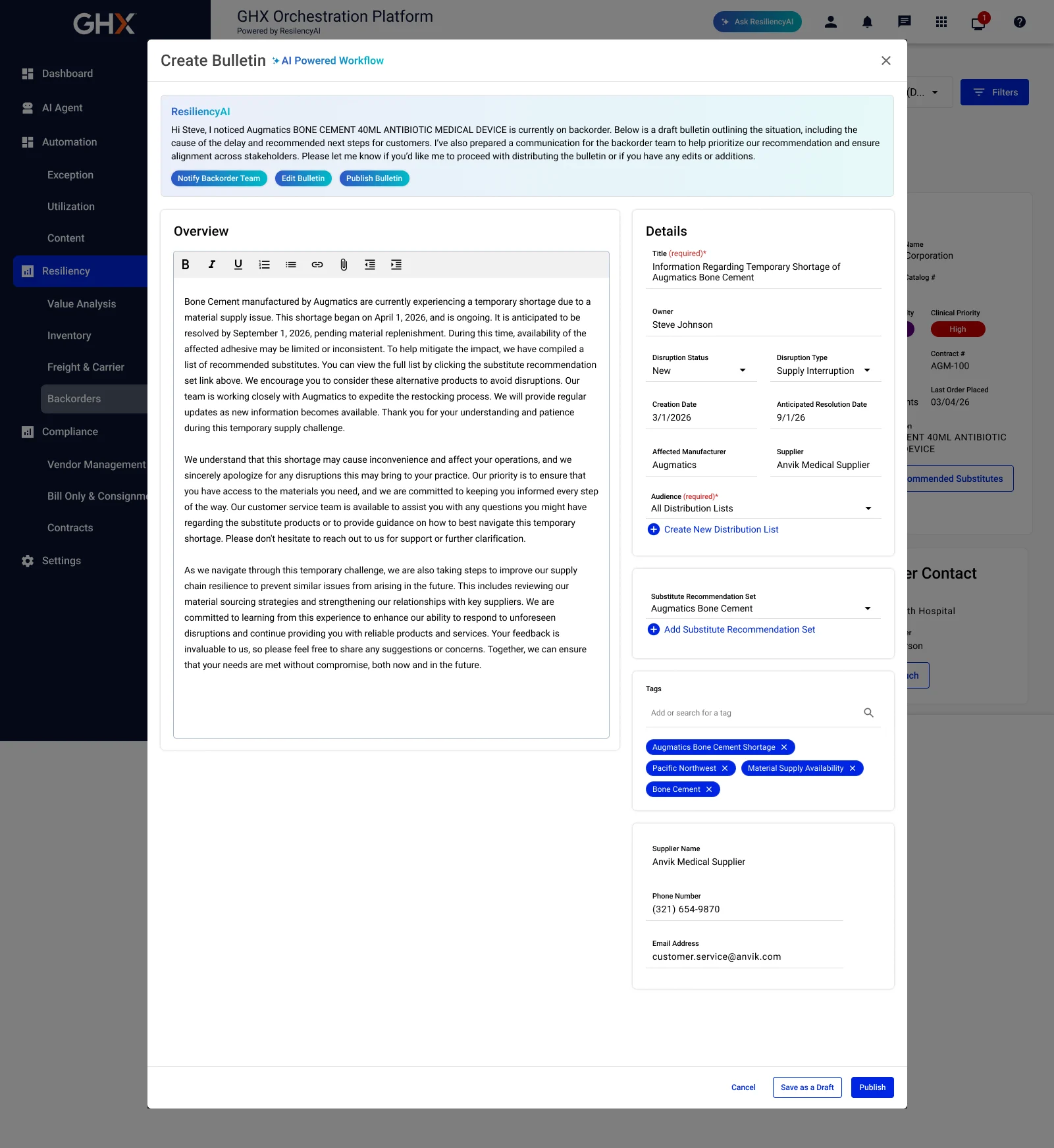
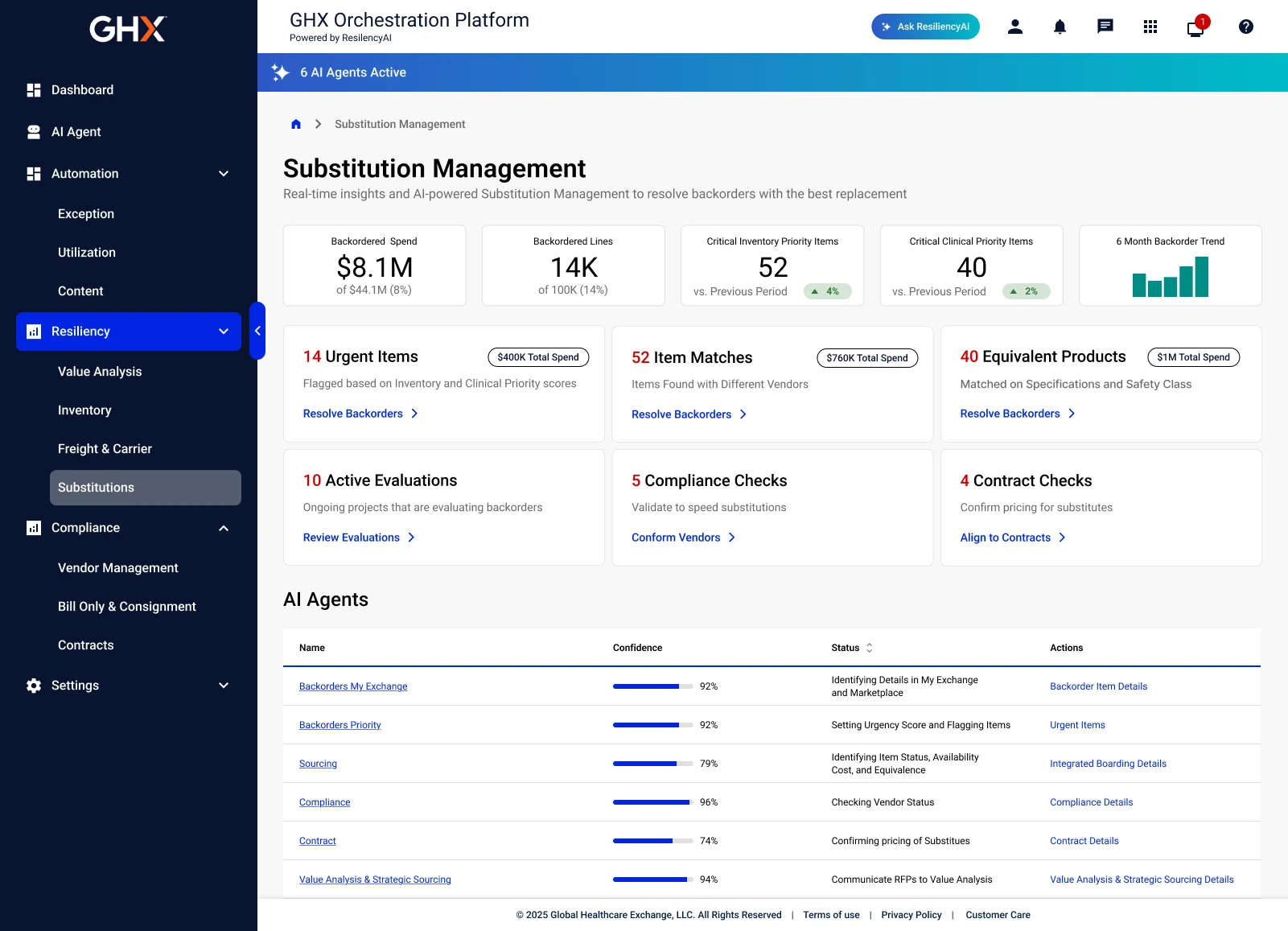
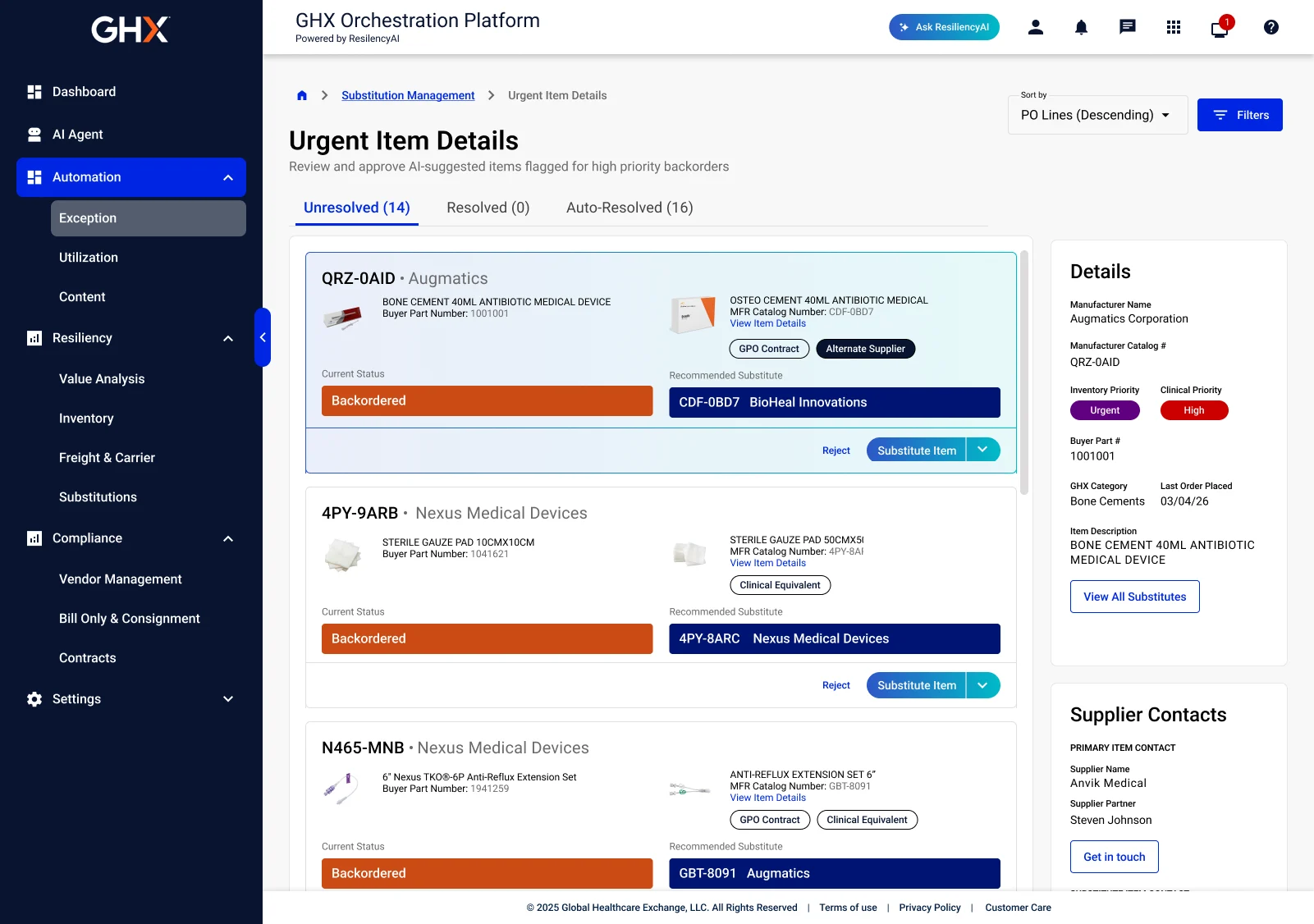
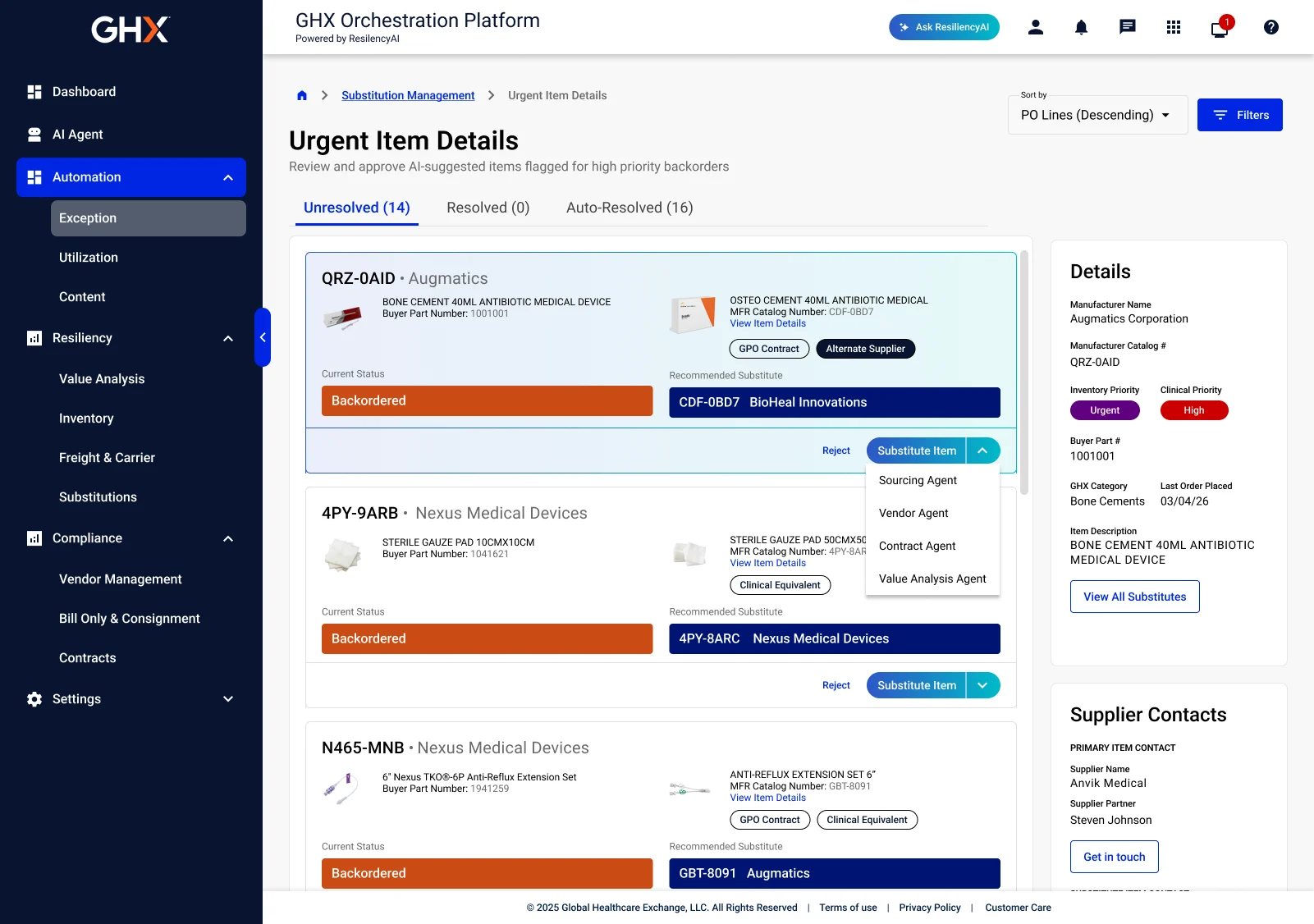
Orders between hospitals and suppliers go wrong in small, expensive ways: an item goes on backorder, a price doesn’t match the contract, a customer is left waiting. GHX describes its orchestration platform as helping supply chain teams sense, decide and act faster, across providers and suppliers.
The three flows here are three of those jobs. A hospital finds a substitute for a backordered item, and sees how the agent found it. A hospital approves a price correction the agent could not settle alone. A supplier recommends substitutes to the customers waiting on a shortage, and sends them a bulletin the AI drafted.
The design work is about trust. Each agent shows its confidence and what it is doing now, and can show its work. What an agent resolved on its own is kept apart from what a person approved, and nothing goes to the other side of the trade until a person sends it.
09 · Design: Registration Center
Connecting trading partners, without the ticket.
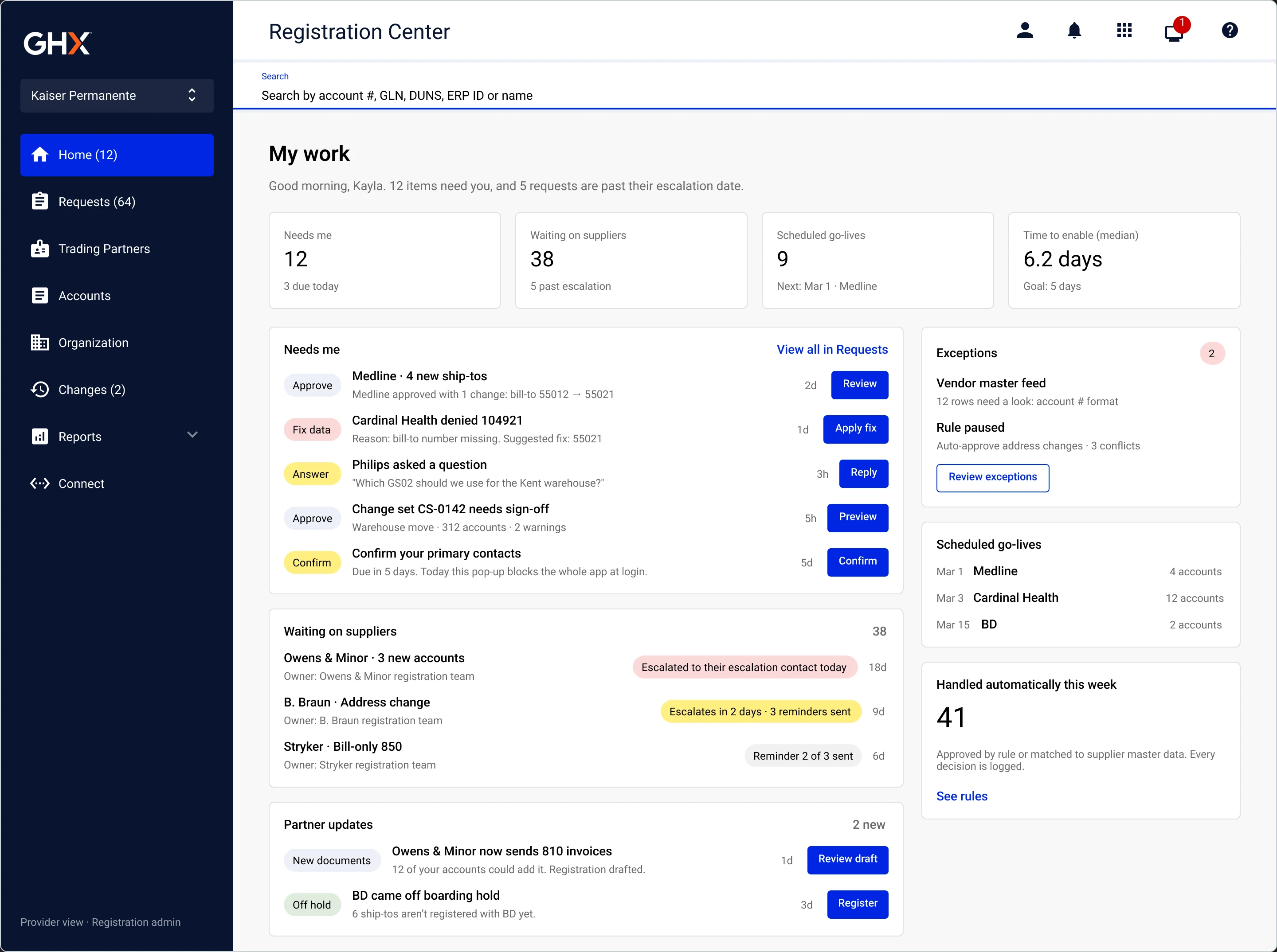
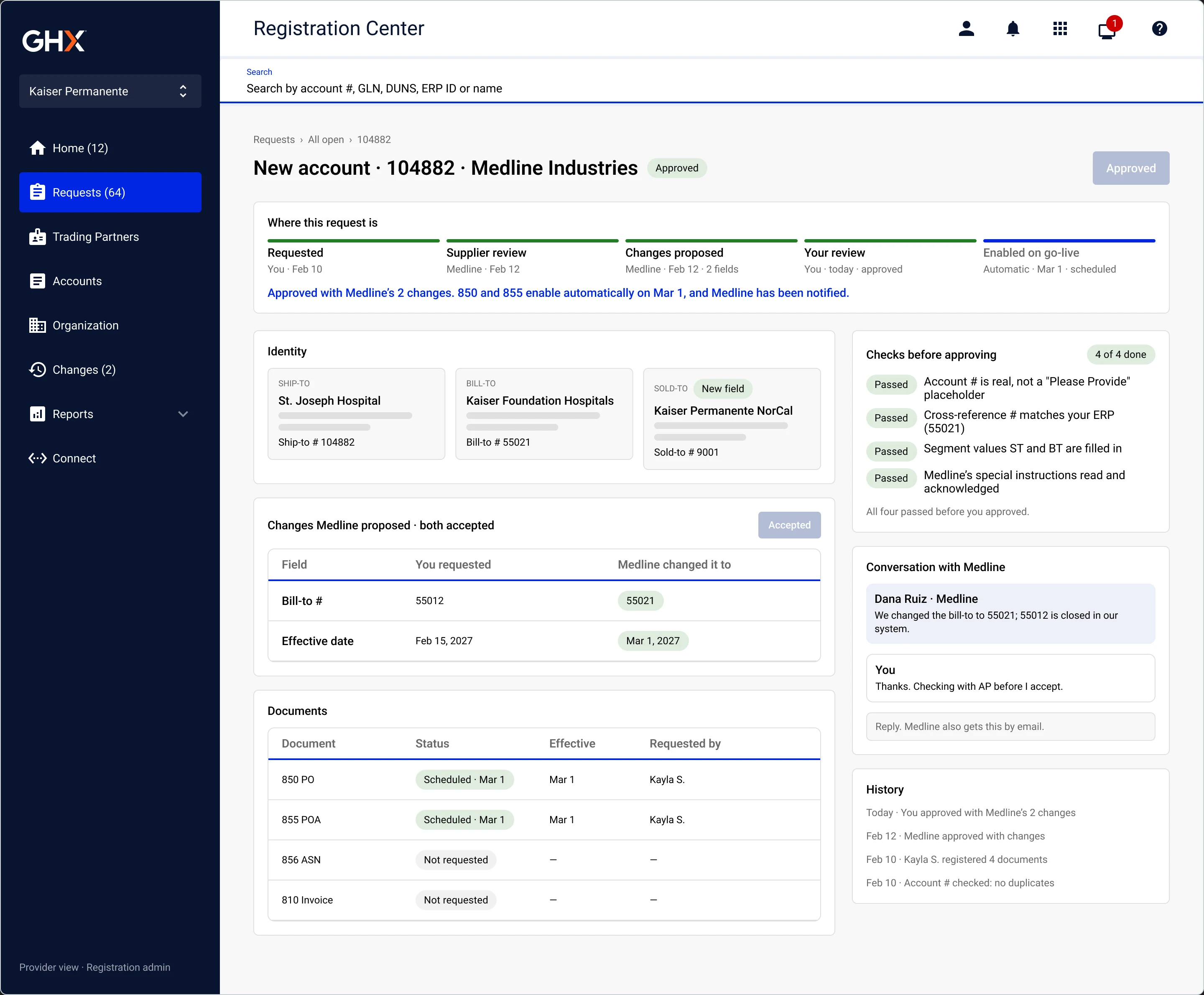
Every request shows who has it, what’s next and when it escalates, on both sides of the trade.
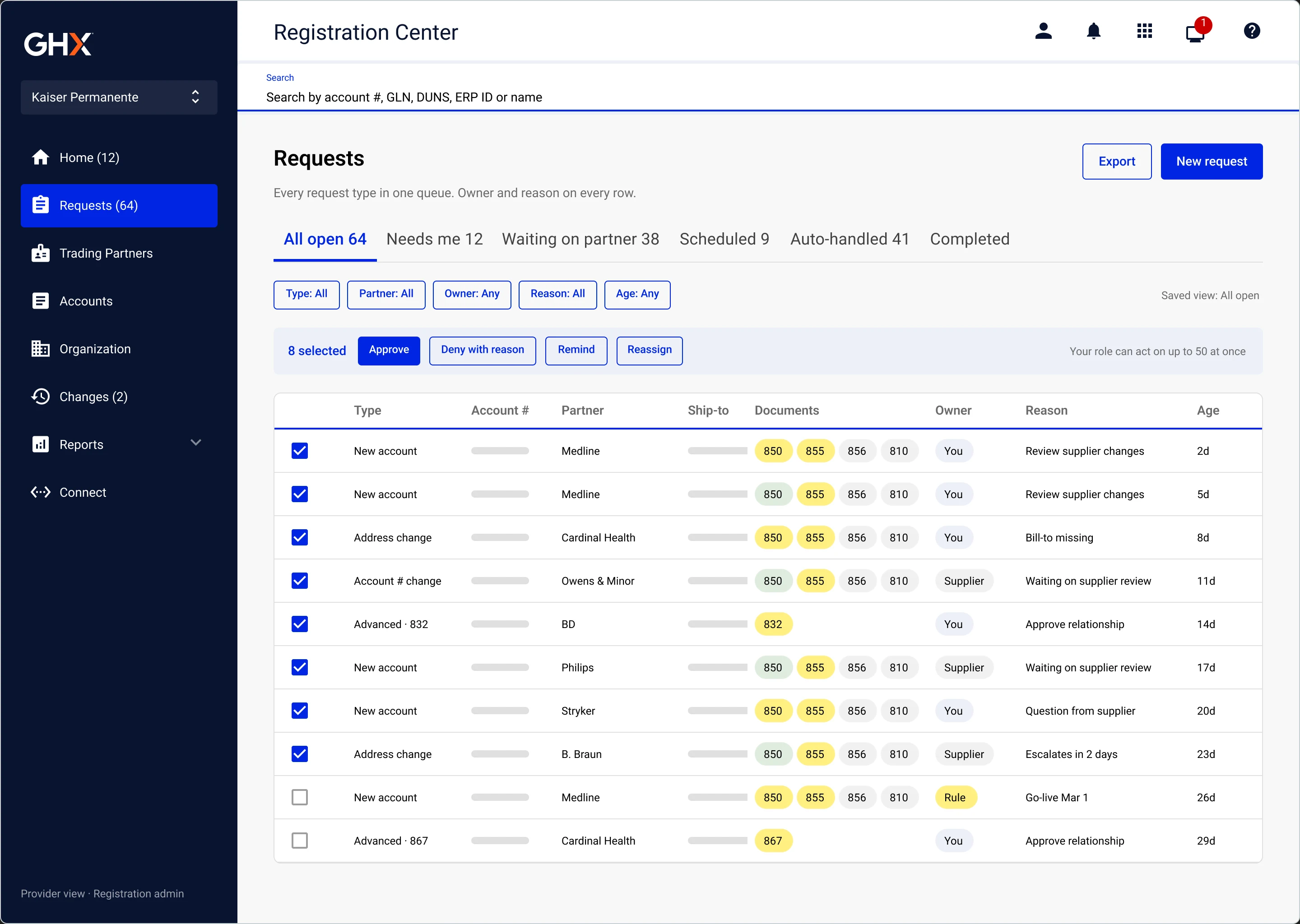
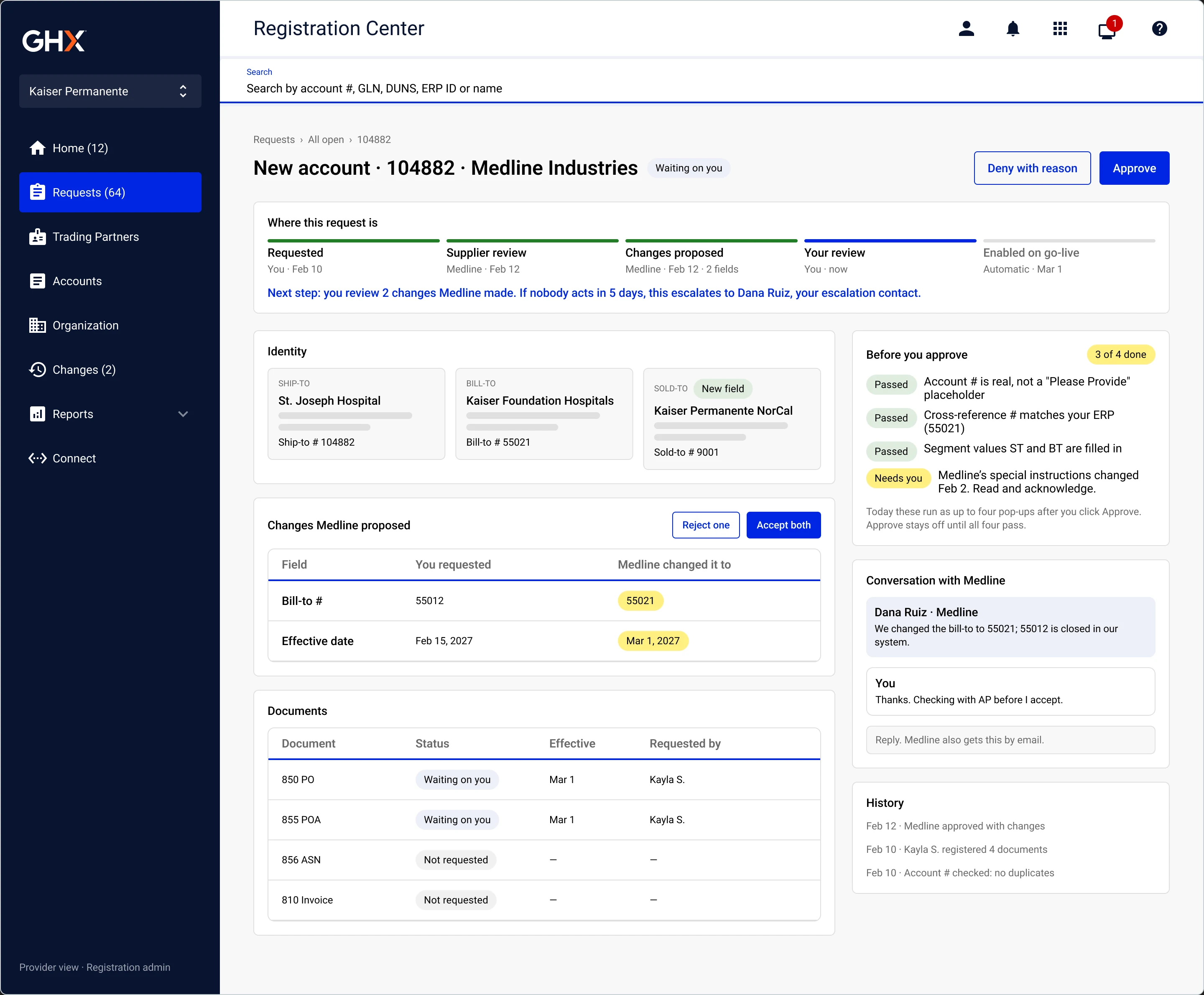
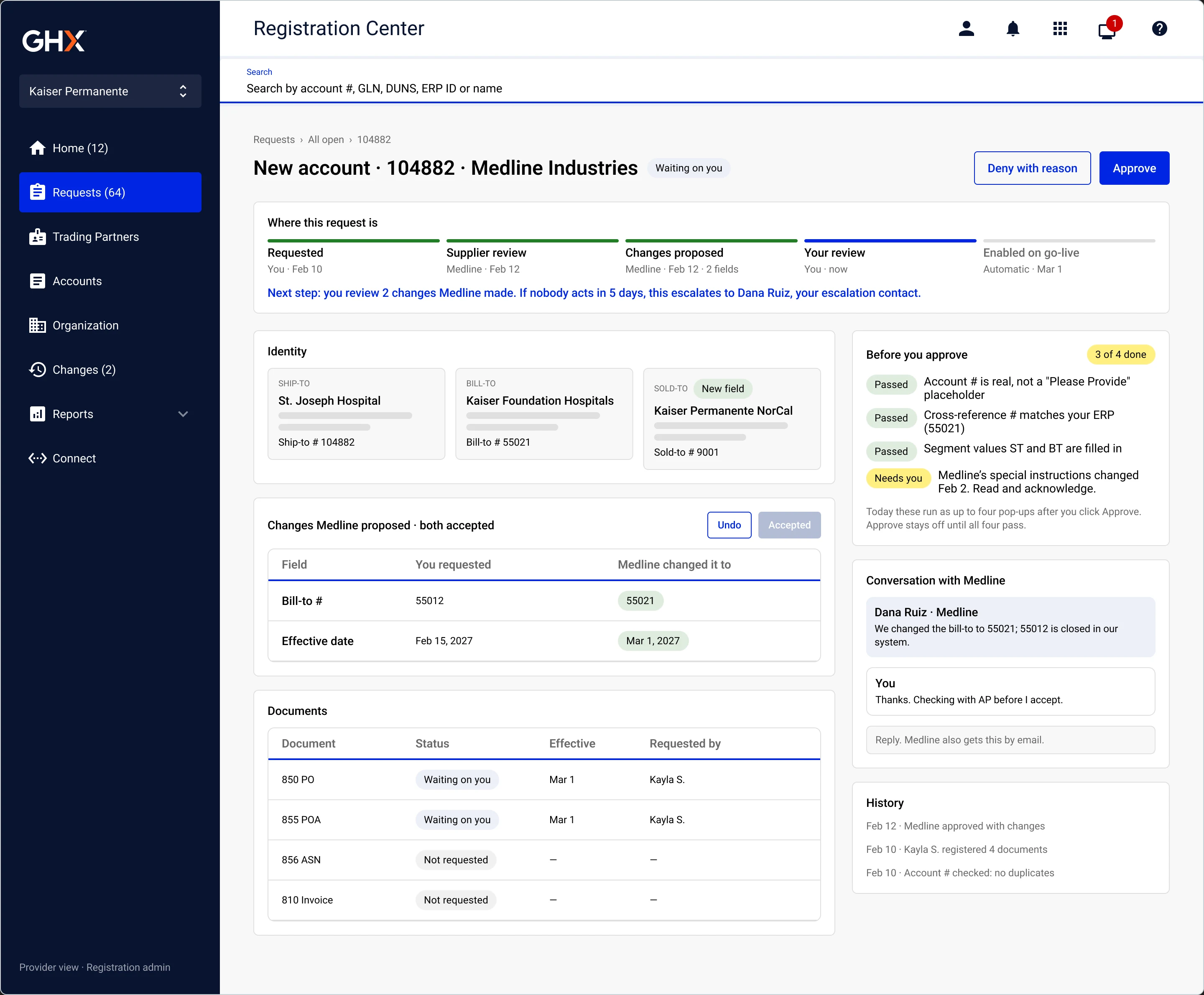
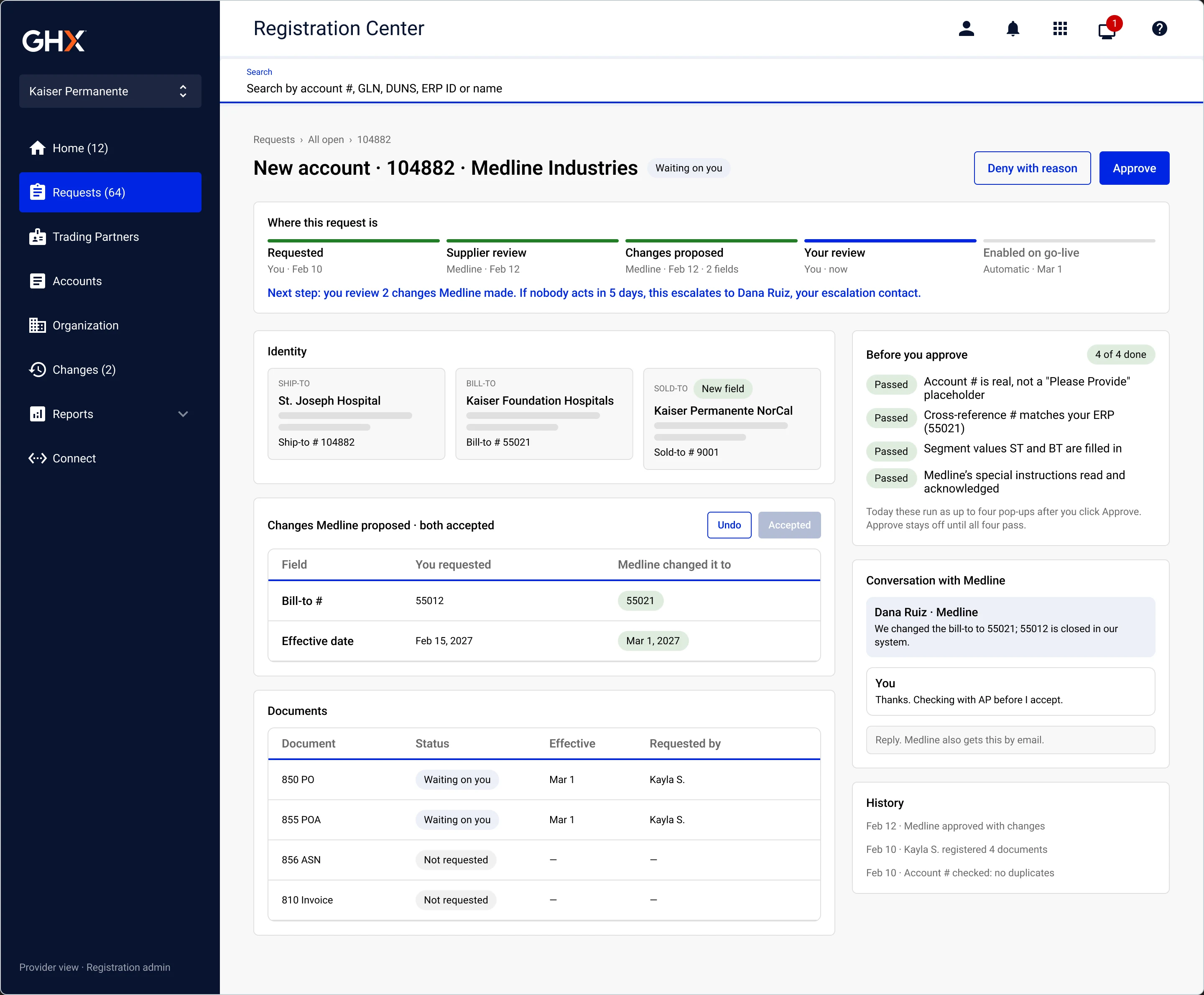
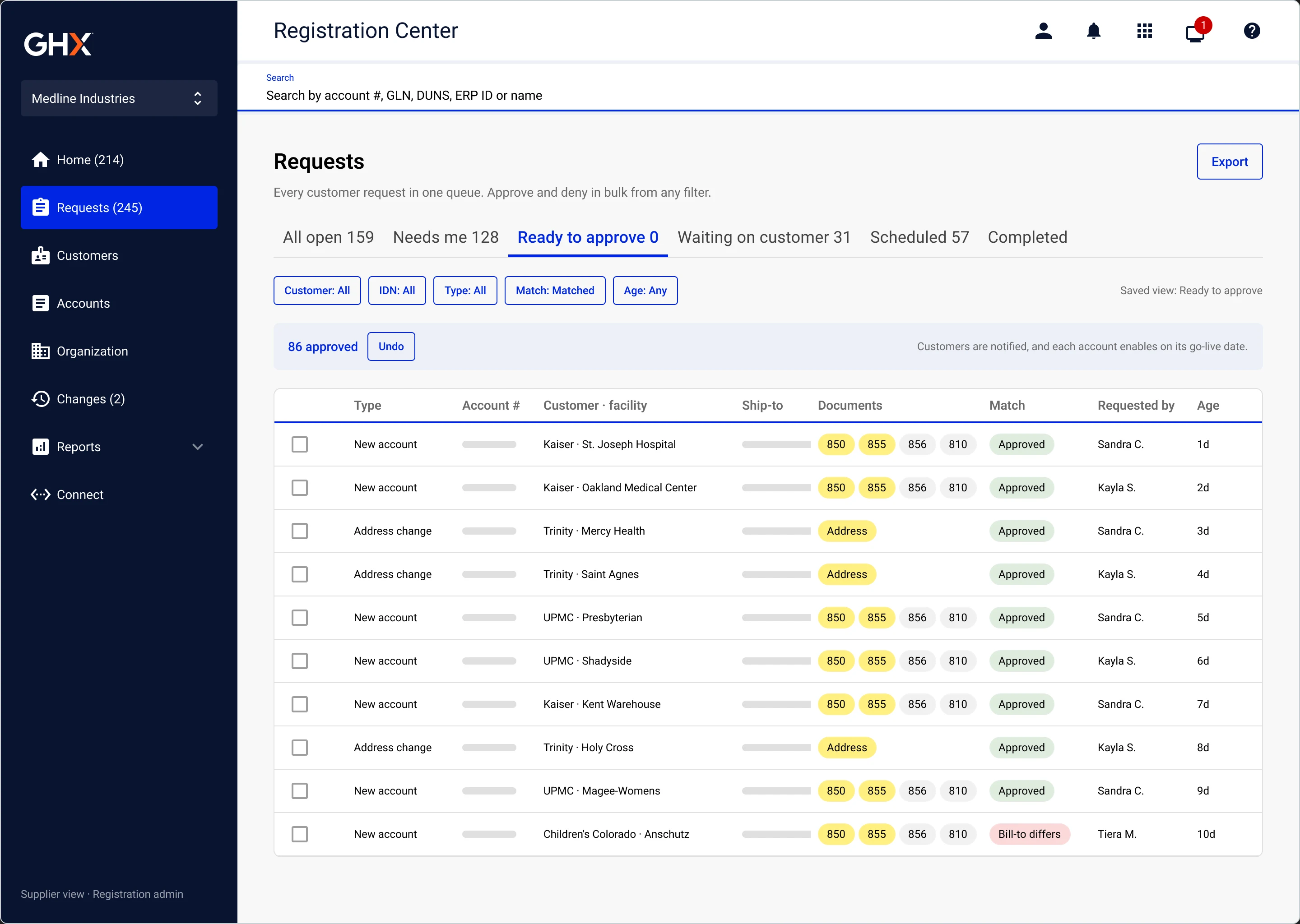
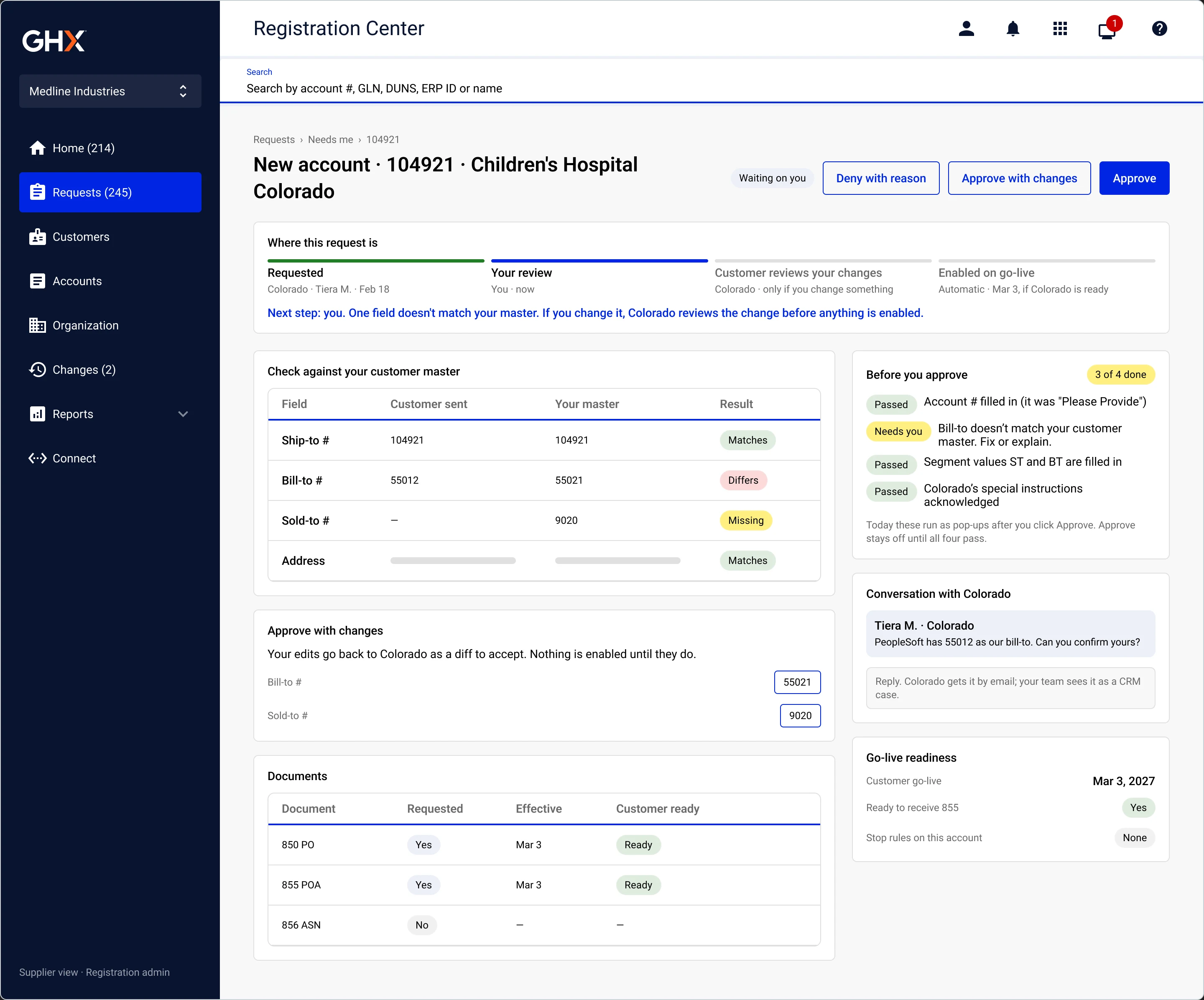
Provider · Approve a request
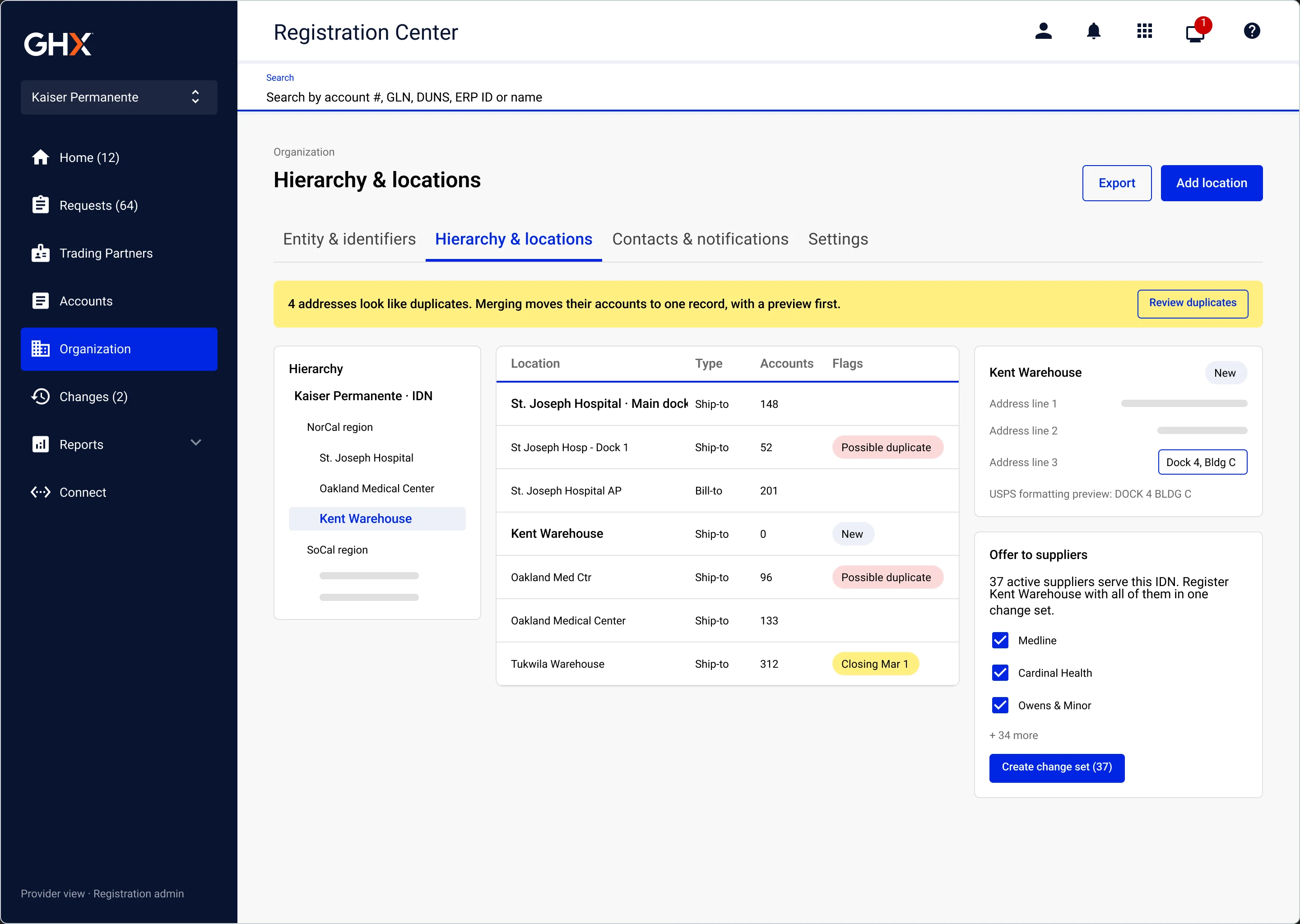
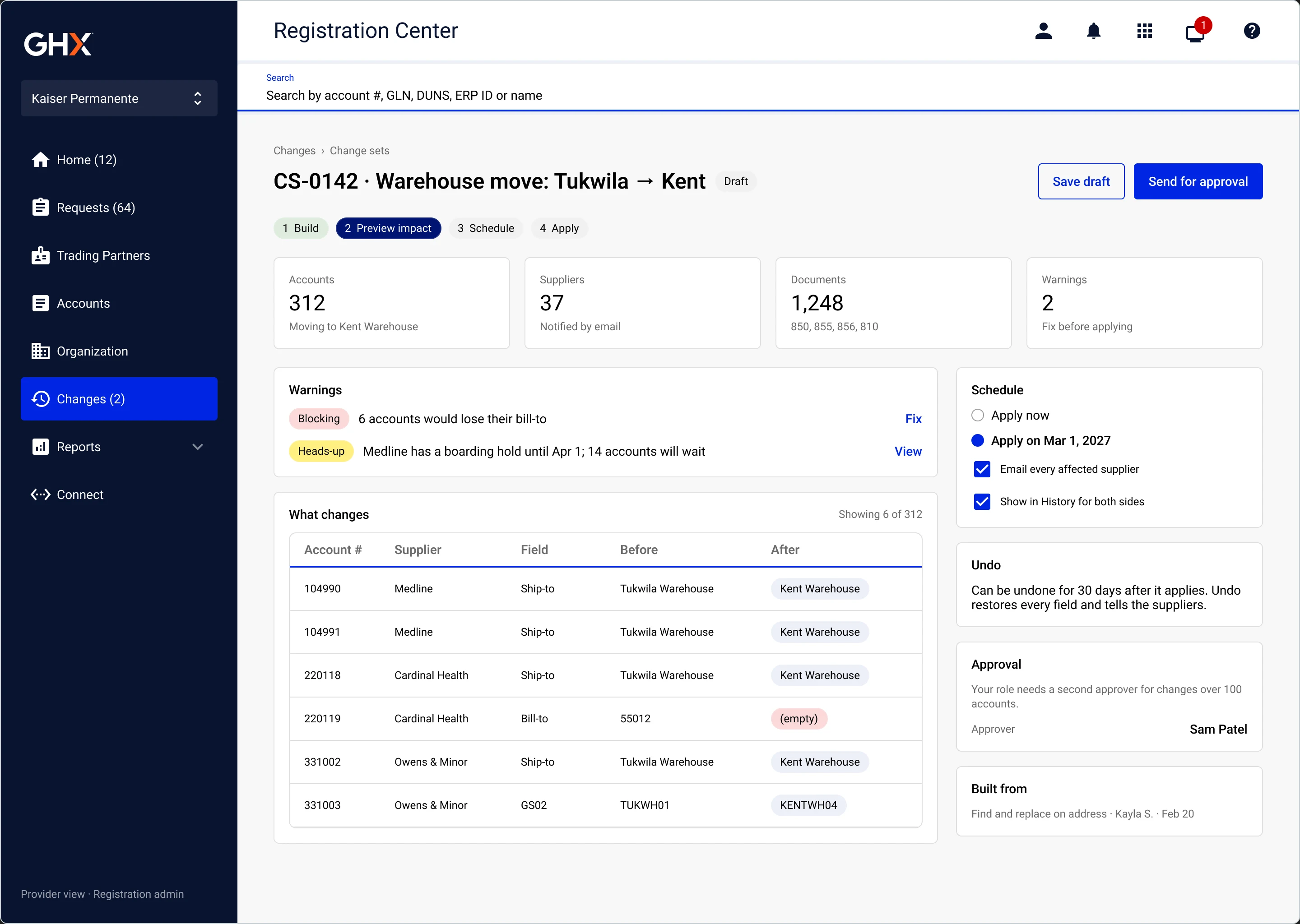
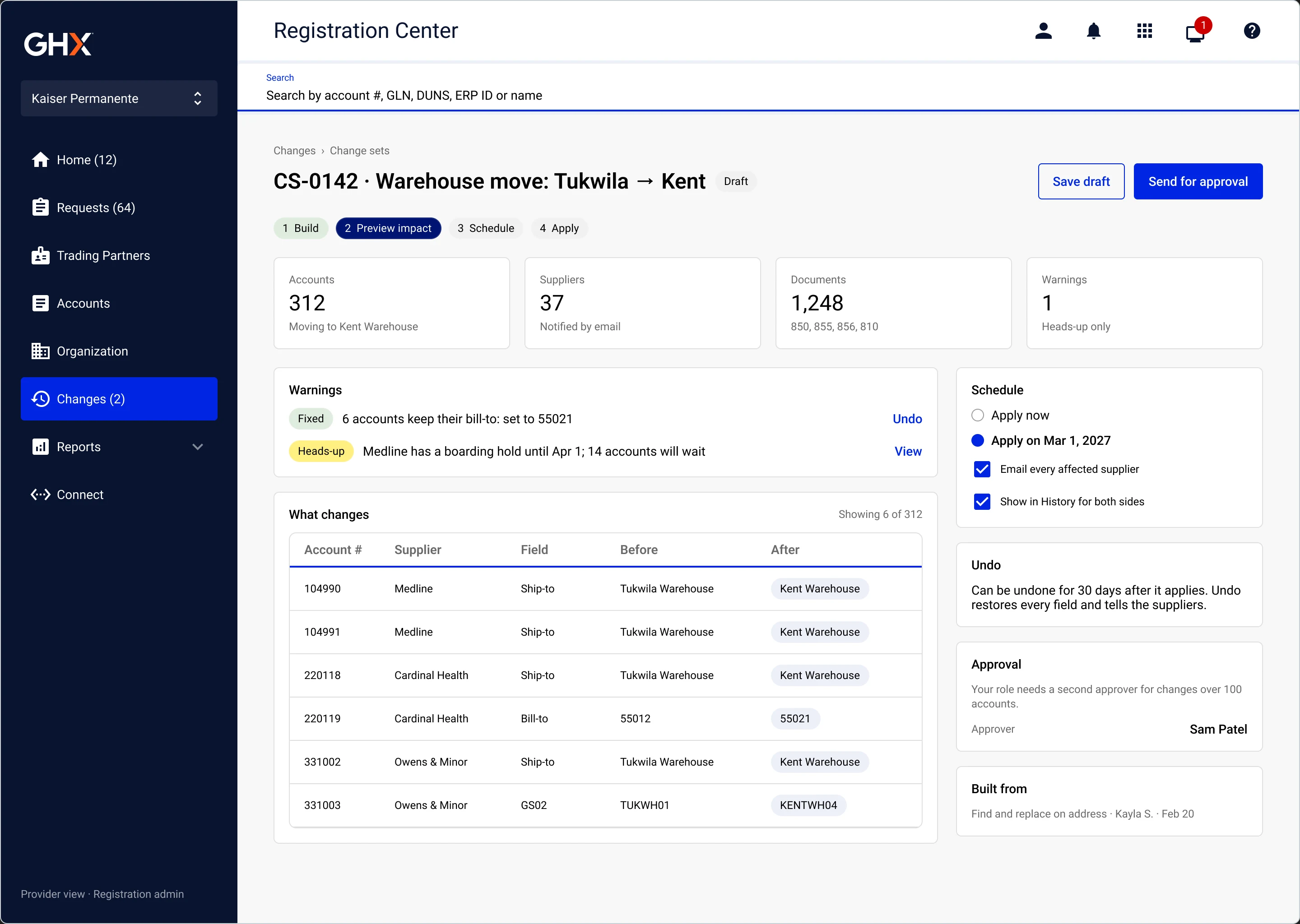
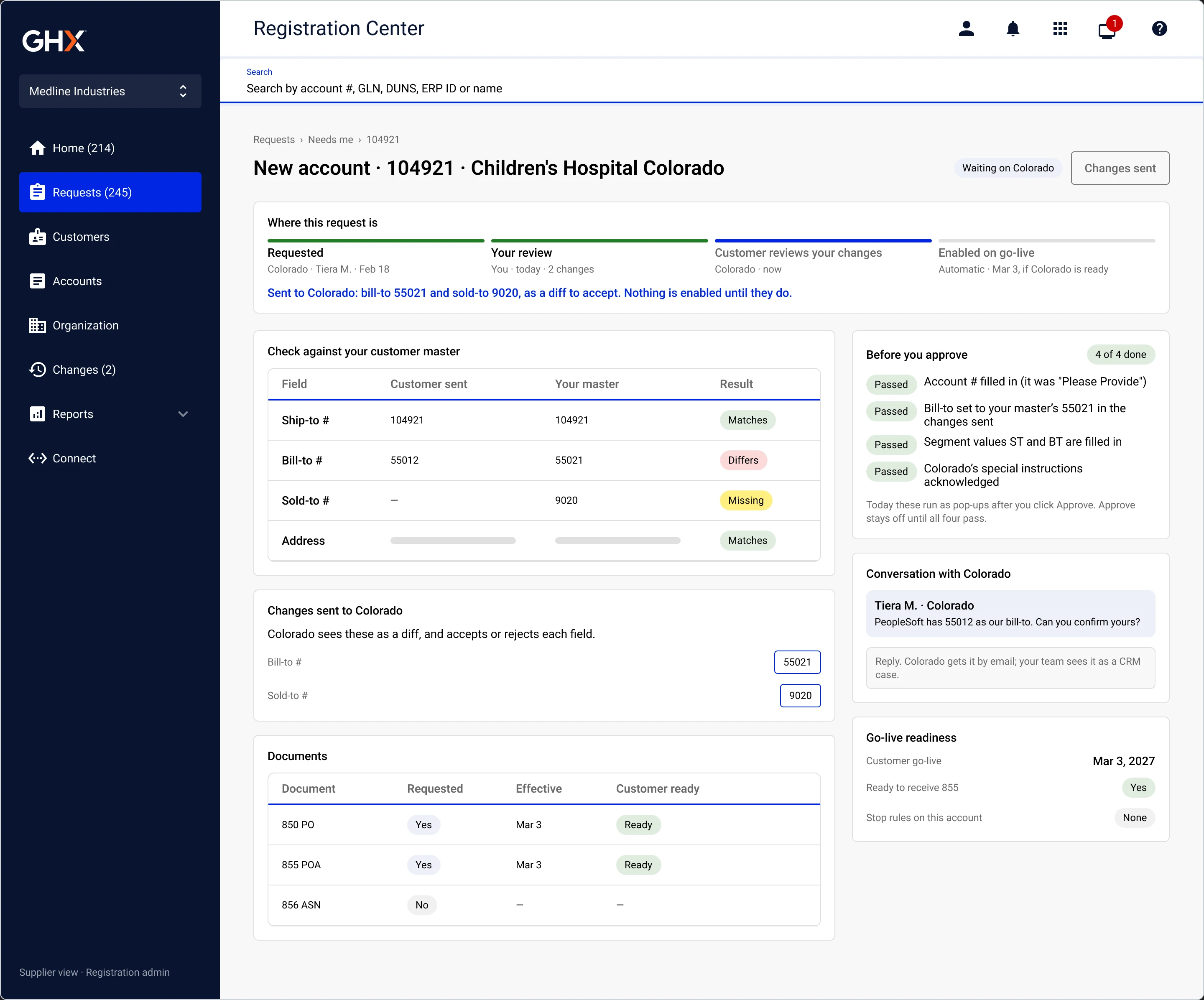
Provider · Change in bulk
Supplier · Respond
GHX support · Admin mode
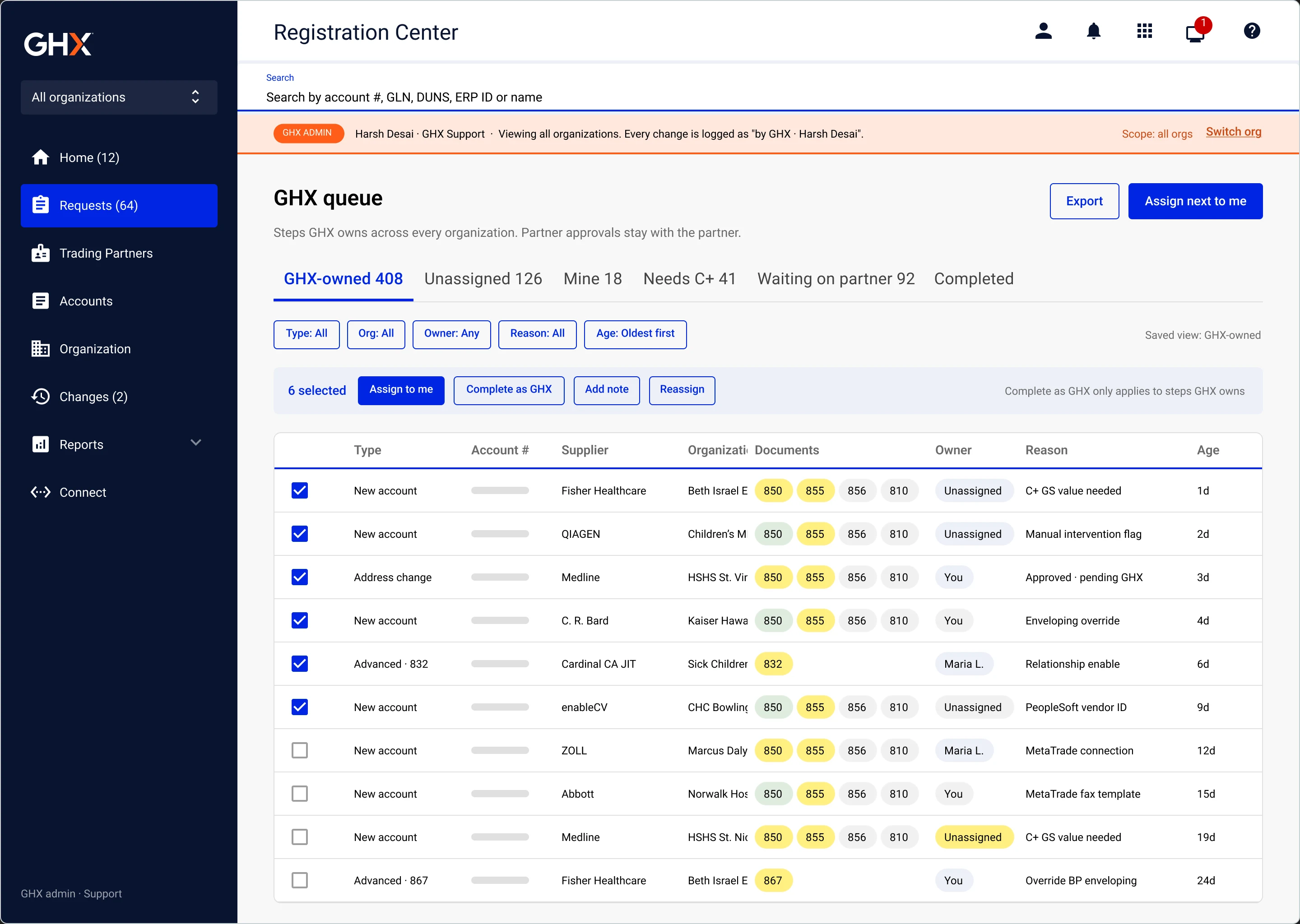
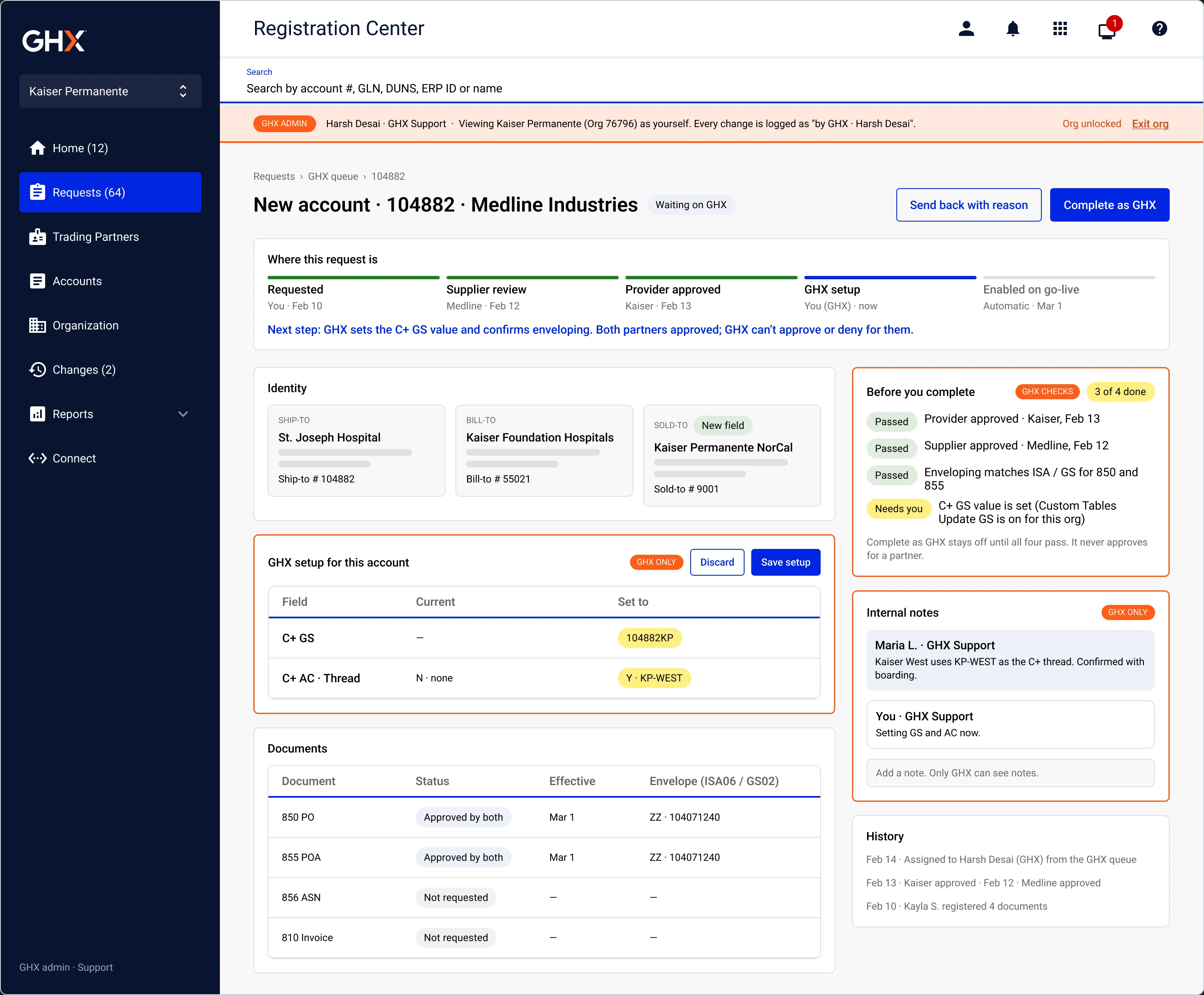
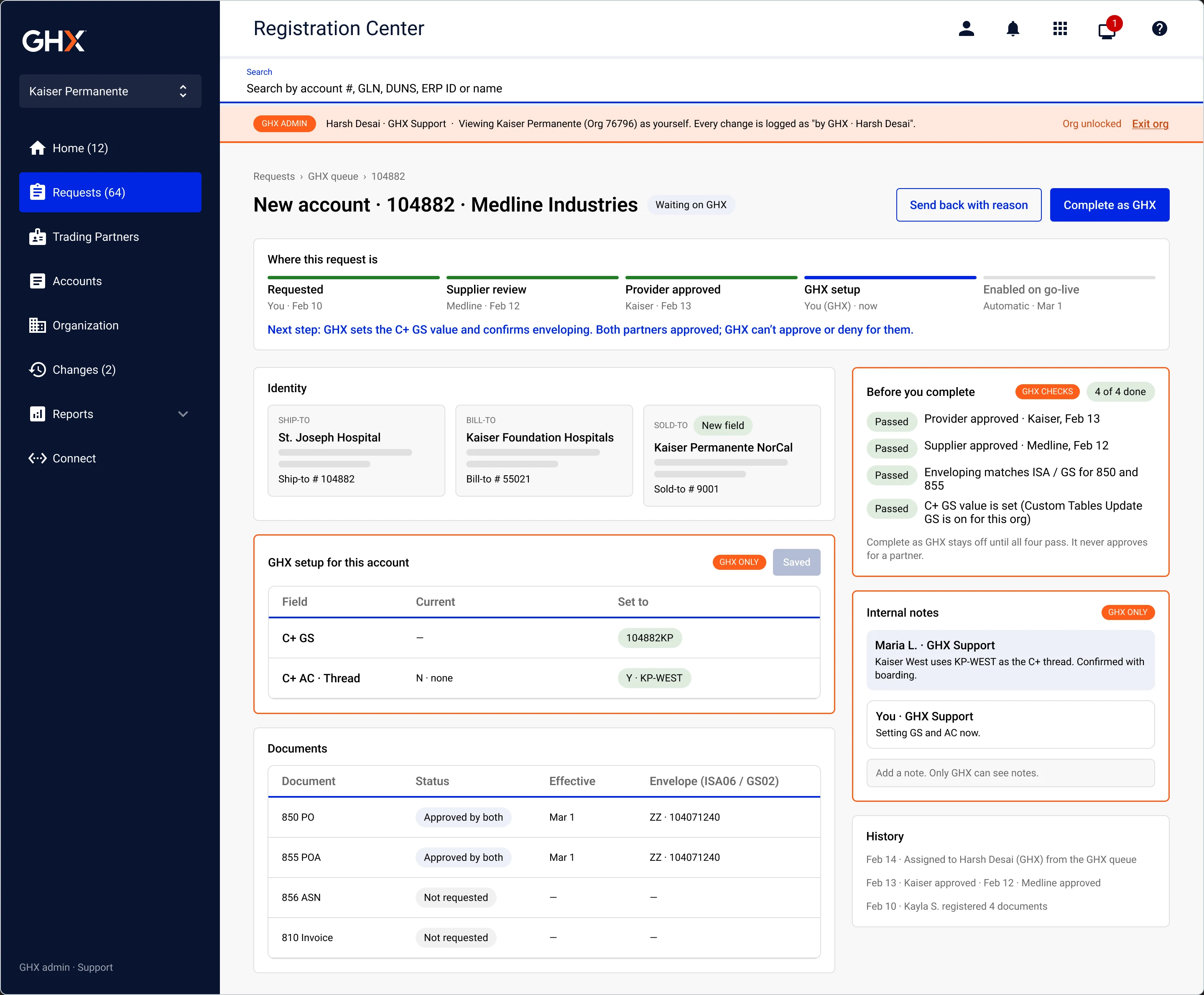
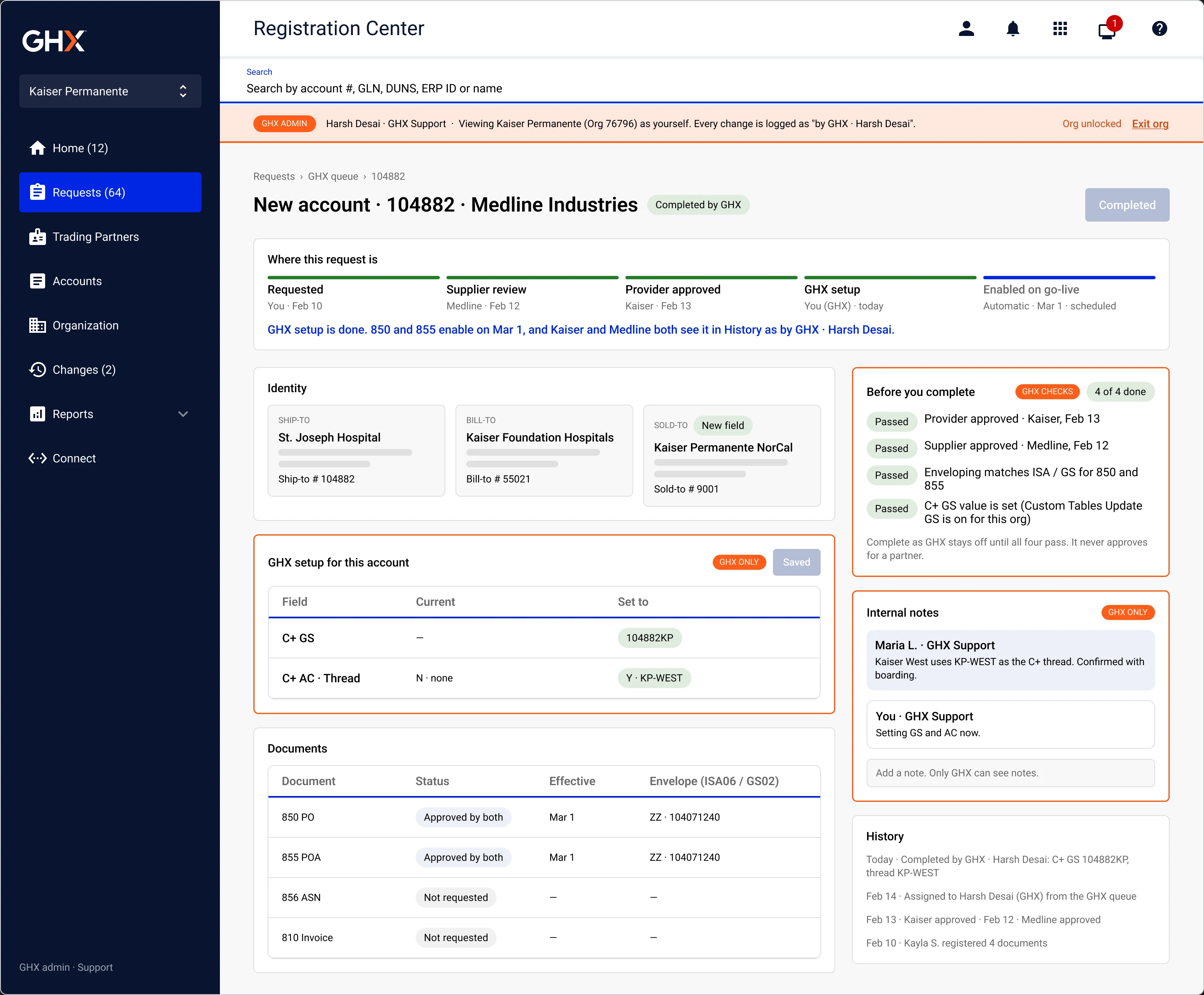
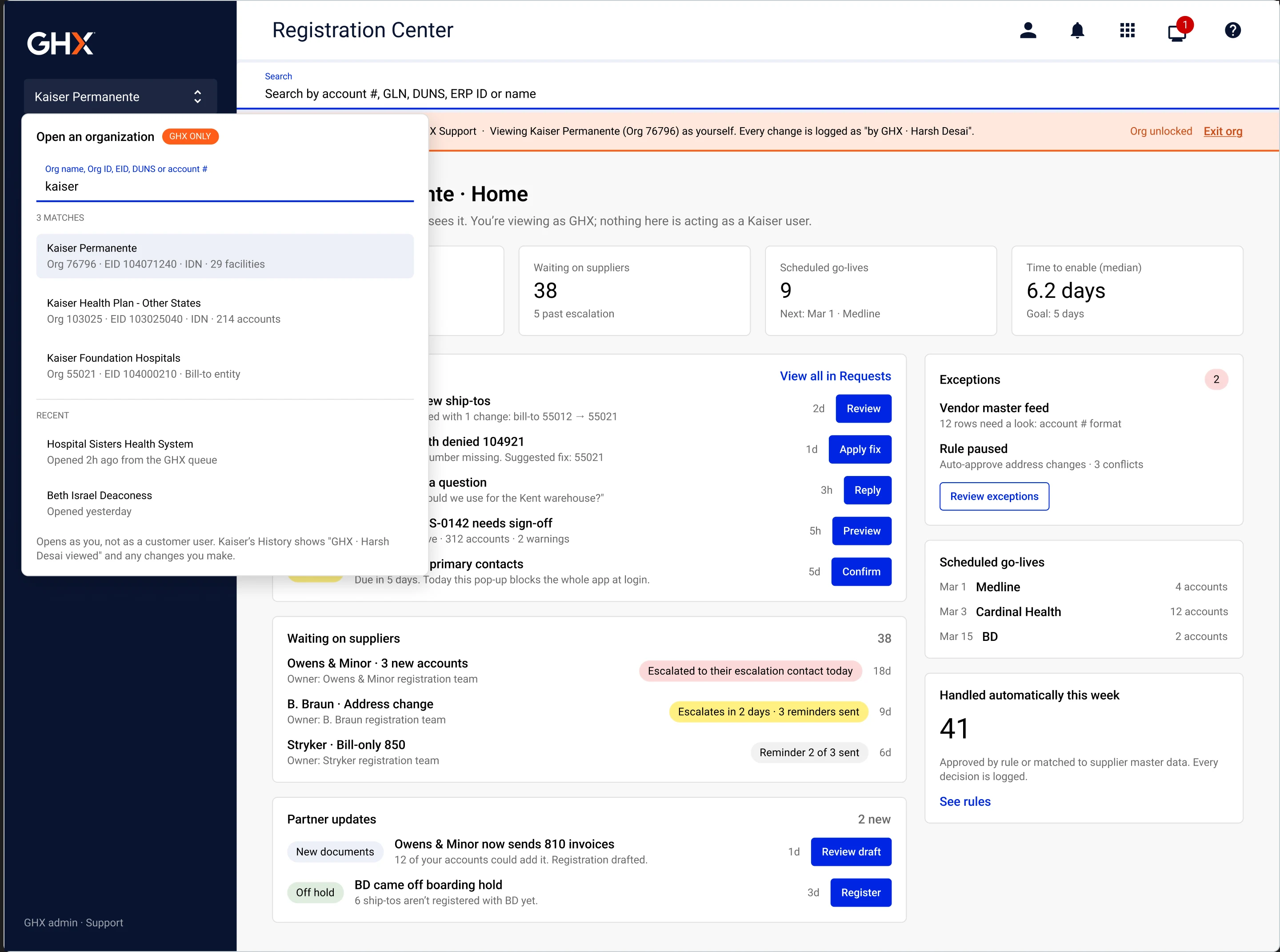
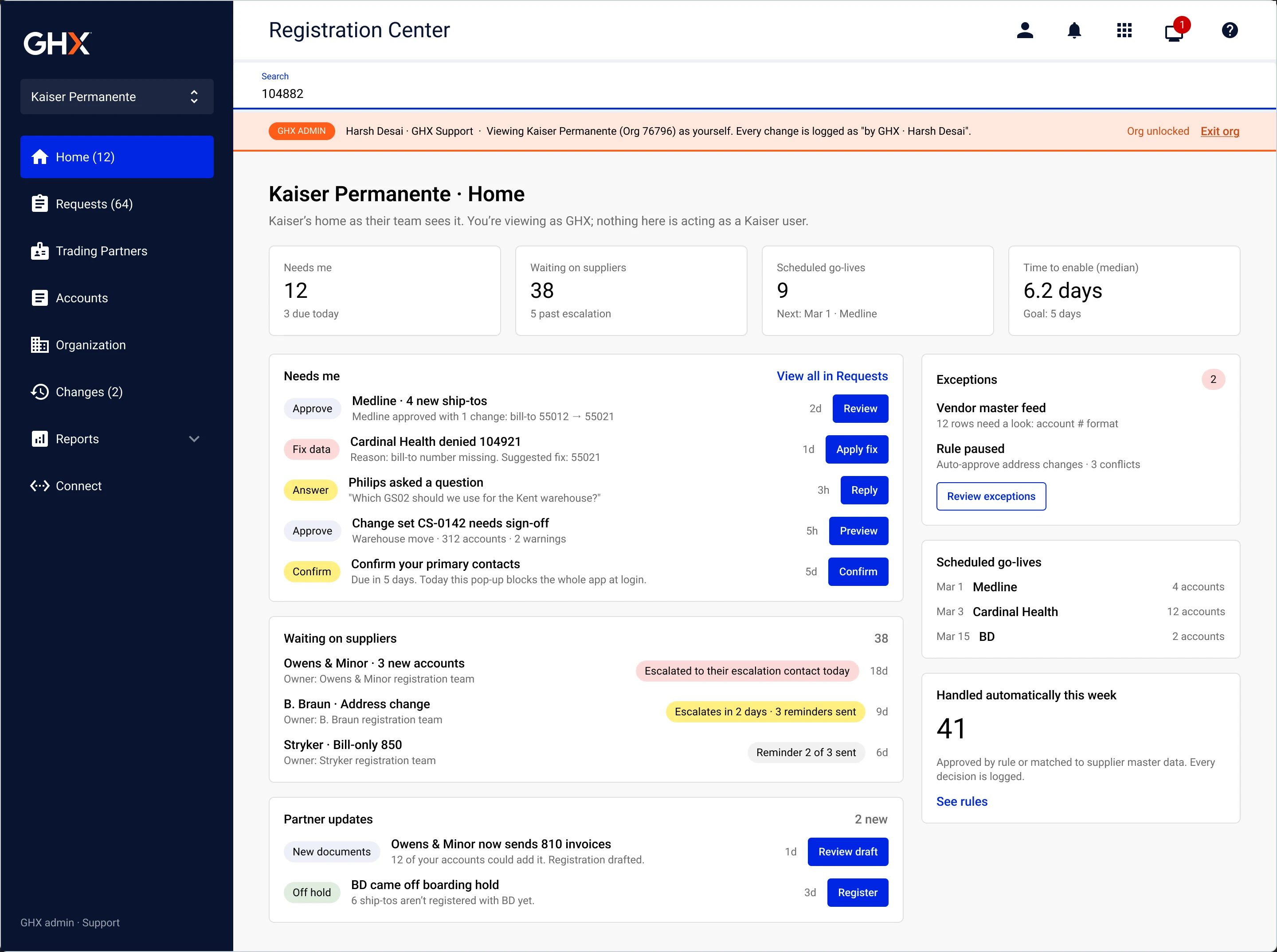
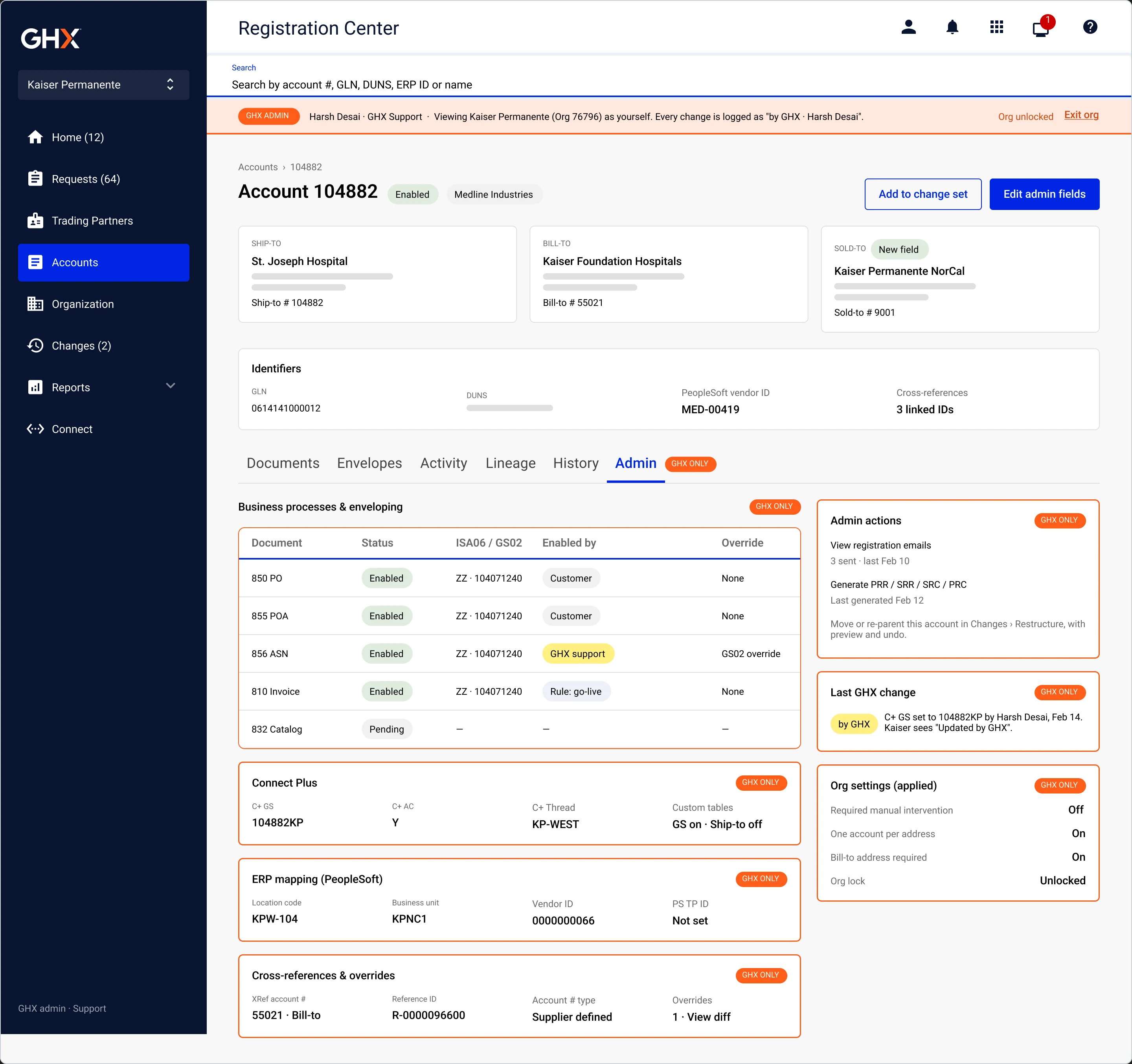
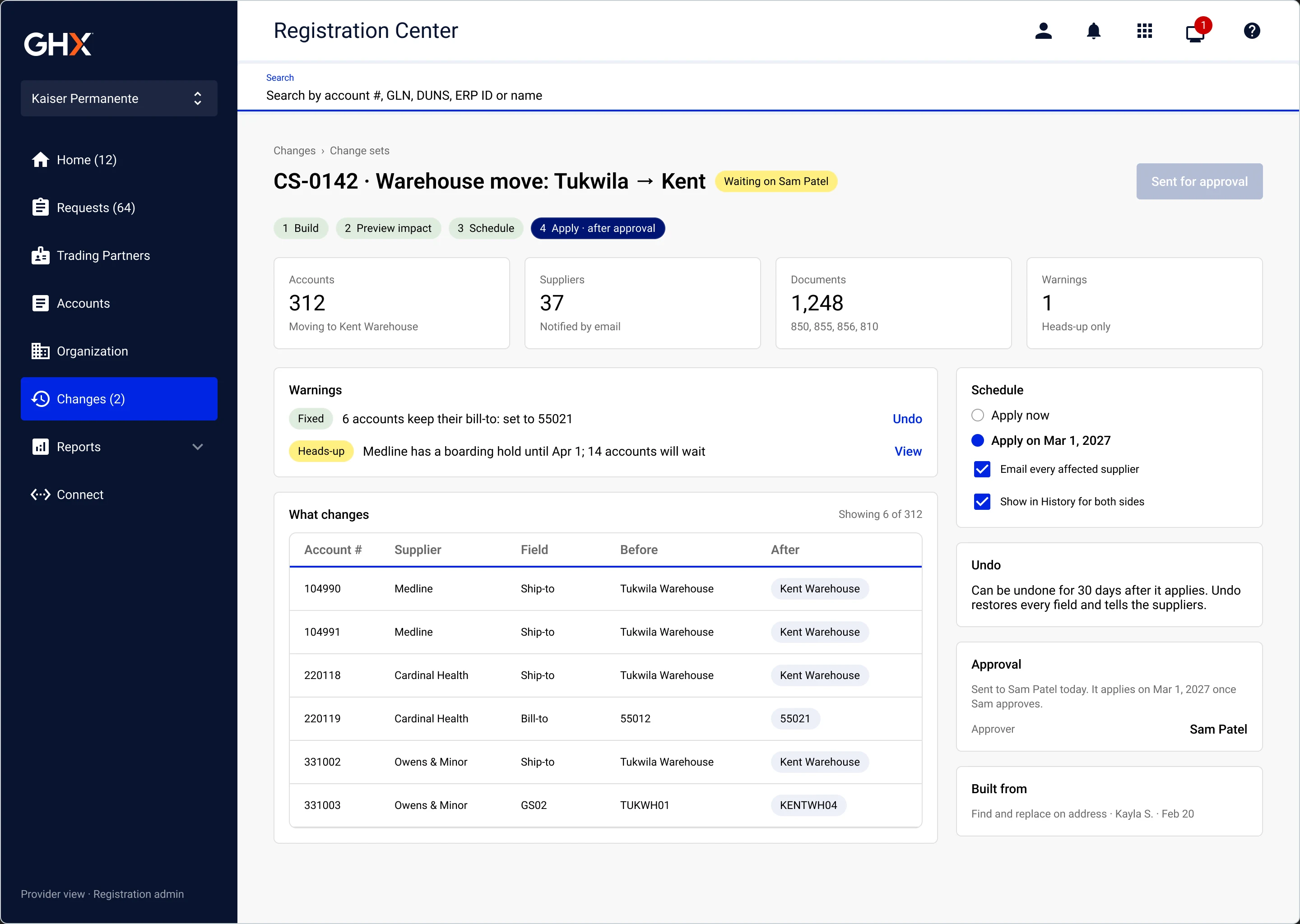
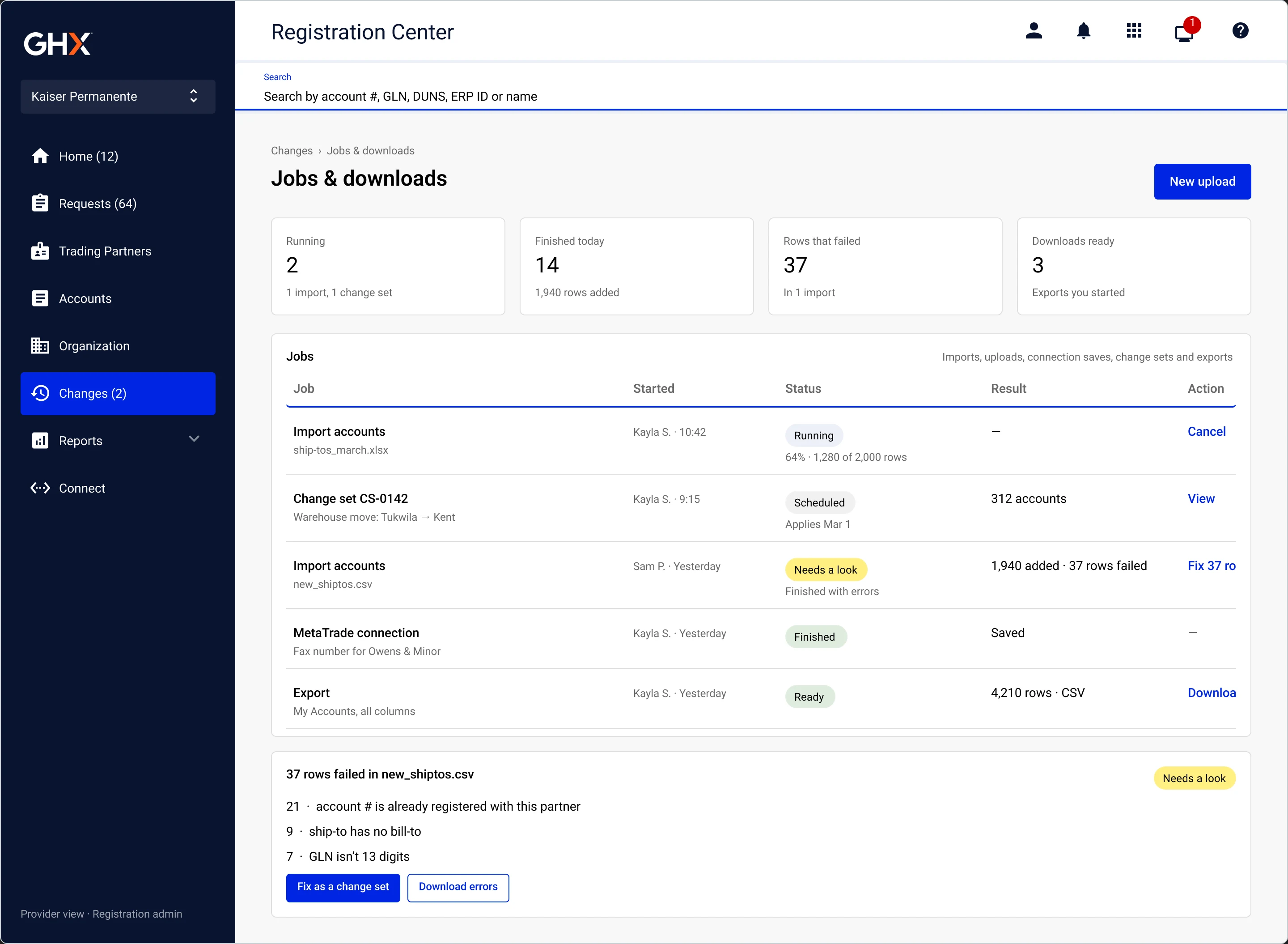
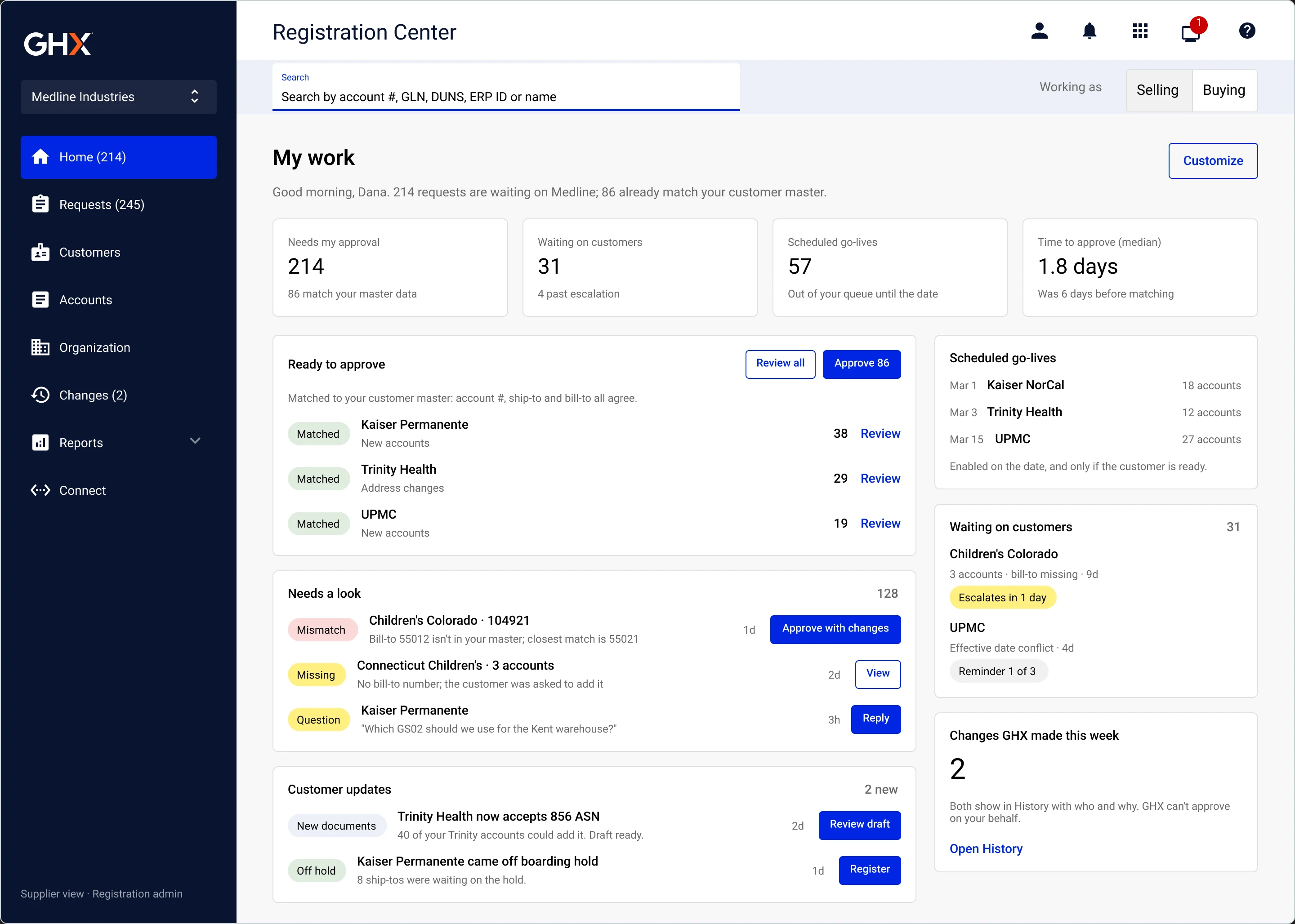
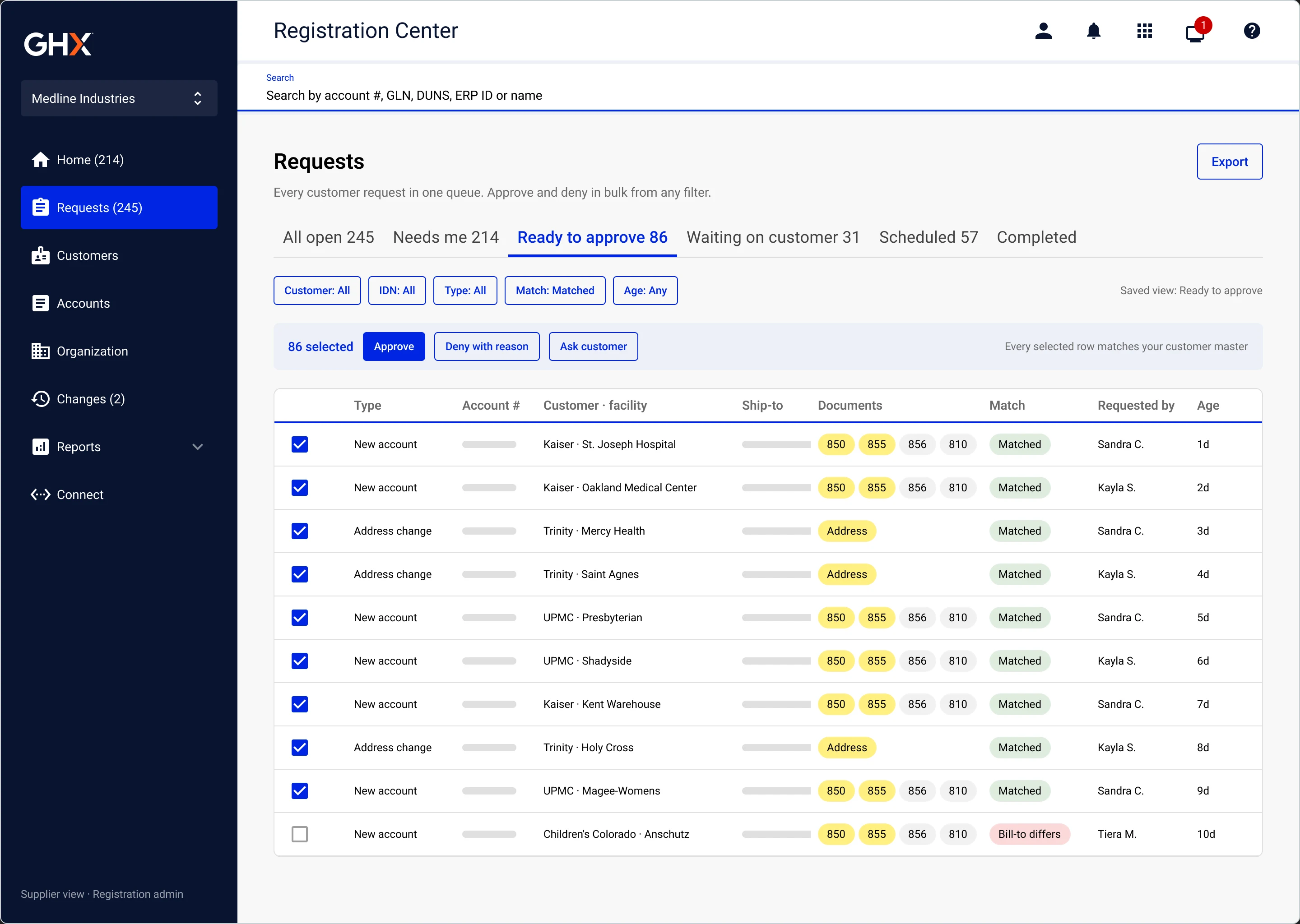
Before a hospital can trade with a supplier through GHX, the two set up and connect their accounts in the Registration Center. Much of that is managed by hand: trading partners are added and kept current one at a time, and when a request stalls, it becomes a support ticket that GHX’s own teams chase between the two sides. GHX calls this kind of manual coordination workflow debt. Research with customers and GHX’s teams found the Registration Center works for one task at a time, and breaks down at scale and at the handoff, where each side waits on a step the other controls.
The rebuild is drawn as user flows for the three roles that share it, each starting from its own home. A hospital’s registration admin approves what a supplier changed, registers accounts, and moves locations in change sets that preview every account they touch, apply on a date and can be undone. A supplier’s team approves in bulk the requests that already match its customer master, and sends back what does not as a diff for the hospital to accept. GHX’s support teams work a queue of only the steps GHX owns, in an admin mode where every change is logged under their name and GHX never approves for a partner. Around all three, routine requests are handled by rules, feeds and matching against master data, and every automated decision is logged. People step in for what is unusual, not for what is routine.
10 · Design: Vendormate kiosk
Checking in at the front desk, without the front desk.
Vendor reps check themselves in at a lobby kiosk, from scanning in to a printed badge.
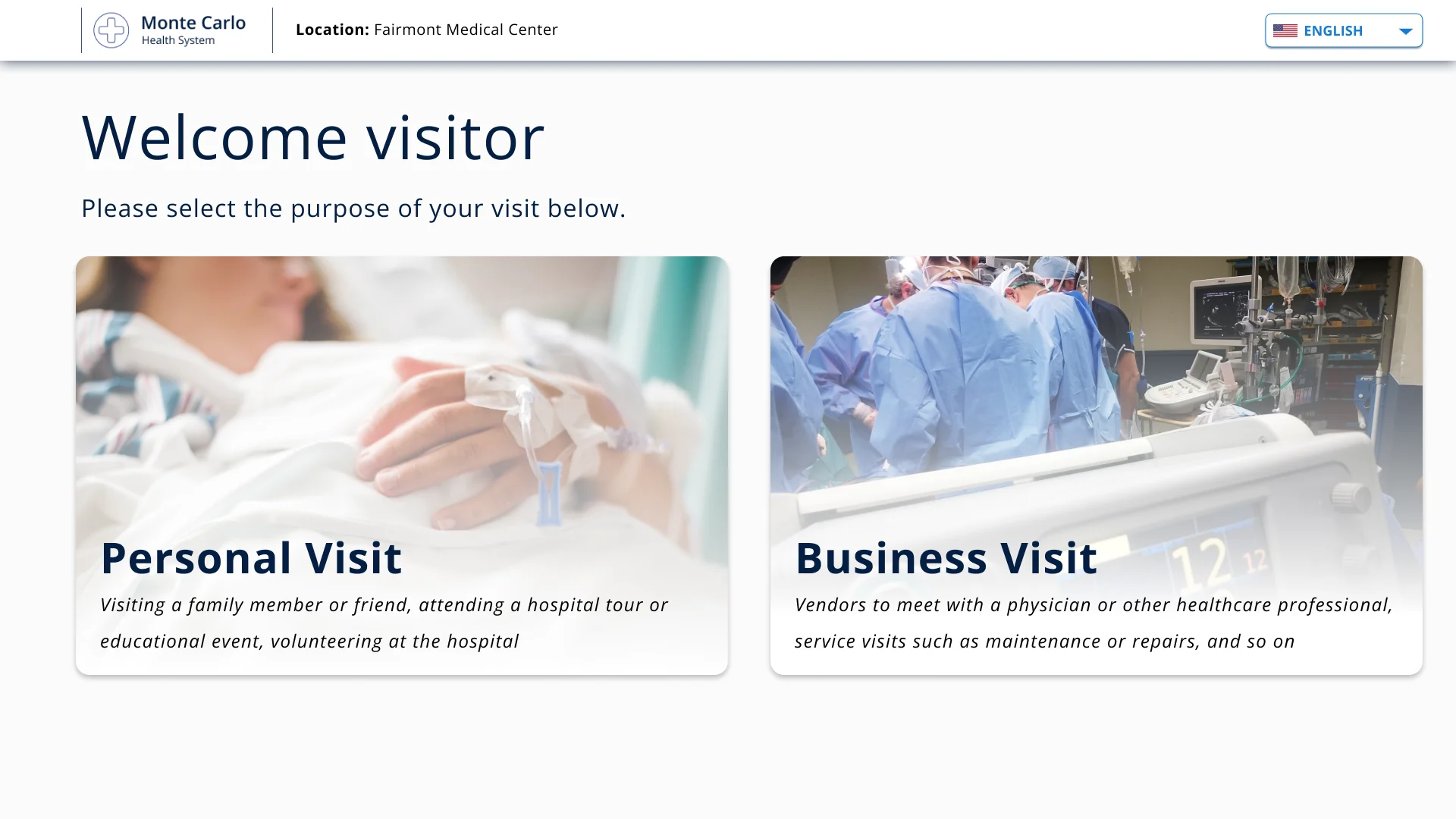
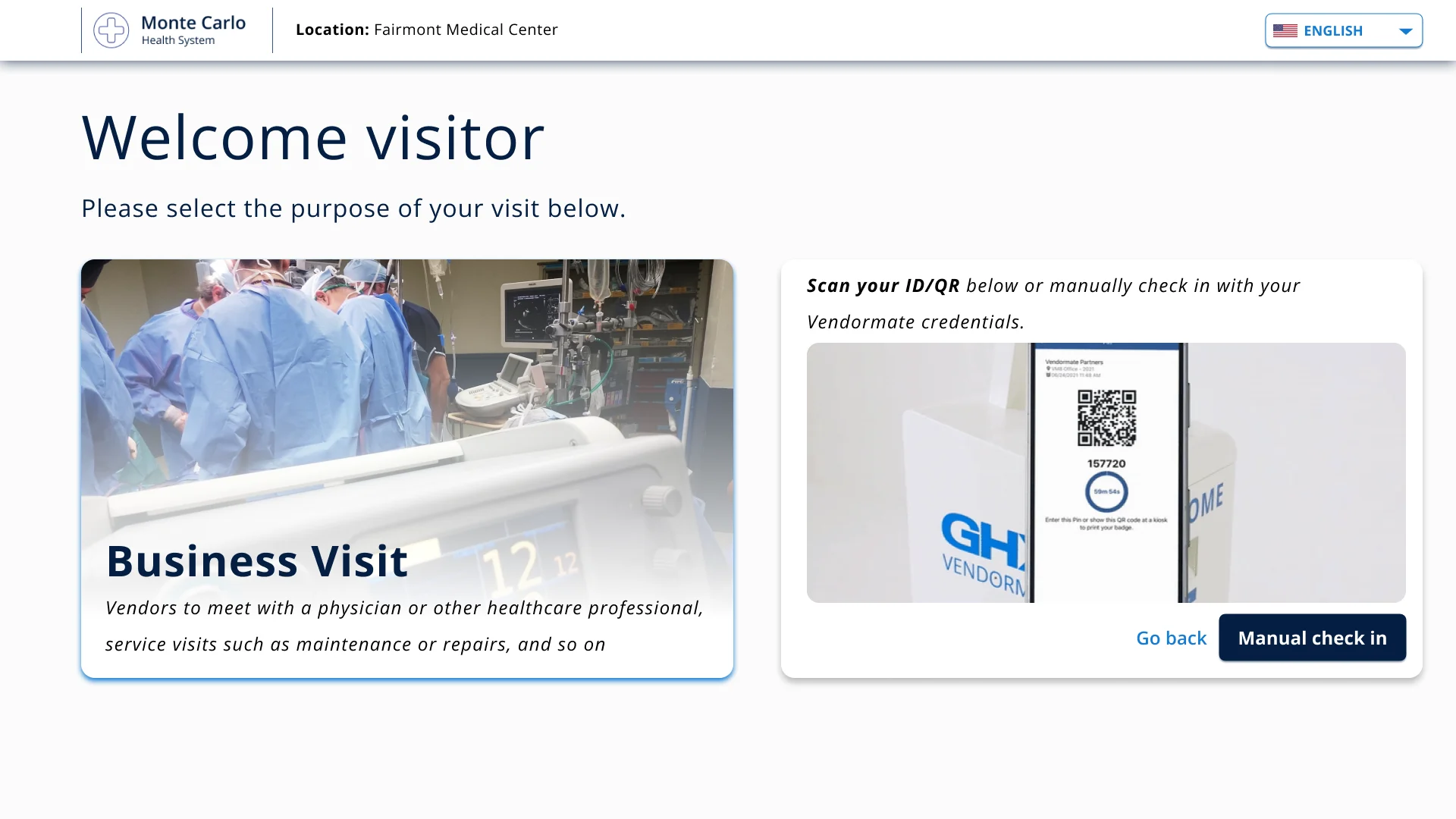
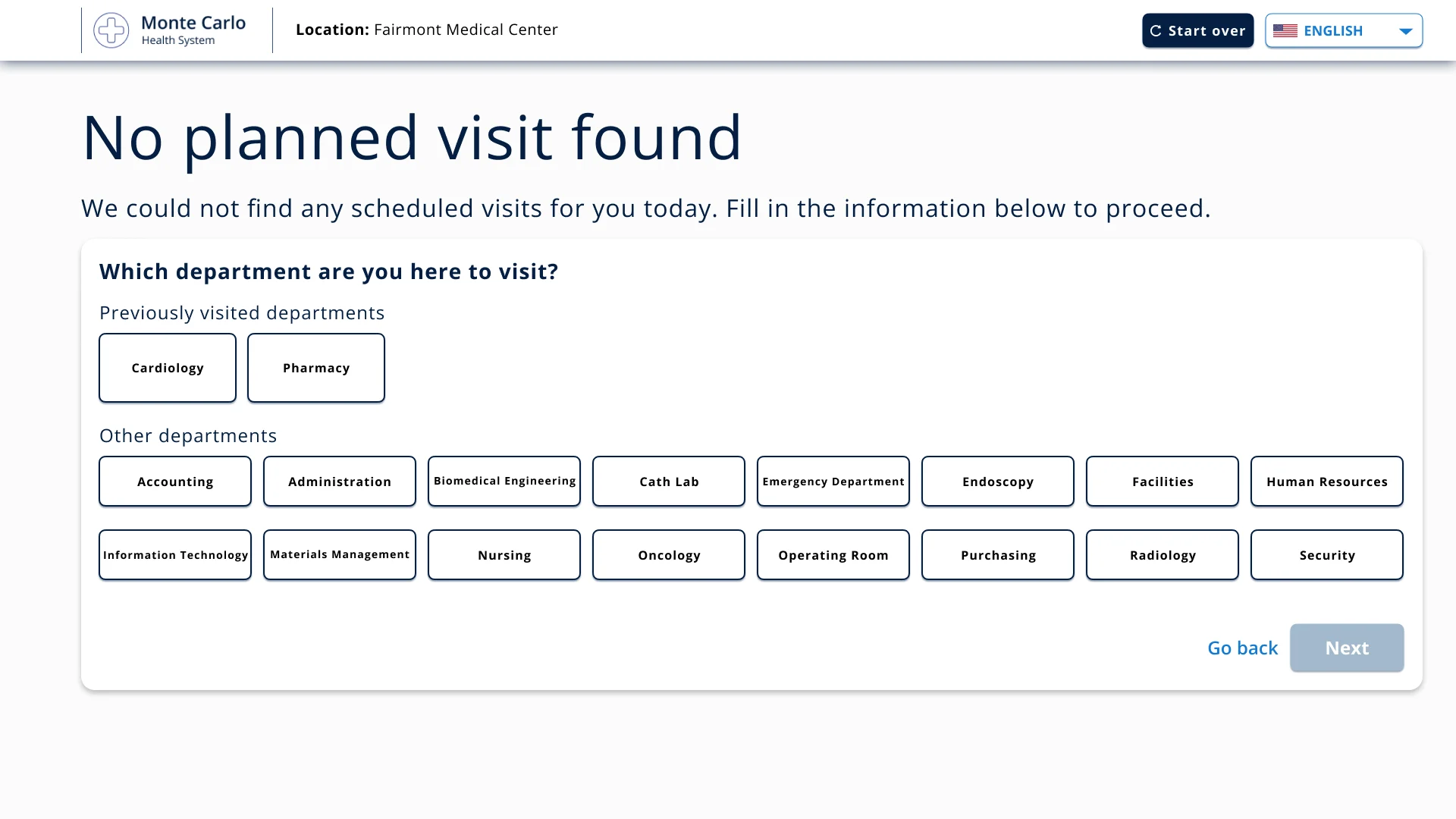
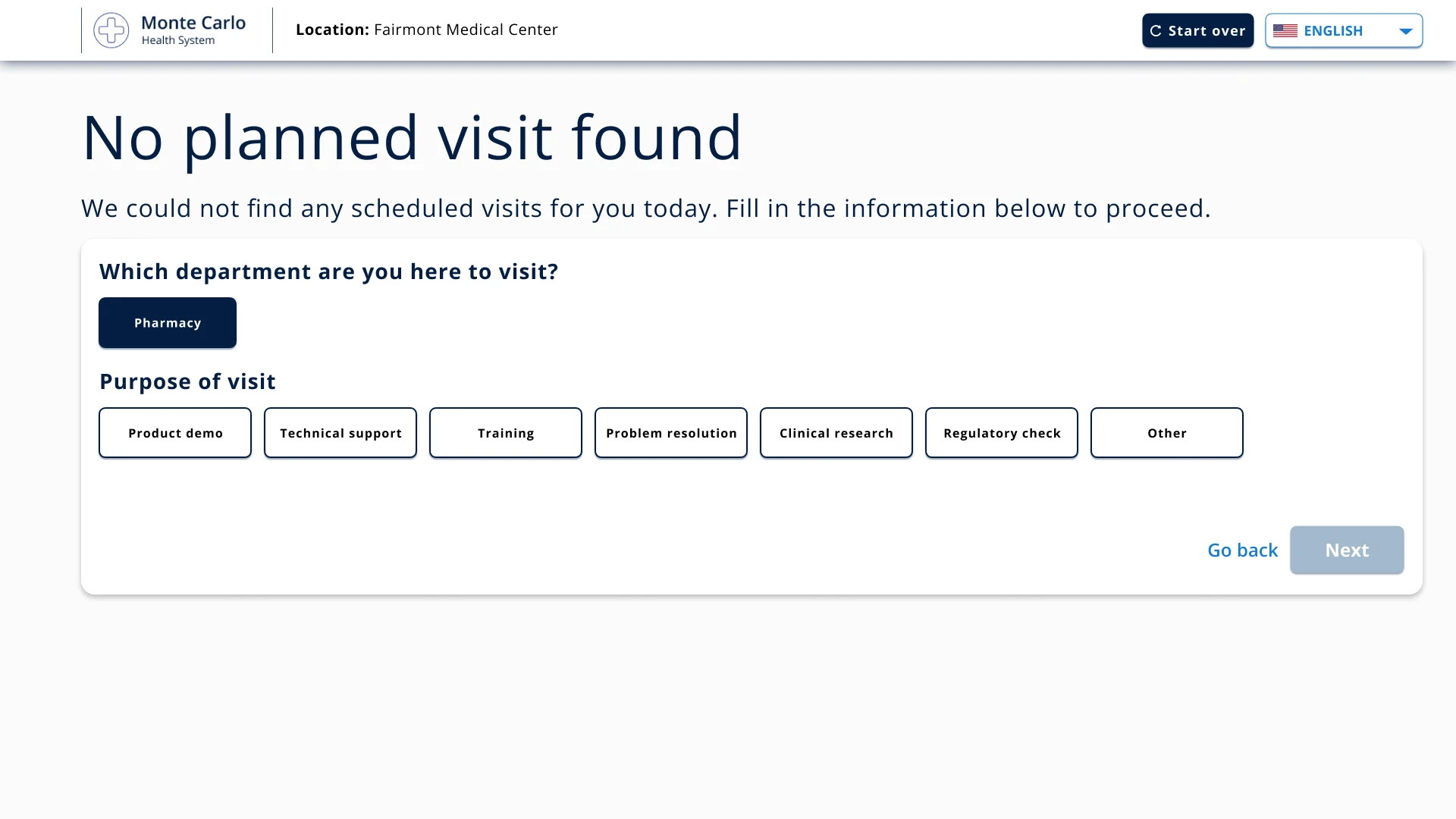
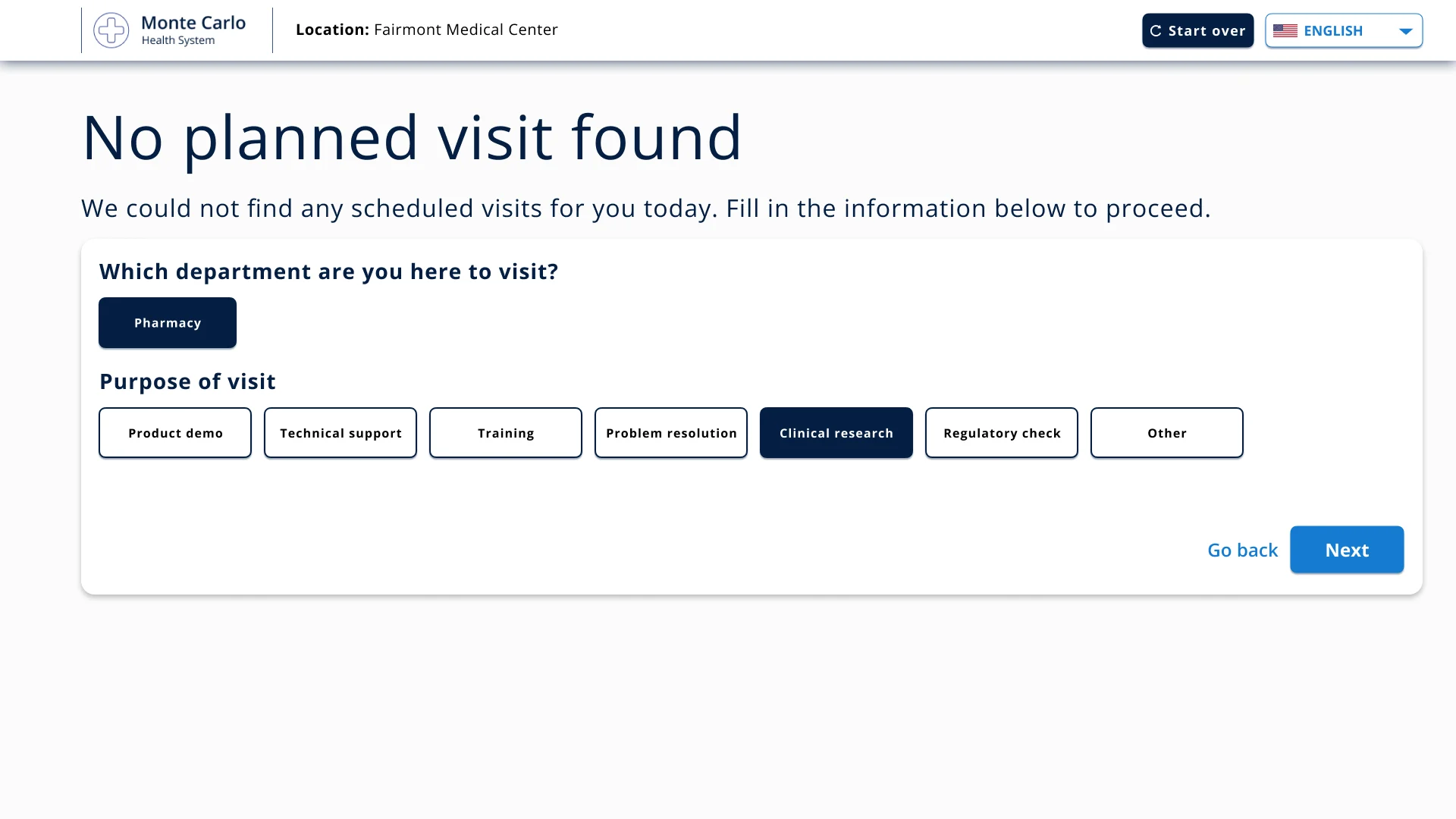
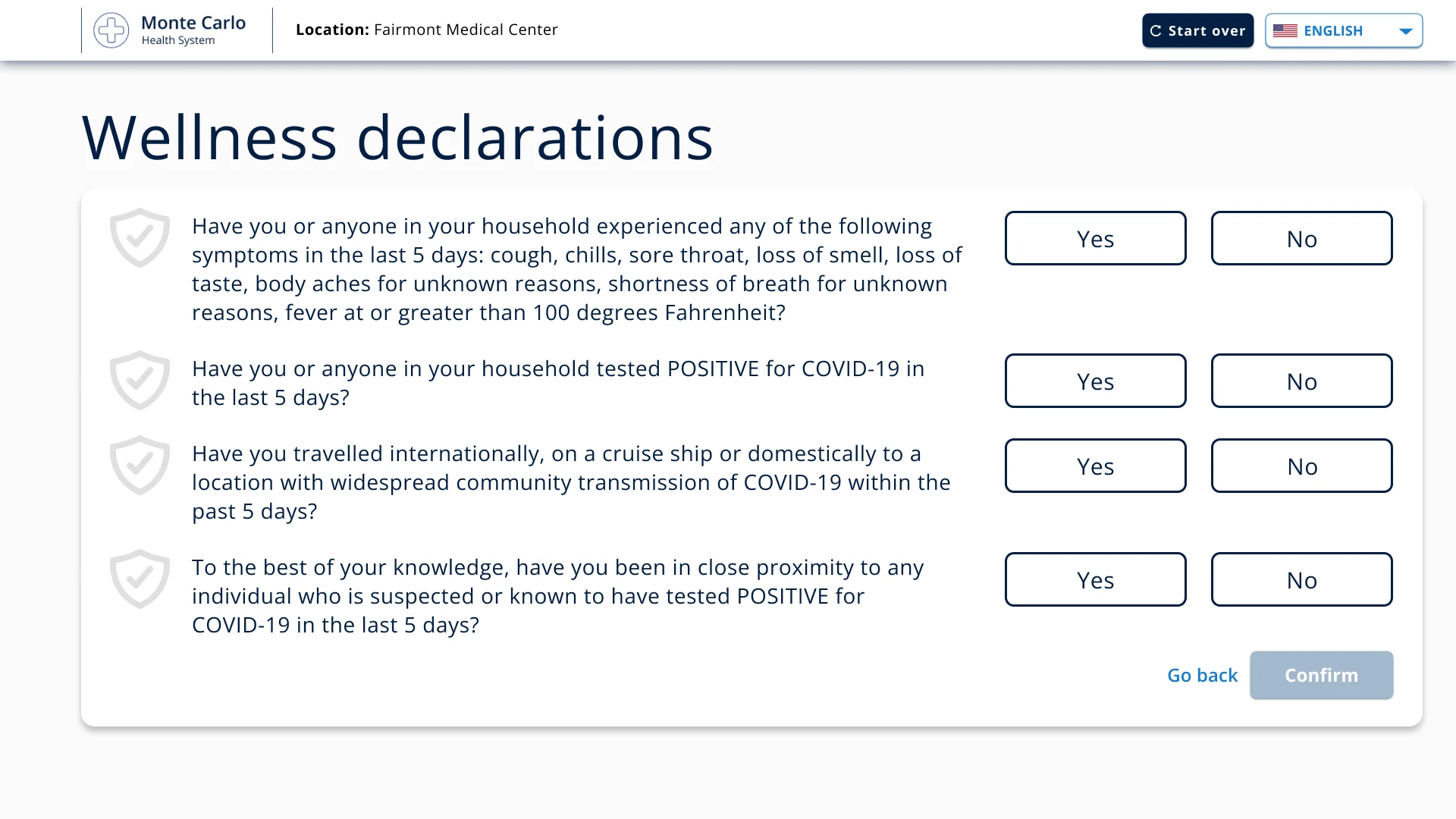
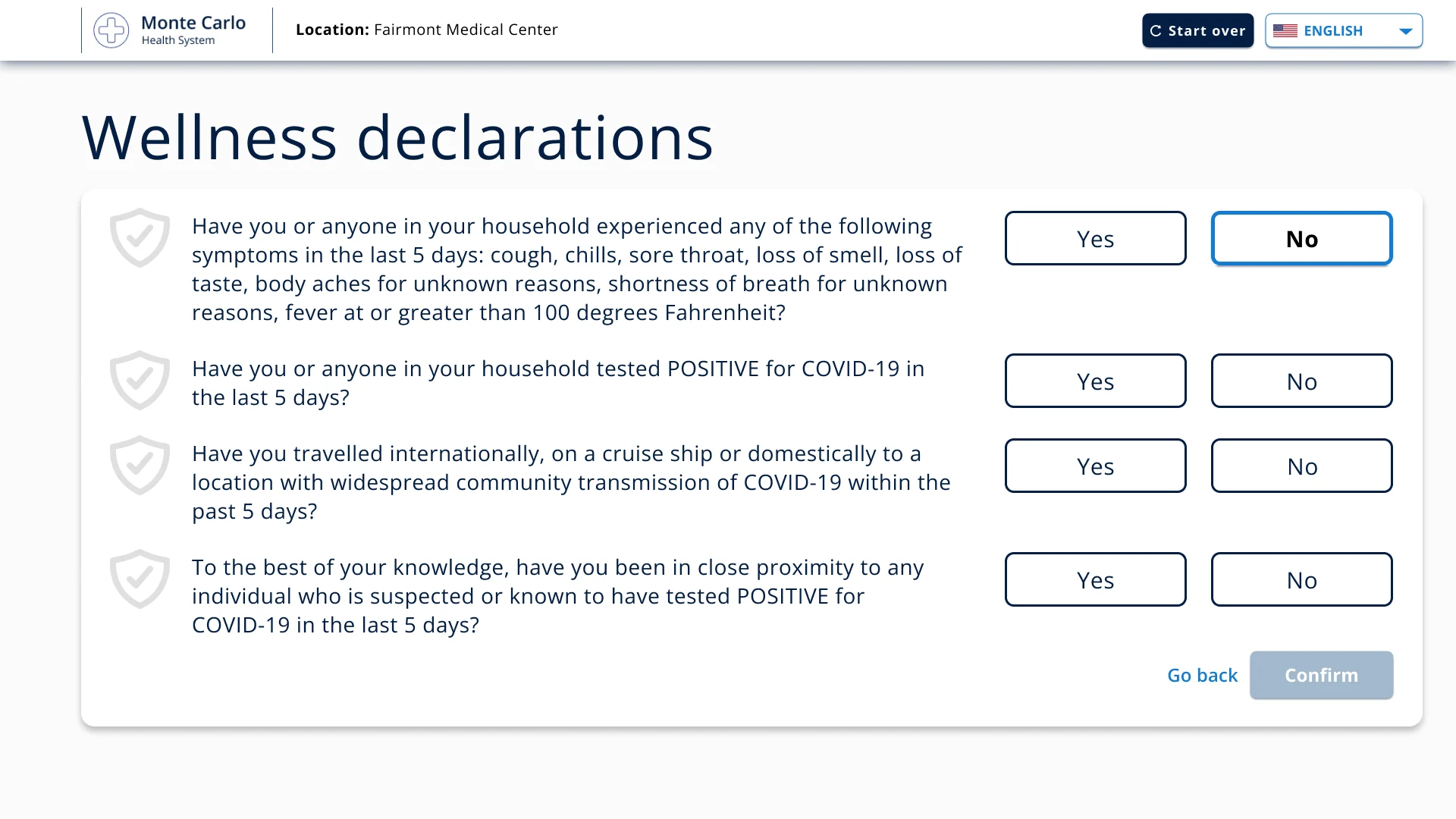
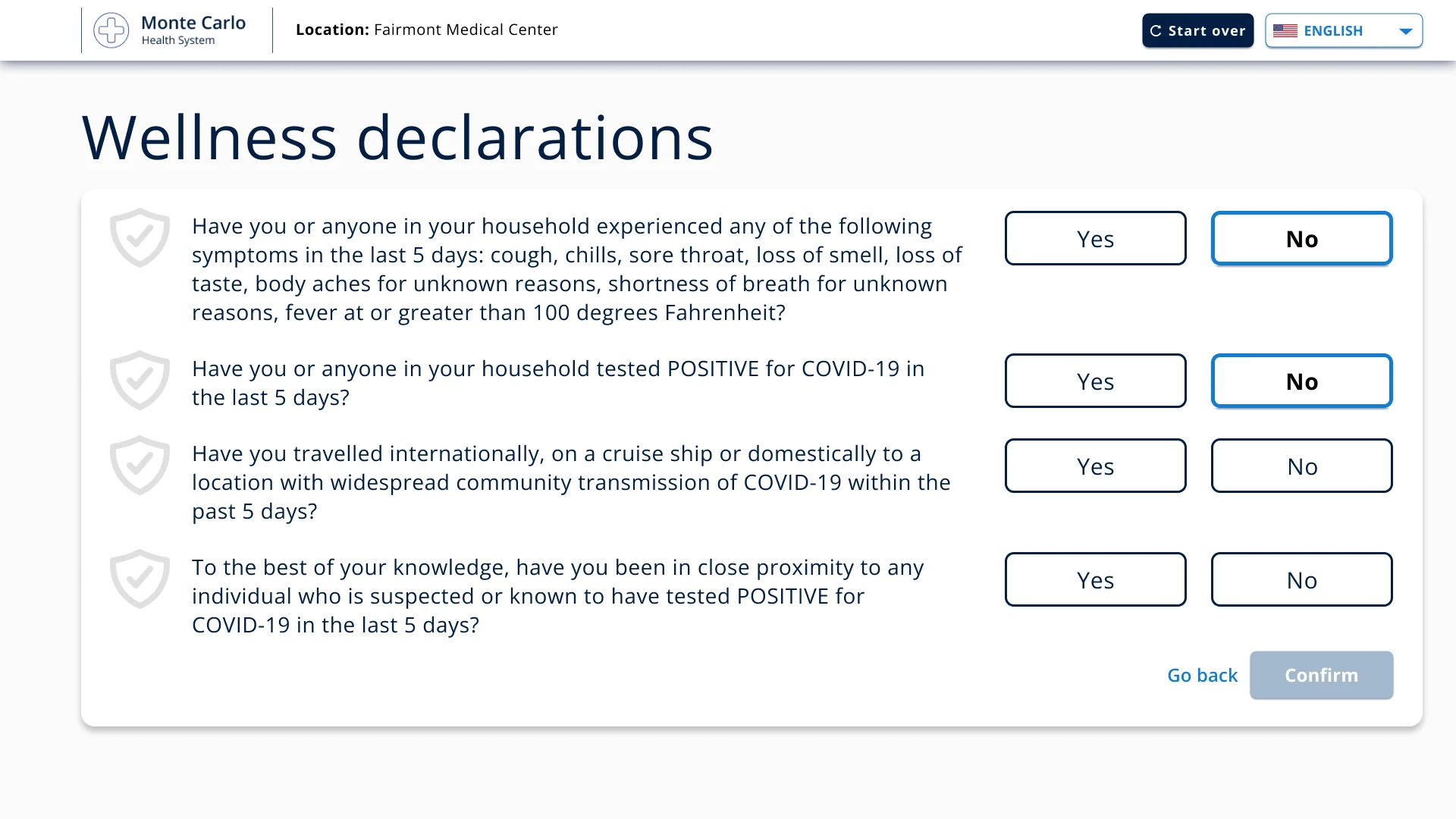
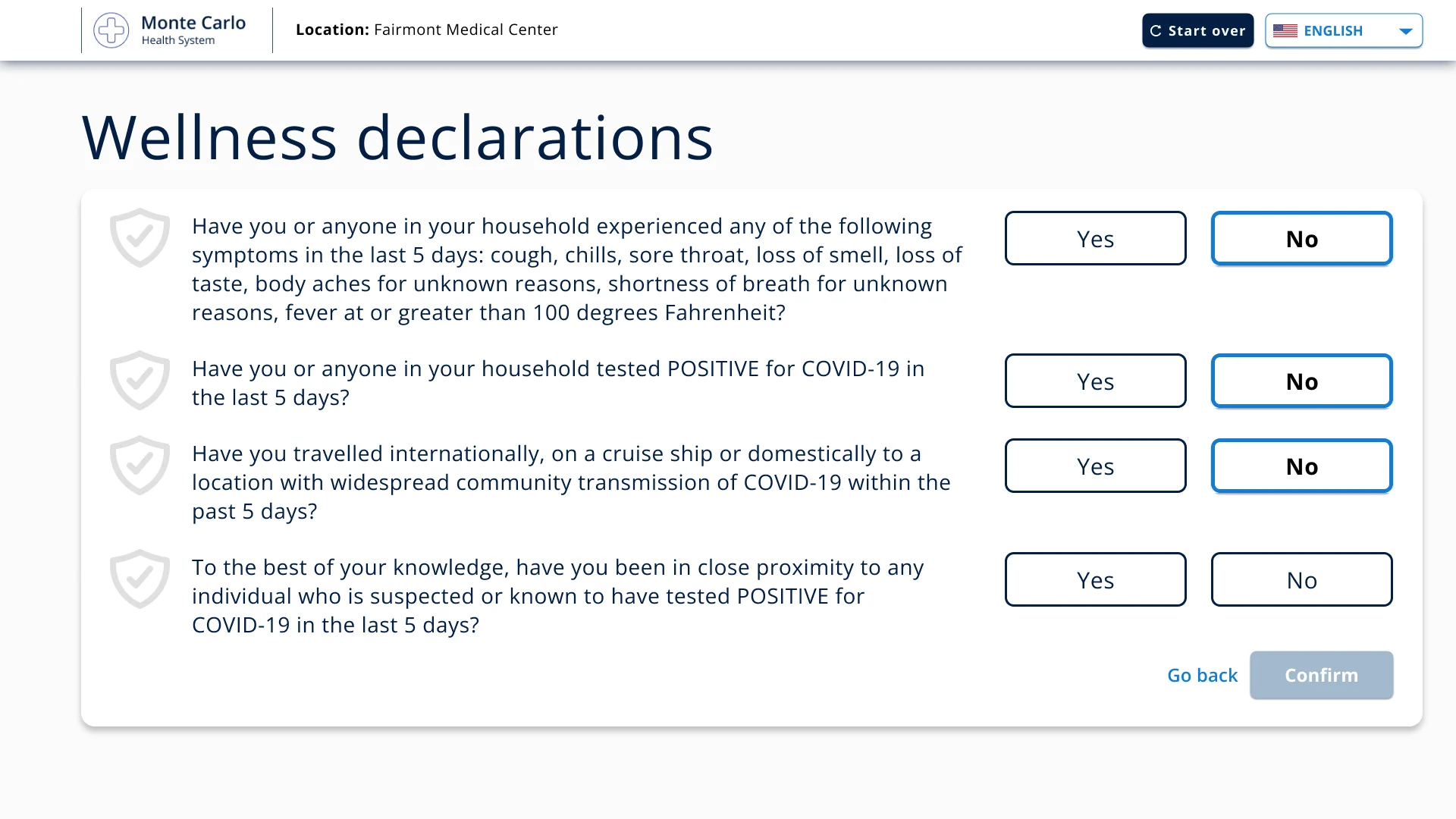
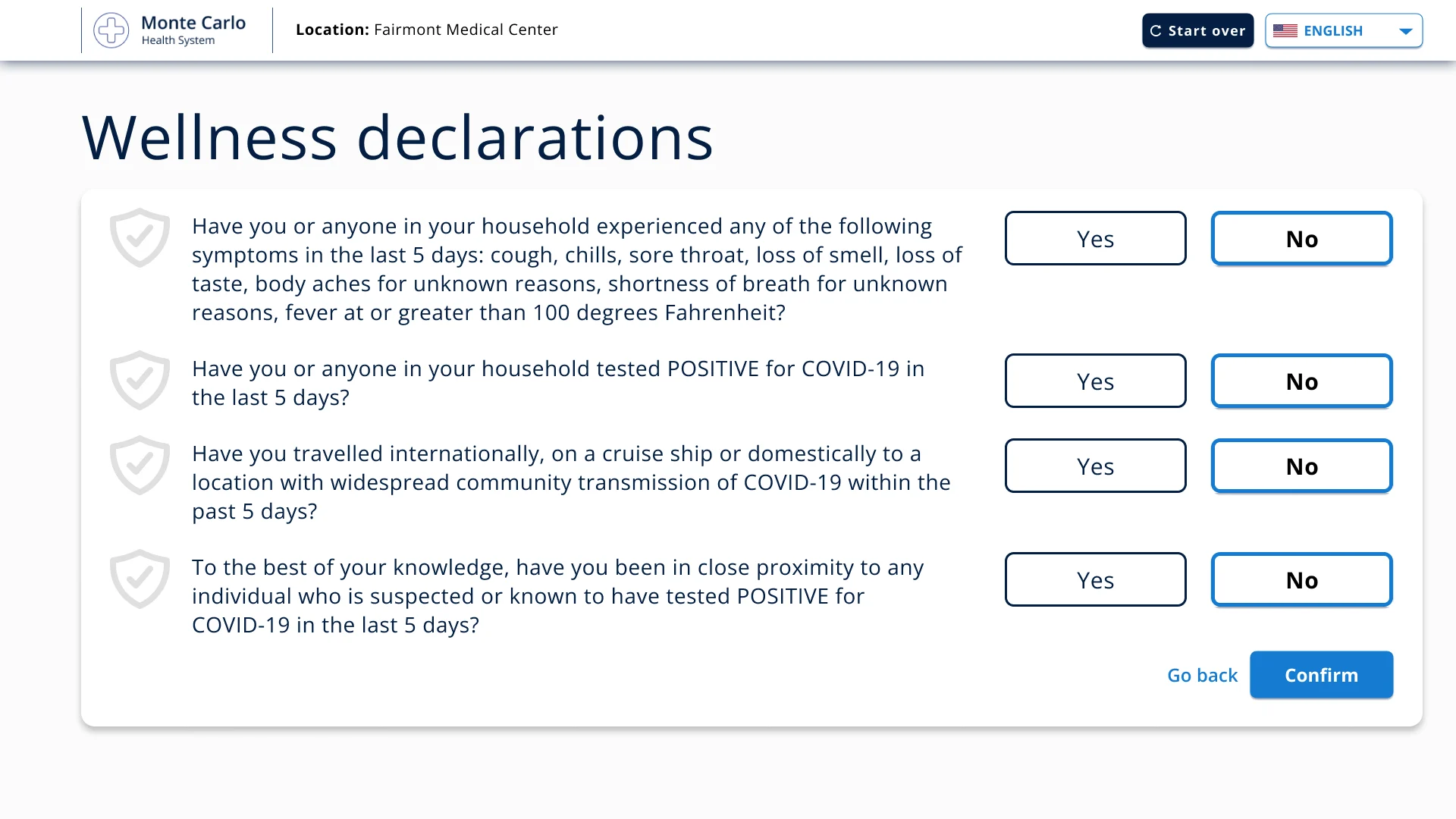
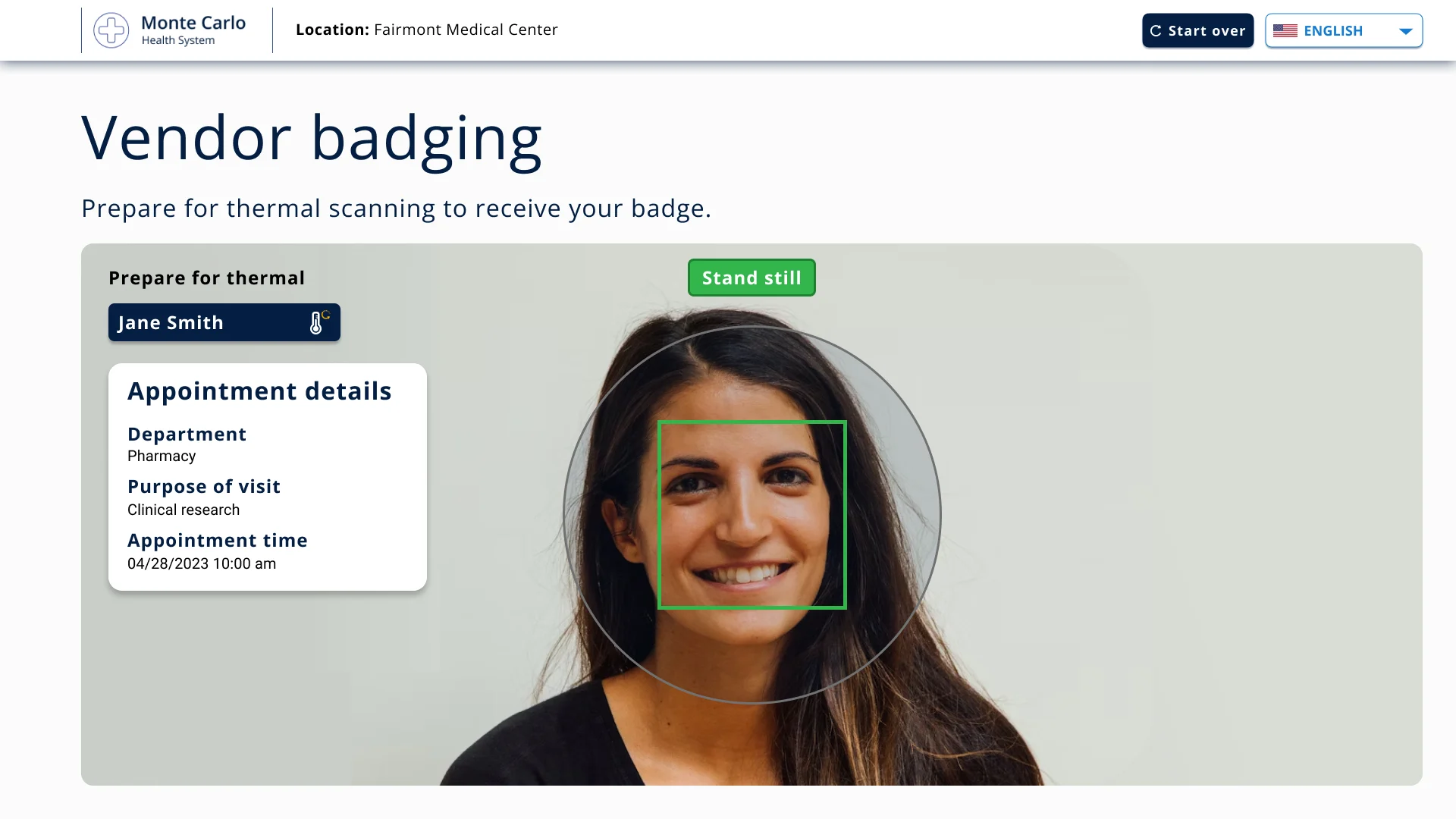
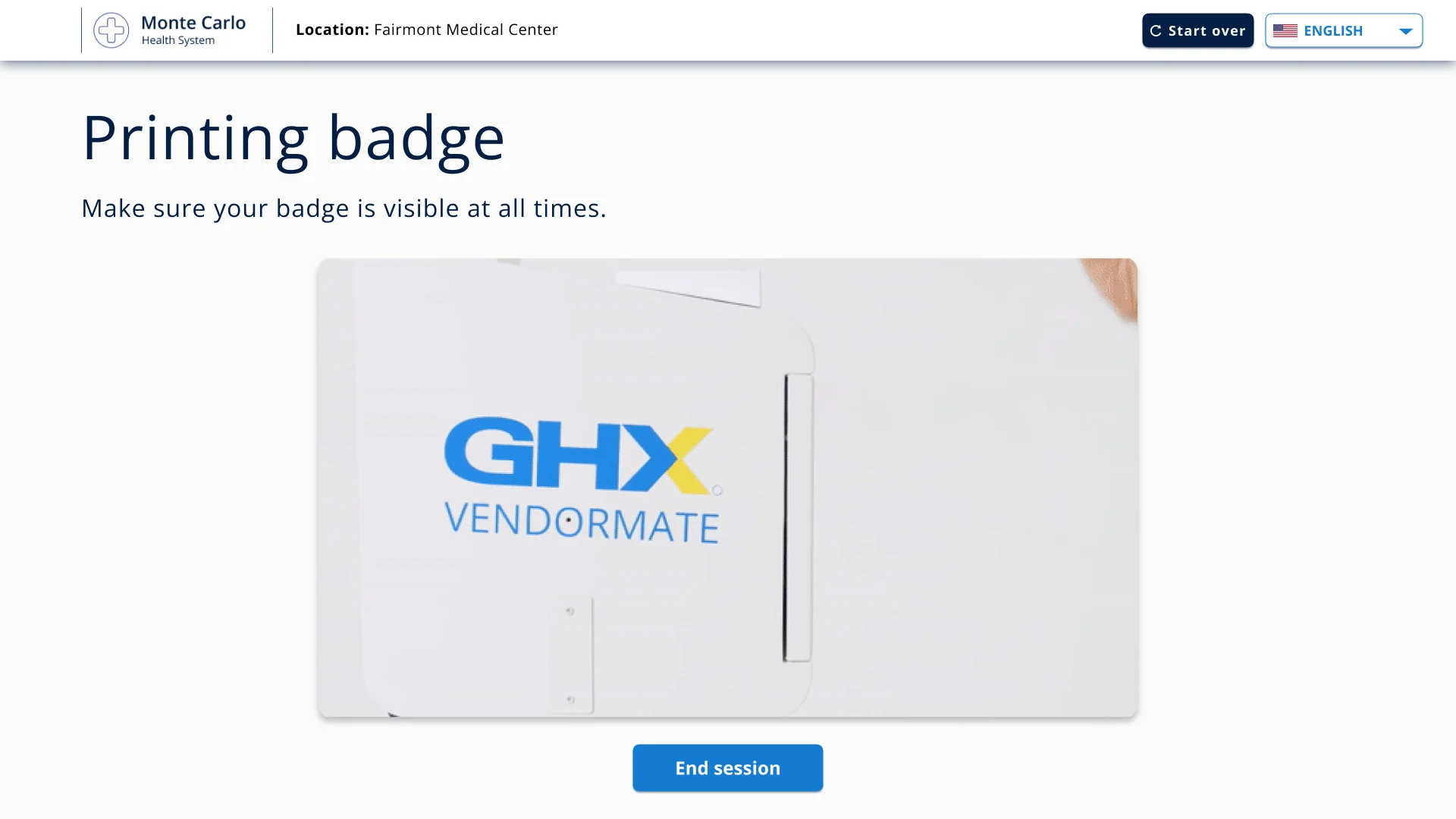
Vendormate is how hospitals credential the supplier reps who come on site. The kiosk is where a visit starts, for personal visitors and supplier reps alike: a rep picks Business Visit, scans in or checks in by hand, says which department and why when no visit is planned, answers the wellness questions, and leaves with a printed badge.
It stands in a lobby and is used by strangers, standing up, often in a hurry. So the screens are large and plain, there is a language switch, and Start over is always in reach.
11 · Result
What the platform has done for hospitals.
I can’t share internal metrics. These are the numbers GHX publishes about its value analysis offering and what customers have done with it. They are the product’s results, built by many people, not mine alone.
- Riverside Health
- 28% reduction in joint costs, through a single three-month project.
- ECU Health
- $520,000 saved in a year.
- Evidence library
- 48K+ products, 2,800+ groups of comparable products and 350+ curated evidence insights.